The United Kingdom has launched EDITH, billed by the government as the world’s largest clinical trial of artificial intelligence in mammography, to test whether AI can take over part of breast-screening reading without missing cancers. Run by the University of Warwick within the NHS, the trial aims to invite nearly 700,000 women — the registered target is 660,000 — across 30 screening centres, funded with £10 million (over $13 million) from the National Institute for Health and Care Research (NIHR). Recruitment began in November 2026 at Cambridge University Hospitals.
Today the British programme uses double reading: two radiologists review every mammogram. EDITH is betting on whether one of those readers can be replaced by AI, freeing specialists in a system under heavy staffing pressure. Health and Social Care Secretary Yvette Cooper called it “the biggest AI breast cancer trial in the world,” adding that “AI has huge potential, but we also need proper safeguards in place.”
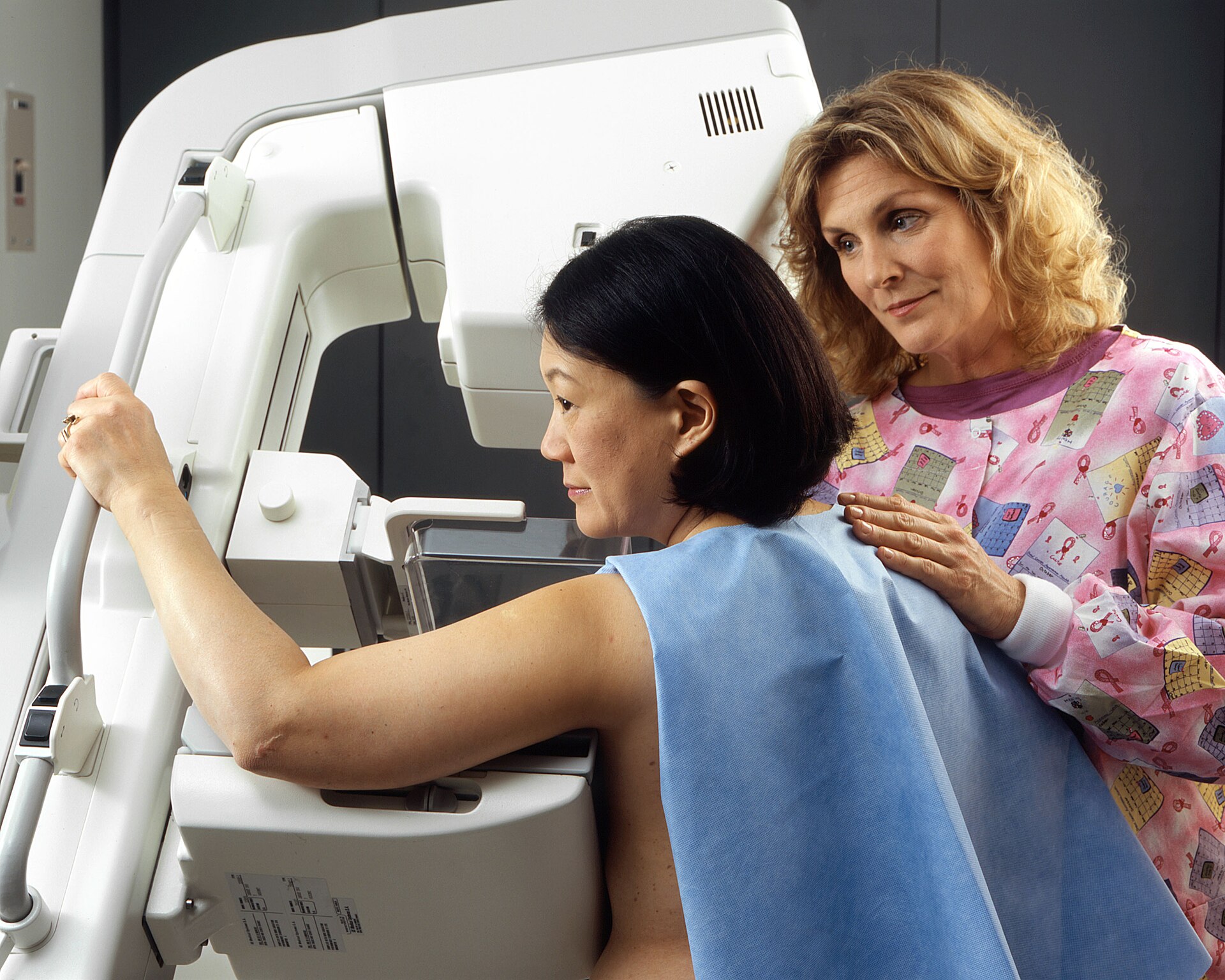
How EDITH will test AI in screening
The trial is pragmatic and uses opt-out consent: every woman invited for routine screening at a participating centre takes part unless she asks that her images not be analysed with AI. There are three groups. The control arm keeps standard double reading, with two specialists. In one AI arm, the algorithm works alongside a single reader, flagging findings a lone reader might miss. In the other, AI triages first by risk, sorting low- and high-probability exams to calibrate the human effort. The NHS says it “rigorously tested” four AI systems — from different vendors — before use, and each centre is randomly assigned one of them.
In every scenario, the final clinical decision stays with NHS staff. When the human reader and the AI disagree, or when the algorithm flags a very high likelihood of cancer, the exam goes to standard arbitration, where a third specialist or a panel decides. The design tries to separate two jobs that are often conflated: detecting lesions and estimating risk. The distinction matters because breast AI detection and risk models are not interchangeable and each needs its own validation.
Why scale and public money change the game
British screening performs about 2.1 million mammograms a year in women aged 50 to 71, invited every three years, and prevents roughly 1,300 deaths annually, the NHS estimates. Fewer than 1% of exams show signs of cancer, which means a lot of time spent confirming negatives. That bottleneck is what AI promises to ease. The Royal College of Radiologists (RCR) sees “real potential” but warns the trial will not fix the immediate “dire shortage” of specialists: more than a fifth of the breast radiology workforce is slated to retire by 2030. RCR president Stephen Harden said “this trial has real potential to free up radiologists’ time, but it won’t be a quick fix.”
Funding a study this large with public money, rather than leaving it to vendors, changes the quality of the evidence. NIHR chief executive Lucy Chappell said the agency “is proud to be funding one of the world’s largest studies of AI-assisted breast screening.” AI mammography reading had already been tested at smaller scale — such as Stockholm swapping its second reader for AI and studies reporting a sharp drop in reading workload — but a national randomised trial has the statistical power to measure safety and detection, not just productivity.
What earlier evidence already showed
The most cited precedent is Sweden’s MASAI trial, with more than 100,000 women and ScreenPoint Medical’s system. Full results, published in The Lancet in January 2026, found about 81% of cancers were detected at AI-supported screening versus 74% with standard double reading, with 12% fewer interval cancers (82 versus 93) and a similar false-positive rate (1.5% with AI and 1.4% without). Interim 2023 results had already pointed to roughly a 44% cut in reading workload. Even so, the UK national screening committee does not recommend AI in the breast programme — exactly the evidence gap EDITH aims to close, now across varied populations and equipment.
AI breast screening in Brazil and Latin America
In Brazil, mammographic screening is offered through the public SUS system, but coverage is uneven and double reading is not routine across much of the public network, which makes the setting different from Britain’s. The shortage and concentration of radiologists in the capitals and the Southeast leave parts of the North and Northeast with queues and slow reports. In that context, AI validated as triage or as a second reader could extend the reach of services with few specialists — provided it is cleared by Anvisa, audited locally and backed by human arbitration. The debate is also about jobs: some read automation as a threat to physician employment, a claim the Neiman Institute rebutted by showing AI does not replace the radiologist. EDITH’s lesson for the region is that responsible adoption depends on local evidence, not on extrapolating numbers from another health system.
Limitations and what to watch
EDITH is a large randomised trial, but its meaningful outcomes — cancer detection rate and recall rate — will take years. Participants will be followed until their screening episode closes and for a further four years, through the screening programme and cancer registries, to capture interval cancers. Opt-out consent broadens the sample but raises the question of how well women understand the use of AI on their images. Because several systems and vendors enter the study, results may vary across algorithms and equipment, and performance will need continuous monitoring. Finally, even if AI cuts reading workload, it does not create radiologists: the RCR insists the staffing bottleneck needs more than software. Worth watching: which vendors take part, how safety outcomes are reported, and whether the productivity gain translates into earlier diagnosis — not just less reading.
Source: Radiology Business — World’s largest breast imaging AI trial launches with $13M in government support; NHS England — First women join world-leading AI-assisted NHS breast screening trial.