
What changed after the fatal Long Island MRI accident
Nearly a year after Keith McAllister’s death, MRI safety experts are still pressing US state authorities for concrete answers. The 61-year-old was pulled into a 1.5-tesla scanner at Nassau Open MRI in Westbury, New York, on July 16, 2025, while wearing a roughly 20-pound weight-training chain around his neck. He remained pinned to the magnet for nearly an hour and died the next day after several cardiac arrests.
In a recent podcast, the news outlet AuntMinnie revisited the case to answer a question that has stayed on clinicians’ minds: what, exactly, did state agencies do? The answer is uncomfortable. Although the event is regarded as the second most infamous MRI fatality in US history, state-level oversight has advanced little, and no specific, verifiable legislation has yet been enacted.
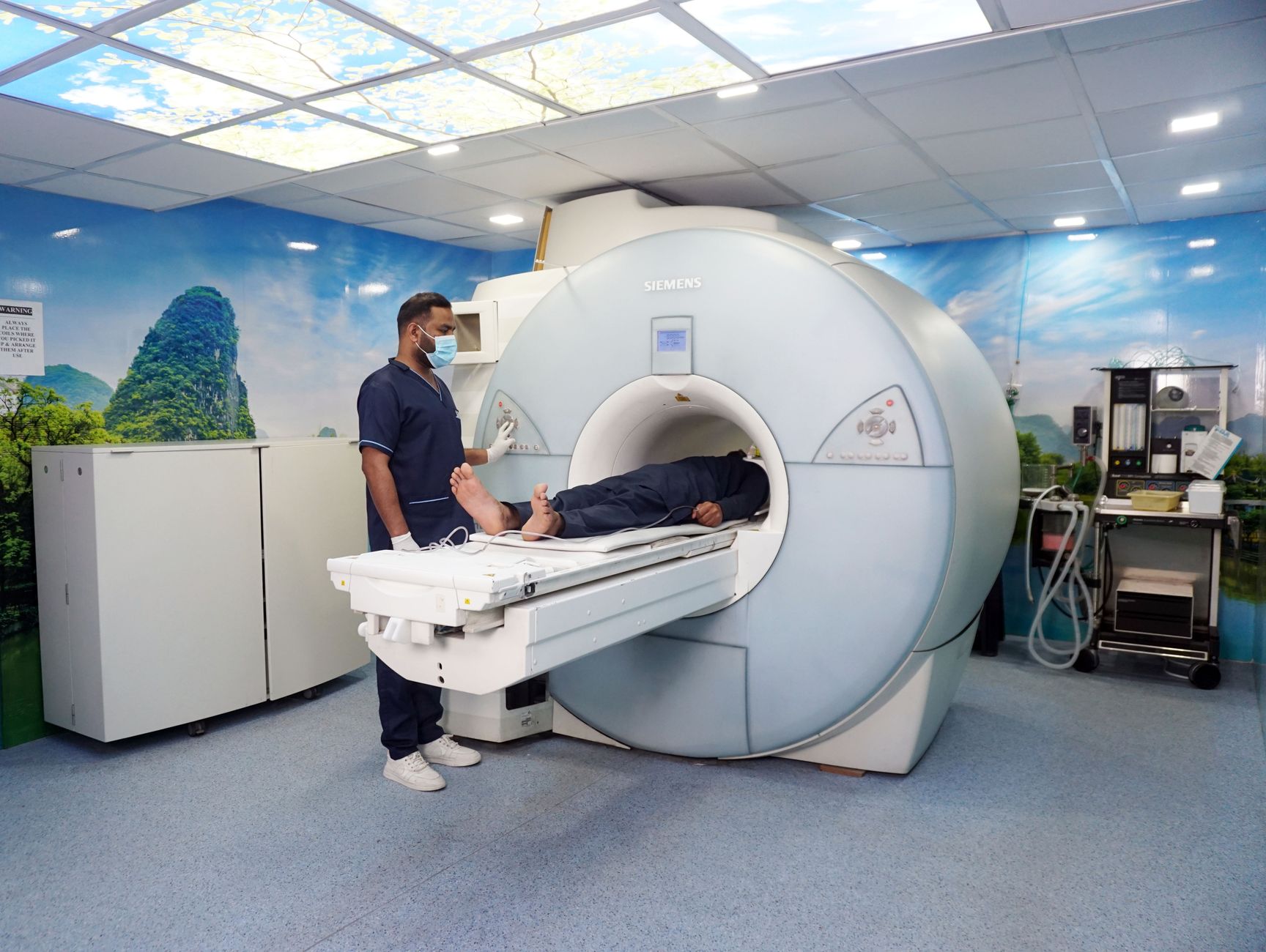
Why this was a preventable ferromagnetic projectile
The core fact is technical and unforgiving: the static magnetic field of an MRI system is never switched off. Even in low-field open scanners, the attractive force on ferromagnetic objects can turn a chain, an oxygen cylinder or a chair into a projectile. This phenomenon, the missile effect, is the recurring cause of tragedies in the modality. In McAllister’s case, the steel chain was violently drawn in, trapping his neck against the equipment.
Safety literature is blunt: nearly every MRI accident is avoidable. The American College of Radiology (ACR) four-zone model defines progressively restricted access areas, from Zone I (open access) to Zone IV, the magnet room, where only screened individuals escorted by Level 2 trained personnel may enter. The golden rule is simple: no unscreened person should ever get near Zone IV. That principle was broken in Westbury, when a companion entered the room carrying a large metal object.
Screening, the 5-gauss line and ferromagnetic detection
Prevention depends on a two-step screening process: a detailed written questionnaire about implants, devices and metallic objects, followed by verbal confirmation from trained personnel and a final “pause and check” before Zone IV entry. The 5-gauss line marks the boundary beyond which the magnetic field can interfere with devices and attract objects with dangerous force, and it must be clearly marked on floors and walls.
Ferromagnetic detection systems (FMDS) act as an extra layer of protection, alerting staff to metal before a person advances. The ACR treats them as a supplement, not a replacement for human screening. Even so, their absence or malfunction has contributed to serious incidents elsewhere. It is worth remembering that protocol failures, not equipment failures, dominate accident statistics, a pattern that also emerges when we examine why 60% of pediatric MRI accidents stem from protocol breakdowns.
The regulatory vacuum in the United States
The case exposed an enforcement vacuum. State health departments have historically focused on ionizing-radiation modalities and left MRI as an afterthought, even though the magnetic field can kill. About 43 states have adopted the FGI hospital construction guidelines, which require the four-zone model and FMDS in new builds, but many outpatient clinics and mobile units escape that requirement. Safety expert Tobias Gilk sums it up: the ACR offers robust guidance, but actual enforcement of safety standards is weak.
Mobile units like the one in Westbury are especially vulnerable. They often run with a single technologist juggling many tasks, sometimes with little more than an unlocked door separating the magnet room from the outside world. In the US there is no state license that requires minimum MRI safety training, and no accreditation body explicitly mandates best practices across all service types.
Implications for clinical practice
For practitioners worldwide, the lesson is direct. MRI safety is not a bureaucratic checklist item but a culture that must empower any team member to stop an exam when risk appears. Investing in clear 5-gauss line signage, periodic training, physical access control to the magnet room and, where possible, ferromagnetic detectors dramatically reduces the chance of tragedy. Every member of the team, from the front desk to the supervising radiologist, should treat near-miss events as learning opportunities rather than minor annoyances, and even a paperclip drawn toward the bore deserves a documented report. The regulatory debate connects with broader sector trends, such as the imaging technologist licensure advancing in Pennsylvania and the work of agencies like the FDA, seen recently when the FDA warned Zoll over an MRI-compatible ventilator.
Outlook and next steps
The lawsuit filed by the widow against the providers and the public scrutiny should keep the topic alive, and states such as New York are expected to advance oversight proposals and accreditation requirements. But history shows that regulation alone is not enough. Twenty-four years passed between the 2001 Colombini accident and the 2025 McAllister case without the fundamental lesson being fully absorbed. Field strength, from 0.2 to 3 tesla, is irrelevant against the one variable that truly protects the patient: strict protocols followed by everyone, on every exam, without exception.
Source: AuntMinnie