
Strategic Collaboration Merges AI and Advanced Imaging
Siemens Healthineers and Mayo Clinic have announced a significant expansion of their strategic partnership, targeting three critical areas of modern medicine: neurodegenerative diseases, prostate cancer, and metastatic liver tumors. The collaboration integrates advanced imaging systems, artificial intelligence, and minimally invasive technologies into clinical practice.
For those following the diagnostic imaging sector, this partnership represents more than a commercial agreement. It serves as a model for how industry and academia can accelerate the translation of research into real clinical benefits. The approach combines cutting-edge technology with deep clinical expertise in ways that could reshape how we diagnose and treat these conditions.
Four Innovation Tracks
The partnership is organized around four main initiatives:
- Neurodegenerative Disease: Development of AI-enabled MR protocols to improve diagnostic accuracy and longitudinal monitoring of conditions like Alzheimer’s and Parkinson’s, aiming to detect subtle changes before clinical symptoms manifest.
- Surgical Innovation: Exploration of digital twin technology to redesign surgical care pathways, optimizing perioperative processes and patient flow.
- Prostate Cancer: AI tools to reduce unnecessary biopsies and support advanced imaging integration in minimally invasive procedures.
- Metastatic Liver Disease: Image-guided interventional suites designed to improve detection and treatment precision for hepatic tumors.
Innovation Centers with Ultra-High-Field MRI
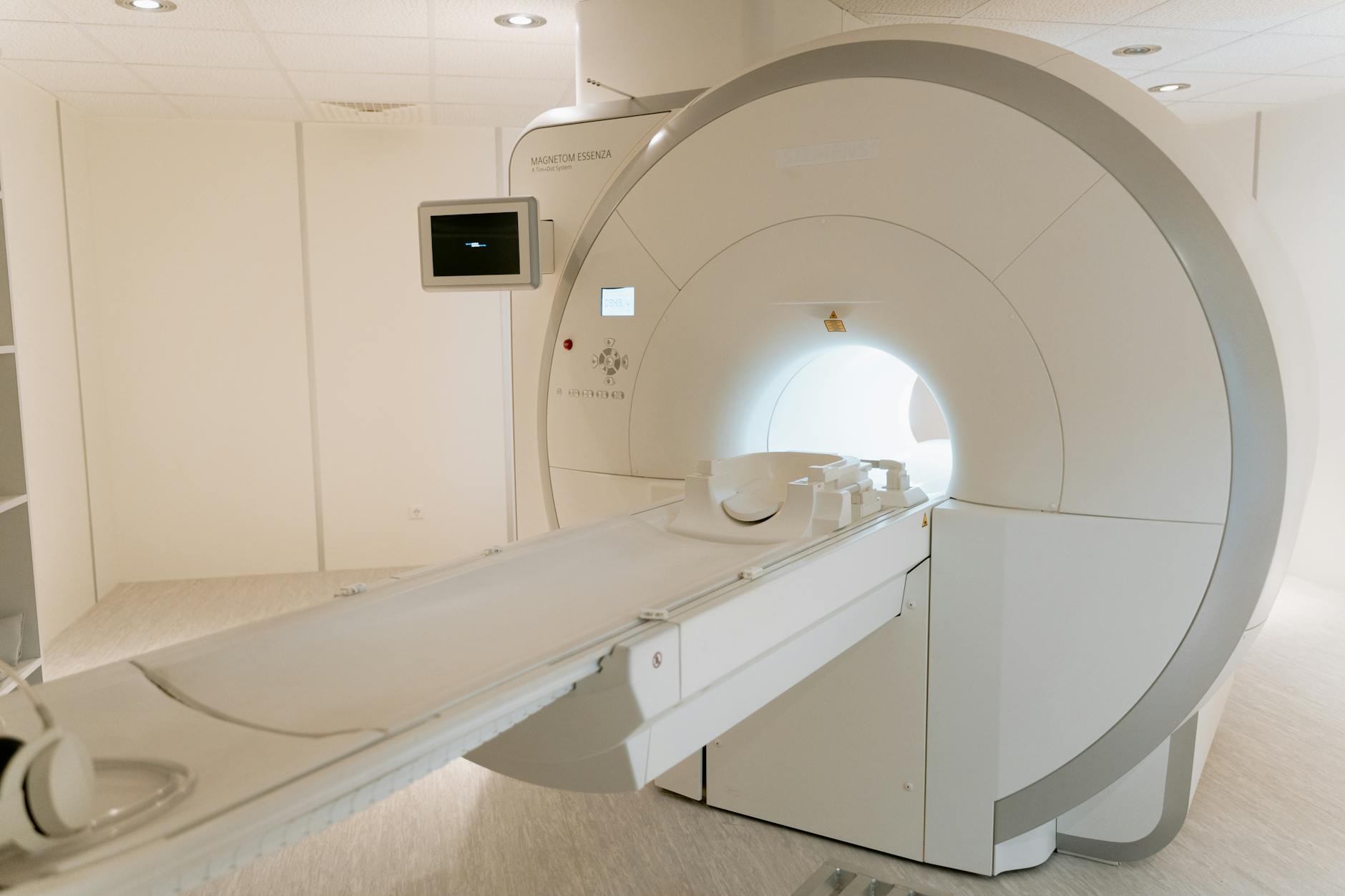
Two innovation centers support the partnership. One focuses on ultra-high-field MR imaging for neurological conditions, exploring the potential of stronger magnetic fields to reveal previously invisible anatomical and functional details. The second center supports clinical integration of whole-body PET/CT and PET/MR, including theranostics and combined anatomical-metabolic imaging for cancer care.
This multimodal approach combines PET’s metabolic sensitivity with the anatomical resolution of MR or CT — something that professionals working with DICOM imaging systems recognize as one of the most significant recent advances in the field.
What This Means in Practice
Dr. Eric Williamson of Mayo Clinic summarized the goal: “Our aim is to make care more precise, less invasive, and more responsive to each patient’s individual needs.” In daily practice, this translates to faster, smarter MR protocols where AI preprocesses data and highlights relevant findings before the radiologist begins reading.
John Kowal of Siemens Healthineers added: “Our collaboration with Mayo Clinic creates significant opportunities to help extend the quantity and quality of patients’ lives.”
Source: DOTmed HealthCare Business News