Pancreatic cancer target delineation starts with a simple rule in this chapter: imaging, motion control, and margin design matter as much as the named technique. The plan only works when biphasic pancreatic-protocol simulation CT, respiratory management, and vessel-aware contouring all point in the same direction.
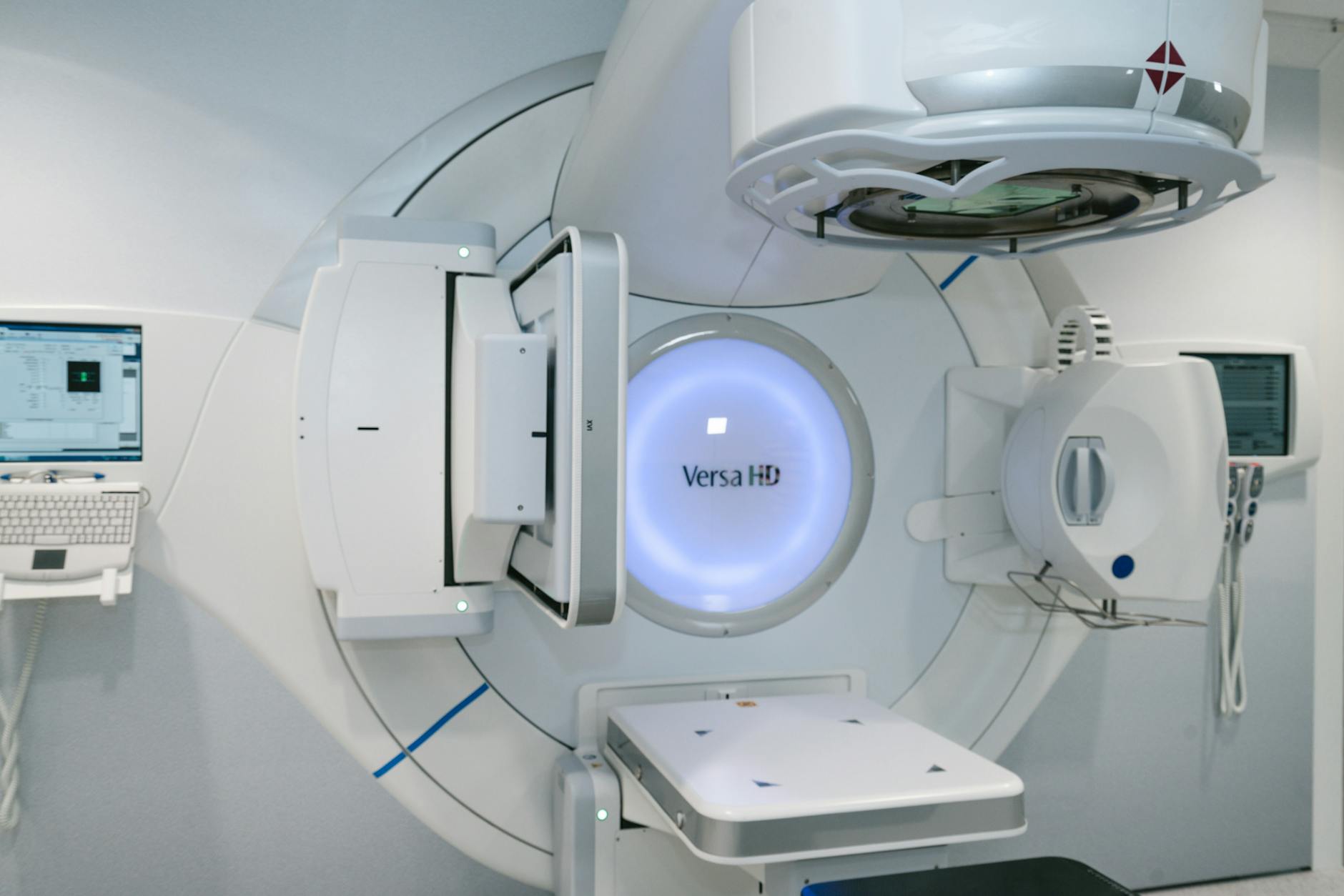
The practical focus here is narrower: when IMRT is enough, when ablative treatment needs SBRT or image guidance, and how stomach, duodenum, and small bowel geometry ultimately control PTV design. For the broader series overview, see the Target Volume Delineation and Field Setup – Complete Clinical Guide.
The contrast with other chapters is useful because it recalibrates how margins and intent shift across disease sites. For another anatomy-driven example, see our article on oropharyngeal carcinoma target delineation.
In this article
Pancreatic cancer target delineation basics
The chapter answers the technique question directly: IMRT is becoming the standard approach for pancreatic adenocarcinoma in neoadjuvant, adjuvant, and definitive treatment. Three-dimensional conformal radiotherapy still has a role in palliation and in some preoperative scenarios, but only when the intended target can be covered without violating normal tissue constraints.
Ablative treatment is handled differently. In the authors’ view, the definitive ablative setting requires SBRT or image-guided techniques. The reason is practical, not theoretical. Pancreatic targets sit immediately beside radiosensitive luminal gastrointestinal organs, so delivering BED10 of at least 100 Gy depends on highly controlled geometry.
Simulation CT is part of that geometry. Intravenous contrast-enhanced pancreatic-protocol CT improves both target and organ-at-risk delineation in every setting, becomes especially useful in surgically altered anatomy, and is described as critical when the dose exceeds 50 Gy in EQD2. The protocol specified in the chapter uses 150 cc of iodinated contrast at 5 cc/s, with image acquisition at 35 seconds for the late arterial phase and 90 seconds for the portal venous phase from the start of the scan.
Motion management, immobilization, and fiducials
If the intent is ablative, motion management is mandatory. The chapter states that it lowers dose to organs at risk while helping maintain target coverage. Gating is preferred, either with deep-inspiratory breath hold or expiratory gating.
An internal target volume approach remains an alternative when patient factors or available technology make gating impractical. The text does not treat it as interchangeable in all contexts. When gating is used, metal fiducials or a metal stent are required.
Immobilization is equally deliberate. Patients are placed in a custom alpha-cradle with arms extended above the head when tolerated. From there, the PTV margin is tied to the motion-management method and should never be less than 0.5 cm. In free breathing without an ITV, the superior-inferior expansion should increase to 1 to 1.5 cm.
Borderline resectable disease in the neoadjuvant setting
For high-risk resectable or borderline resectable disease treated with preoperative intent, the chapter recommends lower doses and therefore less complex technology than in definitive ablative planning. That does not justify smaller thinking. The core task is to cover microscopic spread and radiographically occult extension along the vasculature.
The fractionation schemes explicitly listed are 25 Gy in 5 fractions, 30 Gy in 10 fractions, 36 Gy in 12 fractions, and 50.4 Gy in 28 fractions. In all of them, the GTV contains all gross disease and suspicious nodes, with specific attention to vessel-tracking spread. When the plan uses 4D-CT, ITV contouring follows the GTV rules across all phases.
The CTV is intentionally generous because PDAC is infiltrative. The chapter requires at least a 1 cm uniform expansion around all gross disease, plus coverage of the celiac axis and superior mesenteric artery basins, extra margin along vessels if extension is uncertain, splenic hilum coverage for body and tail lesions, and optional porta hepatis coverage for pancreatic head tumors.
Figure 16.1 condenses the borderline resectable example into one planning snapshot: a 2.9 cm pancreatic head tumor with venous involvement, possible arterial abutment, and a portocaval node, managed with asymmetric margins and inclusion of peripancreatic, CA, SMA, and porta hepatis regions.
Table 16.1. Target volumes in borderline resectable neoadjuvant therapy
The chapter frames preoperative contouring around gross disease, optional ITV use, and mandatory coverage of microscopic extension around the major vessels.
| Target volume | Definition and description |
|---|---|
| GTV | All gross disease on imaging, including the primary tumor, typically hypointense, with particular attention to extension along vessels and all suspicious nodes. |
| Optional ITV | If an ITV strategy is used, apply the GTV contouring rules on all 4D-CT phases. |
| CTV | Because PDAC is infiltrative, the CTV should include at least a 1 cm uniform expansion around all gross disease, coverage of the celiac axis (CA) and superior mesenteric artery (SMA) basins, extra margin along vessels when tumor extension is uncertain, splenic hilum coverage for body and tail lesions, and optional porta hepatis coverage for tumors in the pancreatic head. |
| PTV | The PTV margin depends on the motion-management technique and should be at least 0.5 cm. In free breathing without an ITV, a 1 to 1.5 cm superior-inferior expansion is recommended. |
Source: Target Volume Delineation and Field Setup, 2nd Edition (Table 16.1)
Unresectable disease: ablative versus non-ablative planning
In unresectable disease, the chapter’s preferred endpoint is straightforward: if motion management and image guidance are available, treat with ablative dose, defined here as BED10 ≥ 100 Gy. The fractionation choice should not be driven only by the resource burden of stereotactic planning and delivery. The authors explicitly warn that radiobiologic and dosimetric logic still has to govern the decision.
Because the target is so close to luminal gastrointestinal organs, the ability to reach ablative dose often depends on more than five fractions. The practical recommendation is 75 Gy in 25 fractions for tumors within 1 cm of the OARs, 67.5 Gy in 15 fractions when the tumor is more than 1 cm away, and 50 Gy in 5 fractions only in selected cases with the tumor more than 2 cm from the OARs. If contact between tumor and OARs is extensive enough to make effective ablative coverage unrealistic, the fallback is 50.4 to 56 Gy in 28 fractions or low-dose SBRT with 33 Gy in 5 fractions.
The target hierarchy reflects that escalation. The high-dose CTV is the GTV, or the ITV if an ITV is used, with no extra margin. The microscopic-dose CTV again requires at least a 1 cm expansion, CA and SMA basin coverage, splenic hilum coverage for body and tail disease, extra vessel margin when needed, and optional porta hepatis coverage for pancreatic head tumors. The high-dose PTV is only 0 to 0.5 cm, and then it is trimmed away from overlapping critical OARs with an added safety margin.
Figure 16.2 shows the same principle in definitive treatment: a 3.8 cm pancreatic head tumor treated with 75 Gy in 25 fractions, daily CBCT, and DIBH, using tighter margins, possible over-contouring of adjacent pancreas when supported by imaging, and deliberate exclusion of the nearest critical OAR from the PTV.
Table 16.2. Target volumes for unresectable disease
For unresectable disease, the chapter separates the high-dose target from the microscopic target and explicitly explains when the high-dose PTV must be carved away from luminal gastrointestinal organs.
| Target volume | Definition and description |
|---|---|
| GTV | All gross disease on imaging, including the primary tumor, typically hypointense, with particular attention to extension along vessels and all suspicious nodes. |
| Optional ITV | If an ITV strategy is used, apply the GTV contouring rules on all 4D-CT phases. |
| High-dose CTV | Equivalent to the GTV, or to the ITV when ITV is used, without additional margin. |
| Microscopic-dose CTV | Should include at least a 1 cm uniform expansion on all gross disease to cover peripancreatic nodes, plus the CA and SMA basins, the splenic hilum basin for body and tail tumors, extra margin along vessels when extension is uncertain, and optional porta hepatis coverage for pancreatic head tumors. |
| High-dose PTV | Uniform 0 to 0.5 cm expansion followed by subtraction of overlapping critical OAR with an additional safety margin. For 56 Gy in 28 fractions or 33 Gy in 5 fractions, subtract stomach and small bowel without extra margin. For 50 Gy in 10 fractions, 67.5 Gy in 15 fractions, or 75 Gy in 25 fractions, subtract stomach and small bowel with an additional uniform 0.5 cm margin, extendable to 0.7 cm for a long target-OAR interface. Ablative doses are preferred when feasible. |
| Microscopic-dose PTV | The margin depends on motion management and should be at least 0.5 cm. In free breathing without an ITV, a 1 to 1.5 cm superior-inferior expansion is recommended. |
| Notable OAR volumes | For doses of at least 60 Gy in 25 fractions, or BED equivalent, the stomach-proximal duodenum PRV includes the stomach and duodenum segments 1 and 2 plus 0.3 cm, increasing to 0.5 cm for a long interface. The small bowel PRV includes all other small bowel plus 0.3 cm, also expandable to 0.5 cm for a long interface. |
Source: Target Volume Delineation and Field Setup, 2nd Edition (Table 16.2)
Adjuvant field design after surgery
In the adjuvant setting, the chapter points first to the RTOG 0848 contouring atlas. The value of that atlas is reproducibility. It builds the postoperative field from identifiable regions of interest rather than from vague impressions of where the bed might lie.
The CTV includes the postoperative bed and pancreatojejunostomy, plus peripancreatic, CA, SMA, para-aortic, portal vein basin for pancreatic head tumors, and splenic nodal coverage for body and tail lesions. The stepwise contouring method uses five main ROIs: proximal CA for 1 to 1.5 cm, proximal SMA for 2.5 to 3 cm, the portal vein beginning at the SMV-splenic vein confluence, PJ, and the aorta extending from the most cephalad level among CA, PV, or PJ to the bottom of L2, or as low as L3 when necessary to cover the preoperative GTV.
The next step is geometric expansion. PV, PJ, CA, and SMA receive 1 cm. The aorta receives 2.5 to 3.0 cm to the right, 1.0 cm to the left, 2 to 2.5 cm anteriorly, and 0.2 cm posteriorly. The chapter then asks the clinician to confirm that the tumor bed is actually enclosed by correlating the contour with preoperative imaging, pathology, and any surgical clips placed for that purpose. Figure 16.3 illustrates the result in a patient with pT3N1 pancreatic head adenocarcinoma after pancreaticoduodenectomy, showing ROIs in light green, the CTV in pink, and the PTV in yellow.
Table 16.3. Target volumes in the adjuvant setting
The RTOG 0848 atlas turns the postoperative bed into reproducible regions of interest. That is the chapter’s way of replacing vague field design with a stepwise contouring method.
| Target volume | Definition and description |
|---|---|
| GTV | Not applicable. |
| CTV | Includes the postoperative bed and pancreatojejunostomy, as well as the peripancreatic, CA, SMA, para-aortic, portal vein basin for head tumors, and splenic nodal basins for body and tail lesions. The stepwise RTOG 0848 approach uses the following ROIs: proximal CA for 1 to 1.5 cm; proximal SMA for 2.5 to 3 cm; portal vein beginning at the SMV-splenic vein confluence; PJ; aorta from the most cephalad level of CA, PV, or PJ down to the bottom of L2, and as low as L3 when needed to cover the preoperative GTV; and the tumor bed based on preoperative imaging, pathology, and surgical clips placed specifically for that purpose. Proposed expansions are 1.0 cm around PV, PJ, CA, and SMA, and for the aorta 2.5 to 3.0 cm to the right, 1.0 cm to the left, 2 to 2.5 cm anteriorly, and 0.2 cm posteriorly. The final CTV is the sum of these expansions with confirmation that the tumor bed is encompassed. |
| PTV | The PTV margin depends on motion management and should be at least 0.5 cm. In free breathing without an ITV, a 1 to 1.5 cm superior-inferior expansion is recommended. |
Source: Target Volume Delineation and Field Setup, 2nd Edition (Table 16.3)
Suggested OAR dose constraints
Table 16.4 is not background material. It is the checkpoint that decides whether a plan stays ablative or retreats. The chapter also makes the meaning of its labels explicit: G is a suggested goal when coverage is not compromised, while L is a hard limit that should not be exceeded. For liver, the footnote applies only in the absence of cirrhosis, with lower constraints required otherwise.
Table 16.4. Suggested dose constraints for 3, 5, and 8-10 fractions
The authors scale the constraints by fractionation and keep two labels that matter clinically: G for guideline, meaning a suggested goal when target coverage is not compromised, and L for limit, meaning a ceiling that should not be exceeded. For liver, the footnote applies only when cirrhosis is absent.
| Organ or structure | 3 fractions | 5 fractions | 8-10 fractions |
|---|---|---|---|
| Spinal cord | V15 Gy < 10 cc; Dmax < 18 Gy | V15 Gy < 10 cc; Dmax < 18 Gy | Dmax < 35 Gy |
| Liver* | Dmean < 15 Gy; 700 cc < 16 Gy | Dmean < 15 Gy; 700 cc < 16 Gy | Dmean < 20 Gy; 700 cc < 20 Gy; V20 Gy < 33% (G) |
| Common bile and hepatic ducts | Dmax ≤ 40 Gy | Dmax ≤ 55 Gy | Dmax ≤ 70 Gy |
| Esophagus | Dmax ≤ 25 Gy | Dmax ≤ 30 Gy | Dmax ≤ 45 Gy |
| Large bowel | G Dmax ≤ 25 Gy; L Dmax ≤ 30 Gy; L D5cc ≤ 25 Gy | G Dmax ≤ 30 Gy; L Dmax ≤ 33 Gy; L D5cc ≤ 30 Gy | L Dmax ≤ 45 Gy |
| Stomach and duodenum PRV | D2cc ≤ 23 Gy | D2cc ≤ 28 Gy | D2cc ≤ 40 Gy |
| Stomach and duodenum | G Dmax ≤ 23 Gy; L Dmax ≤ 27 Gy if overlapping a 30 Gy PTV; L D5cc ≤ 21 Gy | G Dmax ≤ 28 Gy; L Dmax ≤ 30 Gy if overlapping a 33 Gy PTV; L D5cc ≤ 25 Gy | L Dmax ≤ 40 Gy |
| Small bowel PRV | G D2cc ≤ 23 Gy; L D2cc ≤ 27 Gy | G D2cc ≤ 28 Gy; L D2cc ≤ 30 Gy | D2cc ≤ 40 Gy |
| Small bowel | G Dmax ≤ 23 Gy; L Dmax ≤ 27 Gy if overlapping a 30 Gy PTV; L D5cc ≤ 21 Gy | G V20 Gy = 100 cc; G Dmax ≤ 28 Gy; L Dmax ≤ 30 Gy if overlapping a 33 Gy PTV; L D5cc ≤ 25 Gy | L Dmax ≤ 40 Gy |
Source: Target Volume Delineation and Field Setup, 2nd Edition (Table 16.4)
Table 16.4. Suggested dose constraints for 12-14, 15, and 25-28 fractions
The same table shows why luminal gastrointestinal anatomy still governs planning even in longer courses. Higher total dose becomes possible, but the final plan remains bounded by stomach, bowel, and biliary tolerance.
| Organ or structure | 12-14 fractions | 15 fractions | 25-28 fractions |
|---|---|---|---|
| Spinal cord | Dmax < 35 Gy | Dmax < 35 Gy | Dmax < 45 Gy |
| Liver* | Dmean < 20 Gy; 700 cc < 20 Gy; V20 Gy < 33% (G) | Dmean < 24 Gy; 700 cc < 24 Gy | Dmean < 28 Gy; 700 cc < 28 Gy |
| Common bile and hepatic ducts | Dmax ≤ 70 Gy | Dmax ≤ 70 Gy | Dmax ≤ 80 Gy |
| Esophagus | Dmax ≤ 45 Gy | Dmax ≤ 50 Gy | Dmax ≤ 65 Gy |
| Large bowel | L Dmax ≤ 45 Gy | L Dmax ≤ 50 Gy | L Dmax ≤ 65 Gy |
| Stomach and duodenum PRV | D2cc ≤ 40 Gy | D2cc ≤ 45 Gy | D2cc ≤ 60 Gy |
| Stomach and duodenum | G Dmax ≤ 40 Gy; L V36 Gy ≤ 40 cc | G Dmax ≤ 45 Gy; L V37.5 Gy ≤ 40 cc | L Dmax ≤ 60 Gy; L V50 Gy ≤ 40 cc |
| Small bowel PRV | D2cc ≤ 40 Gy | D2cc ≤ 45 Gy | D2cc ≤ 60 Gy |
| Small bowel | G Dmax ≤ 40 Gy; L V36 Gy ≤ 40 cc | G Dmax ≤ 45 Gy; L V37.5 Gy ≤ 40 cc | G Dmax ≤ 60 Gy; L V50 Gy ≤ 40 cc |
Source: Target Volume Delineation and Field Setup, 2nd Edition (Table 16.4)
Chapter references
The chapter closes with two references that anchor the clinical strategy. One details ablative radiation techniques for locally advanced pancreatic cancer. The other defines the postoperative clinical target volume for pancreatic head cancer through RTOG consensus.
- Reyngold M, Parikh P, Crane CH. Ablative radiation therapy for locally advanced pancreatic cancer: techniques and results. Radiat Oncol. 2019;14(1):95.
- Goodman KA, Regine WF, Dawson LA, Ben-Josef E, Haustermans K, Bosch WR, et al. Radiation Therapy Oncology Group consensus panel guidelines for the delineation of the clinical target volume in the postoperative treatment of pancreatic head cancer. Int J Radiat Oncol Biol Phys. 2012;83(3):901-8.
For the wider map of how this book adapts margins, imaging, and field design across other disease sites, return to the Target Volume Delineation and Field Setup – Complete Clinical Guide.