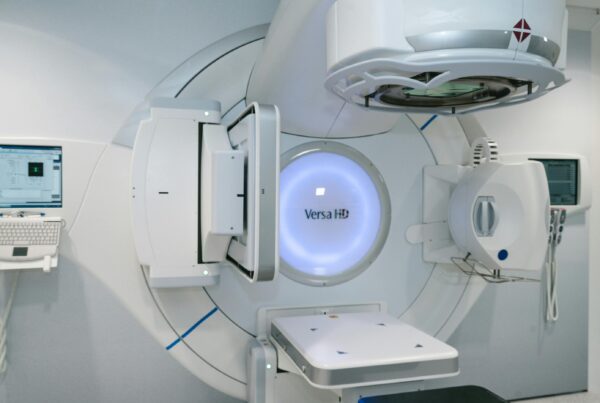
Philips has opened a Class II recall of its Azurion interventional fluoroscopy systems because solid-state drives (SSDs) that are not listed in the device’s technical file may have been fitted to the systems’ internal computers during repair or maintenance work. The nine entries the FDA posted on October 27 add up to 4,304 units in scope, shipped across the United States and to more than 100 other countries, Brazil among them. The systems can stay in clinical use, and drive replacement is expected to start in December.
Brazil’s health regulator, Anvisa, followed on October 29 with Technovigilance Alert 5372 for the same field action, which Philips tracks as 2026-IGT-BST-004. This is the third Philips fluoroscopy correction RT Medical has covered in 2026, and the first in which the FDA points to maintenance rather than product design as the cause.
Nine FDA entries, 4,304 units in scope
Philips Medical Systems Nederland, based in Best, the Netherlands, initiated the action on October 6 by mailing customers an “URGENT Medical Device Correction” letter. The FDA classified it as Class II across nine entries, Z-0292-2027 through Z-0300-2027 (event 99939), all still open, and lists the cause as “equipment maintenance.”
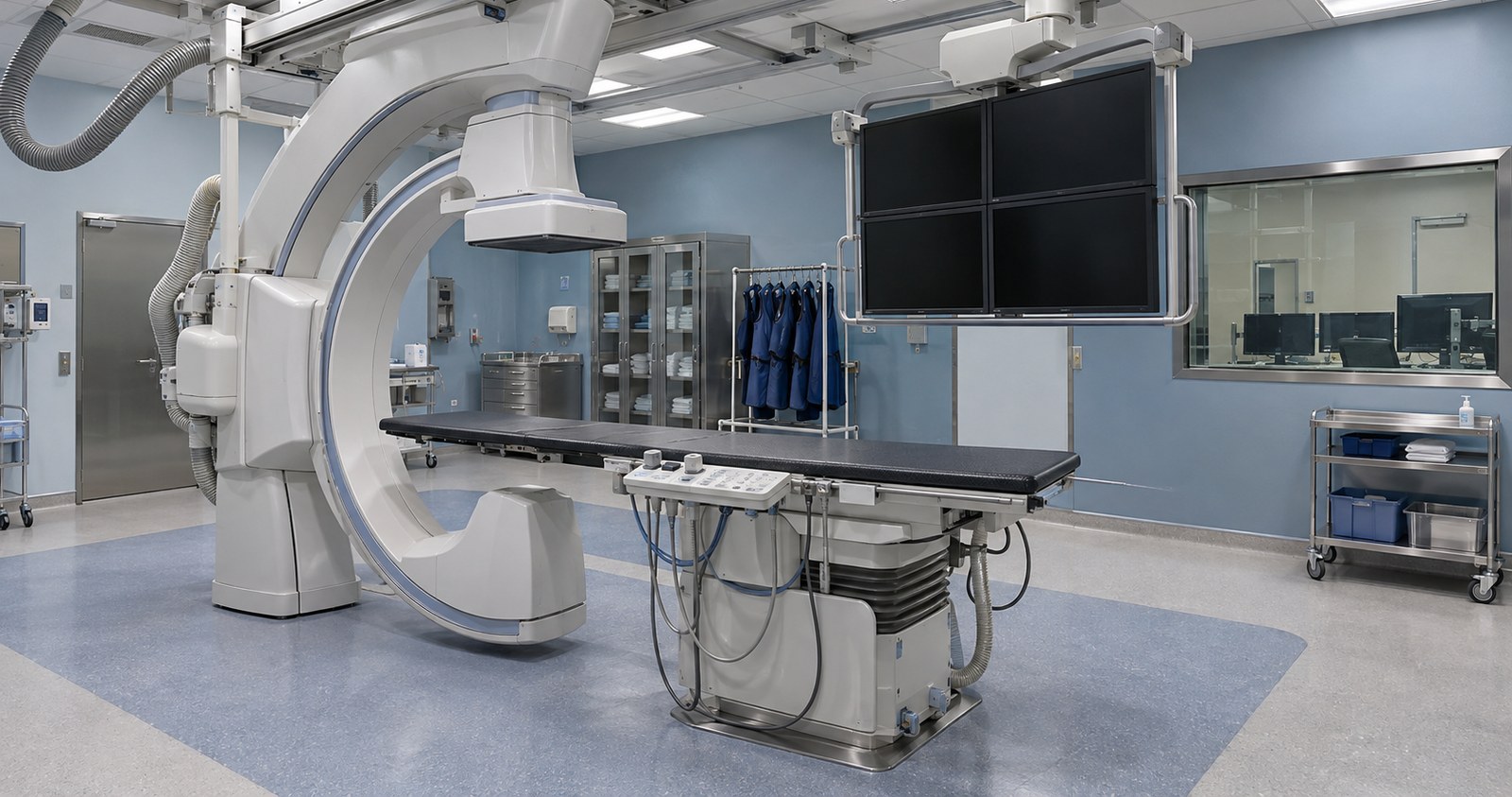
The Azurion 7 M20 accounts for the largest share, 1,896 units. It is followed by the Azurion 7 M12 (602), Azurion 3 M15 (519), Azurion 5 M20 (465), Azurion 7 B20 (457), Azurion 7 B12 (209), Azurion 3 M12 (95), Azurion 5 M12 (60) and a single Azurion S. Radiology Business, which first reported the recall, put the total at “more than 3,000” systems; the nine FDA entries actually sum to 4,304. That figure describes the installed base Philips will inspect, not how many machines carry an off-spec drive, which will only be known once each system has been checked.
“These SSDs may have different performance characteristics, which may include reduced reliability over time,” the FDA entry states. Possible effects include loss of imaging or motorized movement, a blank or black display, and an inability to store new images or open previously acquired ones. In its field safety notice, Philips explains that the symptoms depend on which of the system’s PCs received the drive, rates the likelihood of serious harm as “improbable” and says it has received no injury reports. The patients most exposed, according to the notice, are those undergoing complex or urgent procedures, such as treatment for acute ischemic stroke, acute myocardial ischemia or life-threatening bleeding.
Running the suite until the fix arrives
Philips advises sites to keep using affected systems under the instructions for use, with a fallback for motor failure. If motorized movement is lost, the stand can be repositioned by hand using the handgrips and brake controls on both sides:
- on ceiling-mounted systems, manual longitudinal, transversal and rotational stand movements remain available, although transversal movement exists only on systems with the FlexMove option;
- on floor-mounted systems, only manual rotation of the stand remains;
- the table’s longitudinal position can be adjusted by hand as long as the table is not tilted.
The letter also asks sites to share the notice with every user, keep it with the system and return the signed response form within 30 days. From December, a field service engineer will inspect each system and replace any drive not specified in the medical device file.
Why an off-spec SSD triggers a recall
Under 21 CFR 7.3, a Class II recall covers situations in which use of a product may cause temporary or medically reversible adverse health consequences, or in which the probability of serious harm is remote. That is unrelated to device risk class; Anvisa, for instance, registers the Azurion as a class III device. Nor is this a removal: in the terms of 21 CFR 806 it is a correction, meaning repair, adjustment or inspection without taking the device away from its point of use.
The key concept is the medical device file, required by clause 4.2.3 of ISO 13485 and, since February 2026, by the FDA’s Quality Management System Regulation, which incorporates the standard by reference. That file is where a manufacturer specifies approved components and servicing procedures. A drive from another vendor or model may work on day one and then age differently; never validated in that system, its performance cannot be vouched for, and the repair that installed it becomes a nonconformity. Philips has not said when, or by whom, the drives were fitted.
Storage has been a recurring theme this year. Anvisa had already issued two alerts about hard disk drives in the PCs of Azurion and Allura systems: Alert 5262, on HDD performance degrading with age, especially after about six years of service, and Alert 5281, on HDDs outside the manufacturer’s specification installed during service work. Read together, the three notices suggest that commodity computer storage inside imaging systems now deserves the same scrutiny as tubes and detectors.
What cath lab and IR teams should do now
In Brazil, Alert 5372 lists the Azurion 3 M12, 3 M15, 5 M20 and 7 M20 as affected, distributed in ten states including São Paulo, Minas Gerais, Paraná and Rio Grande do Sul; it does not give a unit count. The action was notified under Anvisa’s RDC 551/2021, which requires registration holders to carry out and report field actions and stresses the shared responsibility of distributors and users. Elsewhere, sites should check the notice issued by their own national regulator.
Several steps follow directly from the notice: match serial numbers against the customer letter, rehearse the manual movements before they are needed, and add a store-and-reopen test of one series to the daily start-up check. Because one risk is losing access to images held on the system, every series should be pushed to PACS right after acquisition, a point covered in the RT Medical piece on PACS integration, IHE profiles and disaster recovery. Downtime plans for stroke and STEMI cases, with a backup room or a defined transfer pathway, deserve a review, and sites should ask the field engineer to document every part replaced.
Three Philips fluoroscopy corrections in 2026, three causes
In March, the FDA posted 22 notices on the wired X-ray foot switch of Azurion and Allura systems, about 21,000 units worldwide, covered in the report on the recall of 21,000 Azurion and Allura systems. In May, it classified a correction of Integris-Allura fluoroscopes whose degassing hose could leak oil in the tube cooling unit. Both were attributed to design or component selection. This time the defect arrived with a part swapped in the field. The platform, which also gained tools such as SmartIQ for coronary imaging, remains in service; what is at stake is spare-parts control.
Gaps remain. The FDA entries are open and the cause may be revised before termination, and the December start is a company estimate that will vary by country. Until the swap, manufacturer and regulators agree: keep using the system as the notice describes and report any failure.
Source: Radiology Business — More than 3,000 Philips fluoroscopy systems affected by FDA recall; FDA — recall entry Z-0299-2027 (Azurion 7 M20)