
The largest hospital network in the United States has decided to invest where radiology hurts most: in training people. HCA Healthcare has reached a deal to acquire the College of Health Care Professions (CHCP) and its parent company, a move that places one of the country’s leading medical-imaging training centers under its umbrella.
What HCA is buying
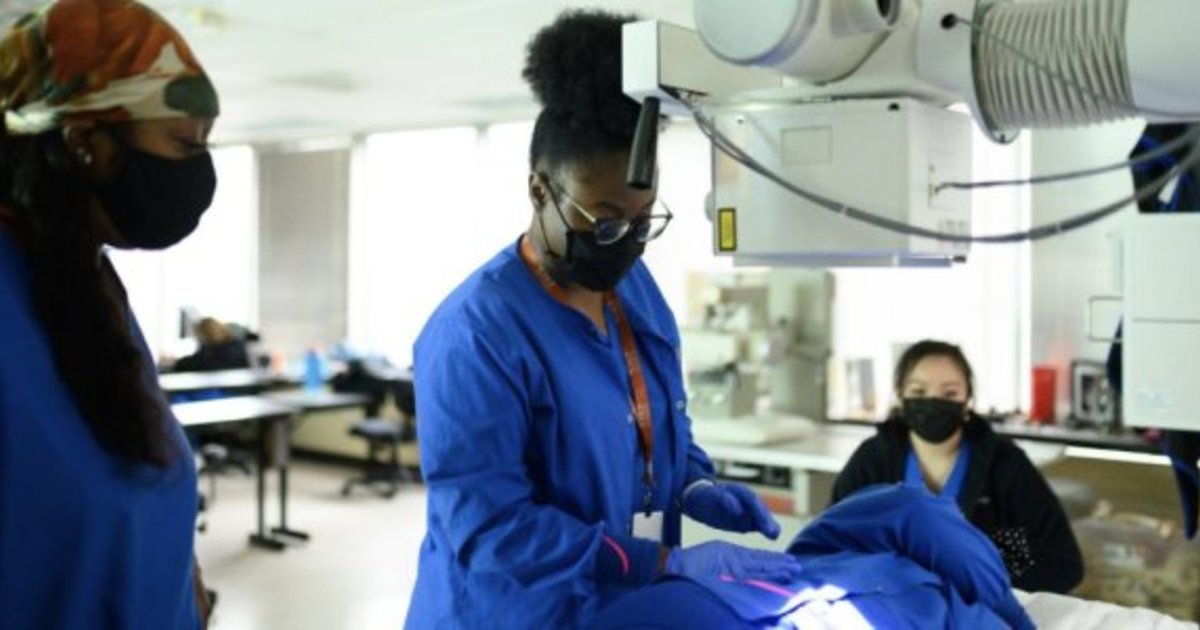
Headquartered in Nashville, Tennessee, HCA operates 189 hospitals and roughly 2,600 ambulatory sites of care. The transaction value was not disclosed, and the deal still depends on regulatory approval. Founded in 1988, CHCP educates about 8,000 students a year across more than 20 accredited programs — including radiologic technology, sonography, surgical technology, and medical coding and billing — spread over ten campuses. Since opening, the institution has served more than 52,000 students.
The most relevant asset for the imaging sector, however, is the Medical Technology Management Institute (MTMI). Founded in 1989 and based in Wauwatosa, Wisconsin, MTMI offers continuing education aimed at radiologic technologists, mammographers, sonographers, medical physicists, and physicians. Its numbers are striking: 180,000 students and 1.76 million credits awarded since its start. CHCP took ownership of MTMI in 2019, making it the college’s continuing-education division.
Why training people became strategy
“The College of Health Care Professions has built a strong legacy of preparing skilled and compassionate healthcare professionals,” said Sam Hazen, CEO of HCA. “Together, we are investing in the future of healthcare and strengthening the talent pipeline that will serve patients and communities.” The line captures the deal’s logic: rather than merely competing for ready-made professionals in a scarce market, HCA will now train them.
This is a direct response to a problem haunting radiology worldwide — the chronic shortage of qualified labor. It is no American exclusive. Anyone tracking the topic knows the size of the hole the shortage creates, as we detailed in covering the NHS’s billion-dollar spending to cover its radiologist deficit. Training technologists and medical physicists is as strategic as buying the newest CT scanner.
The consolidation reshaping the sector
The purchase also fits a broader consolidation wave in healthcare and imaging. Large players have been absorbing companies, clinics, and now educational institutions to integrate the chain vertically. It’s the same logic seen in recent billion-dollar deals, such as Jardine’s acquisition of I-Med Radiology. Controlling training means controlling part of the future supply of professionals — a competitive advantage few rivals can replicate.
This isn’t HCA’s first foray into education. In 2020, the network acquired a majority stake in Galen College of Nursing, one of the largest nursing educators in the U.S., and has since opened 20 new campuses, reaching 25. In 2023, HCA and CHCP had already created a 12-week medical-assistant program in Texas that trained more than 100 staff members in two years. Eric Bing will remain CHCP’s chancellor and CEO.
The invisible bottleneck: the technologist
When people talk about radiology shortages, the conversation usually centers on the radiologist physician. But there is an equally critical, less visible bottleneck: the technologist who operates the equipment, the sonographer who runs the exam, the medical physicist who ensures safety and quality. Without that foundation, no cutting-edge scanner delivers results. Imaging volumes grow year after year, driven by an aging population and expanding indications, while the supply of technical professionals fails to keep pace.
This is precisely the link that institutions like MTMI strengthen. Continuing education for mammographers and sonographers isn’t a luxury: it’s what keeps services accredited, reduces repeat exams from technique errors, and underpins radiation safety. By buying that capacity, HCA secures a steady flow of professionals already aligned with its protocols.
What changes for practice and for Latin America
For the imaging professional, the message is that the technical career is being taken seriously by those who set the market’s pace. When a hospital giant buys a school, it signals that the bottleneck isn’t technology but people trained to operate it. That tends to raise certification standards and elevate continuing education — something that carries even more weight in a scenario where artificial intelligence is redefining roles, as we discussed in analyzing whether AI still scares off those who want to become radiologists.
In Latin America, where the training of radiologic technologists and the continuing education of medical physicists face challenges of supply and standardization, the American move serves as a mirror. Investing in technical schools, partnerships between hospitals and educational institutions, and reskilling tracks can be as decisive for service sustainability as acquiring new equipment.
Next steps
The transaction still needs to clear regulators and meet closing conditions. If confirmed, it cements an increasingly accepted thesis: in a sector pressured by rising demand and a limited supply of specialists, whoever controls the training funnel gains a structural advantage. The imaging market should watch closely whether other large groups follow the same path of integrating education vertically.
Source: Radiology Business