
A degree built only for MRI, and why that is new
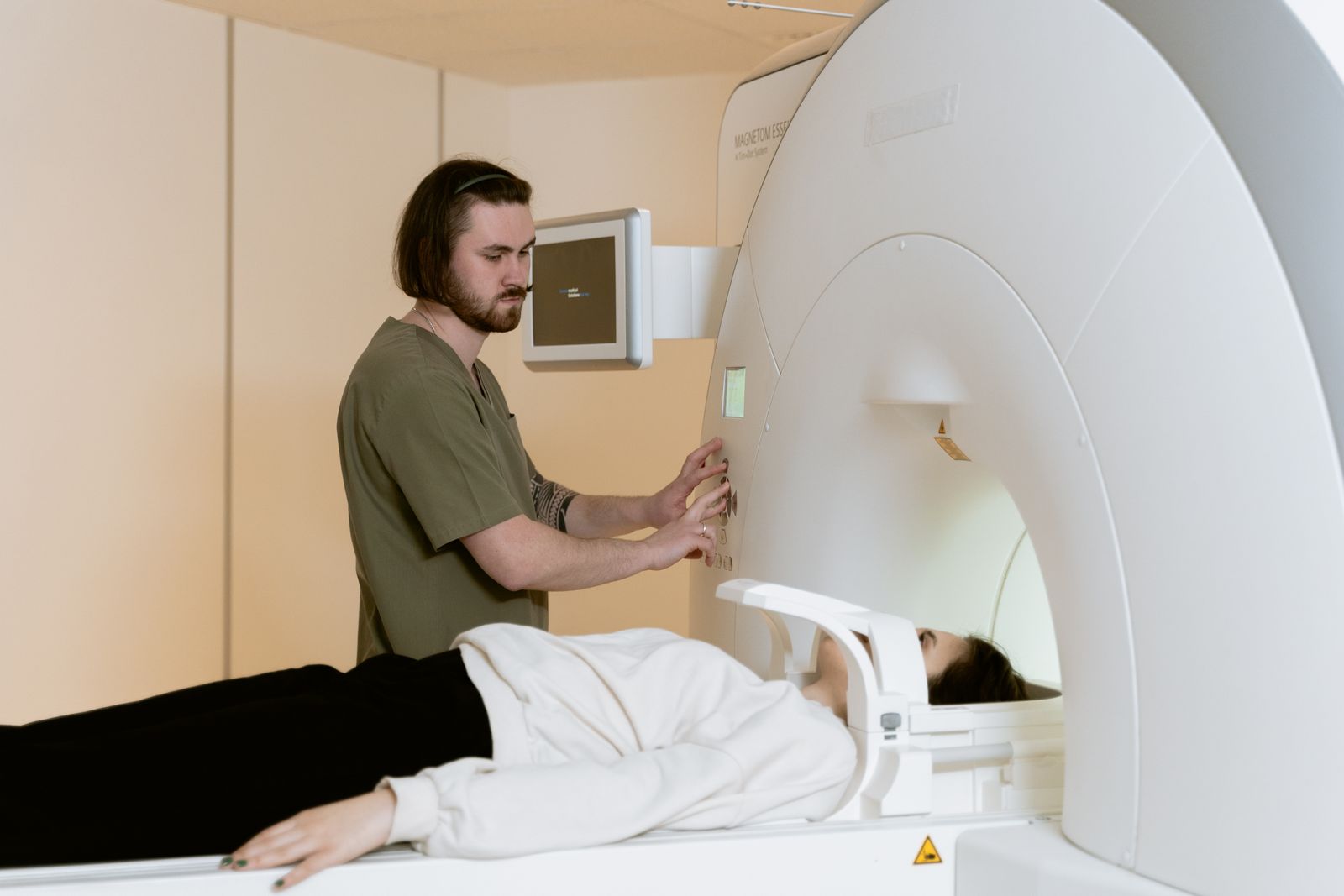
MRI technologist vacancies in the United States reached 17.4% in 2025, an all-time high across more than two decades of tracking by the American Society of Radiologic Technologists. On 15 September, DeVry University and Pulse Radiology Institute responded with a new associate degree specialization in MRI Technology, a credential aimed at producing magnetic resonance technologists directly rather than recruiting them out of general radiography.
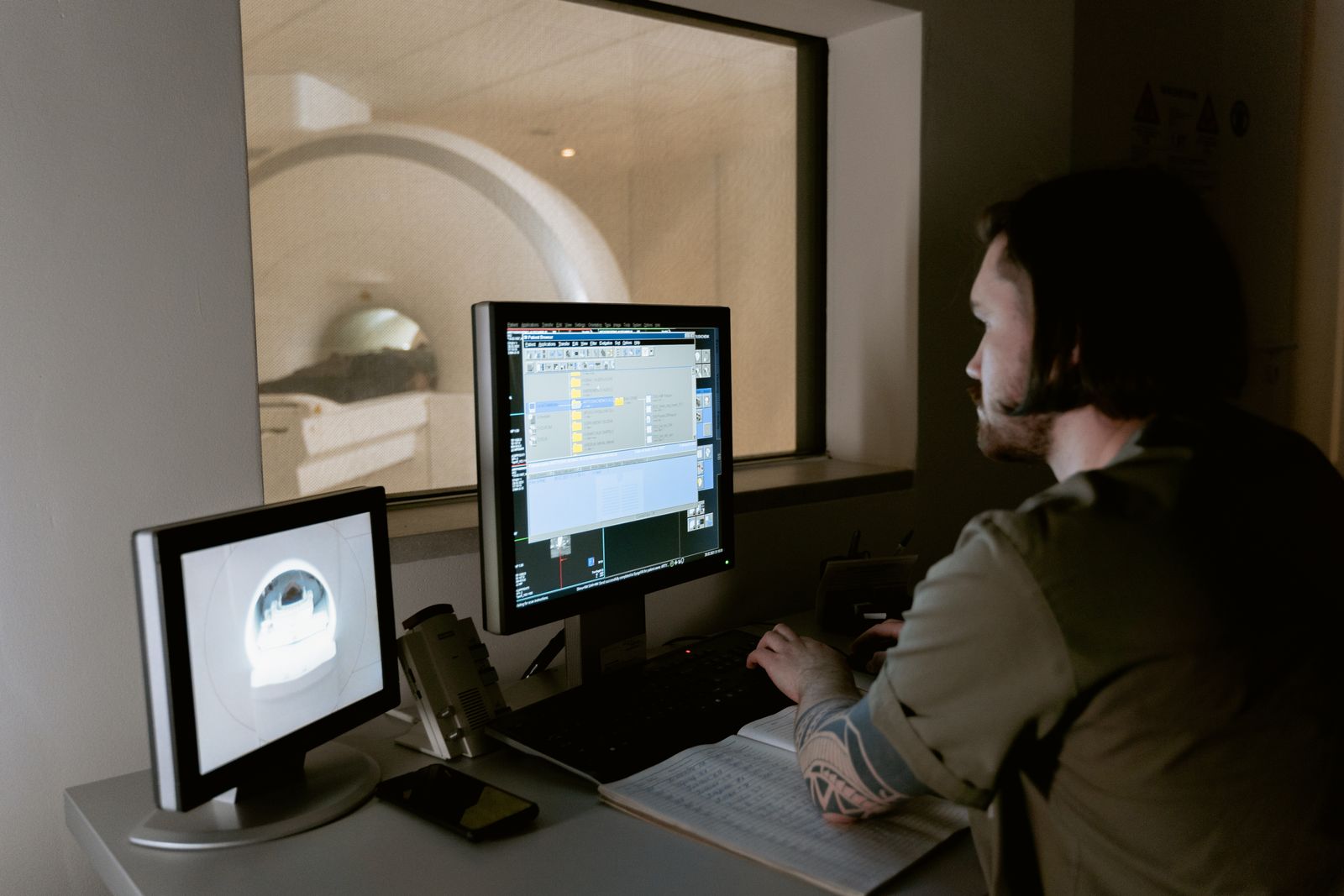
The framing matters more than the press release. Buying a 3 T magnet is a capital decision. Staffing it is a labour market decision, and that is the one currently failing. A scanner without a technologist produces no studies, clears no backlog and returns no capital. The capacity constraint in MRI has quietly moved from hardware to headcount.
The structure of the programme
DeVry supplies the academic frame; Pulse Radiology Institute, an Edcetera company, supplies the clinical training model and its national network of partner imaging sites. The DeVry specialization is still subject to regulatory, institutional and certification approvals, with accreditation pending. What already exists at PRI shows the shape of the thing: an Associate of Science with an MRI specialization, 18 months long, 76 credits split into 34 technical credits across 12 courses, 20 general education credits across five courses and 22 clinical credits.
Didactic work runs online, including a virtual scanning lab built on ScanLab simulation software. Clinical training requires at least 1,000 supervised hours with licensed MRI technologist mentors at approved facilities within 100 miles of the student, and enrolment only happens once that placement is secured. PRI holds full academic licensure from Florida’s Commission for Independent Education and states that its curriculum meets ARMRIT educational standards. Outcomes published with a 30 June 2025 cutoff are a 95% registry exam pass rate, 92% retention and 74% on-time graduation.
“The demand for skilled MRI technologists is creating both a workforce challenge and meaningful career opportunities,” said Jason Horne, chief strategy and transformation officer at DeVry University. Edcetera chief executive Nader Qaimari described the deal as an extension of the company’s work in licensed career pathways.
ARRT and ARMRIT are not the same door
There are two credentialing routes for an American MRI technologist, and they encode different assumptions. The ARRT postprimary pathway requires an existing ARRT certification in radiography, nuclear medicine technology, radiation therapy or sonography before MRI can be added; its primary pathway requires an associate degree plus completion of a recognised educational programme. ARMRIT, by contrast, is an MRI-only registry. Its candidate handbook lists as the first eligibility route a graduate of an ARMRIT-accredited MRI programme, within three years of graduation, carrying at least 1,000 documented hours of MRI clinical training.
The ARMRIT examination runs 240 questions in three 80-question sections over four hours, with a 70% pass mark in each section. Section one covers MR physics, tissue characteristics and electromagnetism. Section two covers clinical applications: pulse sequences, imaging parameters, spatial localisation, image quality, contrast agents, magnet types, coils and peripheral equipment. Section three pairs bioeffects, safety and patient care with cross-sectional anatomy read off MR images. Renewal is triennial and demands 24 continuing education credits, eight per year, strictly on MRI subject matter. It is a narrower and faster credential than ARRT, and that narrowness is the entire point.
The safety syllabus general radiography does not carry
The technical case for a dedicated degree sits in safety. Radiography and CT are governed by ionising dose. MRI has no ionising radiation and an entirely different hazard set. The ACR Manual on MR Safety divides a site into four zones: Zone I is freely accessible to the public, Zone II is the interface where patients are screened, Zone III is the controlled access area secured by reliable locks and bounded in part by the 9-gauss line that extends beyond the scanner room, and Zone IV is the magnet room itself, defined by a definite and potentially lethal projectile risk.
The manual also stratifies people. MR Personnel are classified as Level 1 or Level 2, with Level 2 supervising Level 1 on safety matters, and anyone who has not completed the formal MR safety education defined by the site’s MR Medical Director within the previous 12 months counts as non-MR Personnel, radiologists and technologists from other modalities included. Annual safety training is recommended for everyone, the medical director included, alongside the defined roles of MR Medical Director, MR Safety Officer and MR Safety Expert. Add implant and device labelling as MR Safe, MR Conditional or MR Unsafe, the acoustic noise and peripheral nerve stimulation produced by gradient switching, tighter SAR limits for patients with MR Conditional devices, and quench and cryogen venting procedures. It is a body of knowledge that does not fit as an elective, as the aftermath of the Long Island MRI accident and the state responses to it made painfully clear.
What the workforce data actually says
The ASRT survey was emailed to 18,419 department managers in March 2025 and closed in May with 475 responses, a 2.6% response rate and a margin of error of 4.4 percentage points at 95% confidence. Within it, MRI’s 17.4% vacancy rate is a record: the same series showed 2.5% in 2011 and 8.7% in both 2019 and 2021. CT posted the highest rate of any discipline at 19.4%, followed by MRI and cardiovascular interventional technology at 17.4%, bone densitometry at 16.3%, radiography at 15.6%, nuclear medicine at 12.6%, sonography at 12.4% and mammography at 11.4%. Mean budgeted MRI positions per department also hit a record 6.0, up from 1.7 in 2003, which is the real story: demand for scanning grew faster than the pipeline of people.
Geography splits the picture. The Mid-Atlantic region reported an overall vacancy rate of 24.4% and the Mountain region 21.6%, against 11.3% in East North Central and 11.1% in the Pacific region, echoing the point that the radiologist shortage is regional rather than national. Federal data points the same way: the Bureau of Labor Statistics counts 43,900 MRI technologist jobs, projects 8% growth through 2035 against 3% for all occupations, and reports a median wage of $95,480 with an associate degree as typical entry-level education.
Caveats, and what to watch
Several things are unsettled. The DeVry specialization is an announcement of intent, not a graduating cohort, and accreditation remains pending. The 95%, 92% and 74% figures are self-reported by PRI and describe the existing programme rather than the joint offering. The ASRT survey, with a 2.6% response rate and a 4.4-point margin, is a trend instrument, not a precision one.
There is also a structural ceiling no curriculum fixes on its own. An 18-month programme attacks the entry bottleneck, but 1,000 clinical hours still depend on sites willing to host and supervise students, which are precisely the sites running short-staffed. In that sense the move rhymes with HCA’s acquisition of a medical imaging training institute: organisations that depend on technologists are buying or building their own pipeline instead of waiting for the market to supply one. The short-term alternative has been squeezing more throughput from existing staff, the route taken when AI cut MRI wait times by more than half. Watch whether accreditation lands, whether clinical placement capacity keeps pace with enrolment, and whether the next ASRT survey finally bends the vacancy curve.
Source: AuntMinnie