
Radiotherapy equipment technical specifications: this article turns the document’s contents into a practical navigation map, listing chapters, section numbers, and starting pages from the extracted text (pages 5–7).
For the complete guide (and the broader series context), see Radiotherapy equipment: technical specifications guide.
The goal here is straightforward: use the table-of-contents numbering (chapters and items like 3.6, 4.2, 5.3) to make navigation fast. The excerpt provides titles and starting pages; that’s enough to pinpoint where each topic begins in the full document.
Contents: radiotherapy equipment technical specifications, chapter by chapter
The extracted pages show a clear split: front matter first (acknowledgements, abbreviations, measurements, executive summary), followed by six chapters that run from an introduction through emerging technologies and techniques.
Front matter
The contents list four items before the numbered chapters, using Roman numerals for pagination.
| Section | Page (contents) |
|---|---|
| Acknowledgements | ix |
| Abbreviations and acronyms | x |
| Measurements | xii |
| Executive summary | xiii |
Even from the headings alone, the ordering is deliberate: abbreviations and measurements appear before the executive summary. As a structure choice, it signals an emphasis on shared terminology and measurement conventions before the high-level overview.
Chapters at a glance
Using the first listed subsection of each chapter as a start anchor, this quick table shows where each major block begins in the contents excerpt.
| Chapter | First listed item | Start page |
|---|---|---|
| Chapter 1 | 1.1 Background | 2 |
| Chapter 2 | 2.1 Introduction | 6 |
| Chapter 3 | 3.1 Description of EBRT | 10 |
| Chapter 4 | 4.1 Description of brachytherapy | 52 |
| Chapter 5 | 5.1 Project management and implementation | 66 |
| Chapter 6 | 6.1 Introduction | 76 |
This “at a glance” list is intentionally simple. The detailed section-by-section tables later in this article are better when you want a precise subsection entry point (for example, jumping straight to 3.10 or 4.5).
Chapter 1: Introduction
Chapter 1 frames the publication in four subsections. In the contents excerpt, three of them start on page 2, and the final one starts on page 3.
| Section | Start page |
|---|---|
| 1.1 Background | 2 |
| 1.2 Purpose of the publication | 2 |
| 1.3 Scope of the publication | 2 |
| 1.4 Whom this publication is intended for | 3 |
From a pure navigation perspective, the contents make Chapter 1 easy to locate and quick to scan: the sequence is background, purpose, scope, then intended readership.
The starting-page pattern also hints at pacing. Sections 1.1, 1.2, and 1.3 share the same starting page (2), which suggests those three topics sit very close together in the text. The next chapter is listed from page 6 onward.
Chapter 2: Overview of radiotherapy equipment
In the excerpt, Chapter 2 begins on page 6 and lists three subsections: an introduction, a section titled “packages of radiotherapy equipment”, and a closing section that summarizes what comes next.
| Section | Start page |
|---|---|
| 2.1 Introduction | 6 |
| 2.2 Packages of radiotherapy equipment | 6 |
| 2.3 Summary of next chapters | 8 |
The placement is notable: the overview sits immediately before the technical-specification chapters. That layout implies a bridge chapter that sets up the equipment landscape and the “packages” concept before the item-by-item specification sections.
The starting pages reinforce that impression. Sections 2.1 and 2.2 share page 6, so the chapter likely moves from the brief introduction straight into the “packages” framing. The next entry appears at page 8, placing the “summary of next chapters” early in the flow and suggesting a compact orientation chapter before the longer technical blocks.
Chapter 3: Technical specifications for external beam radiotherapy (EBRT) equipment
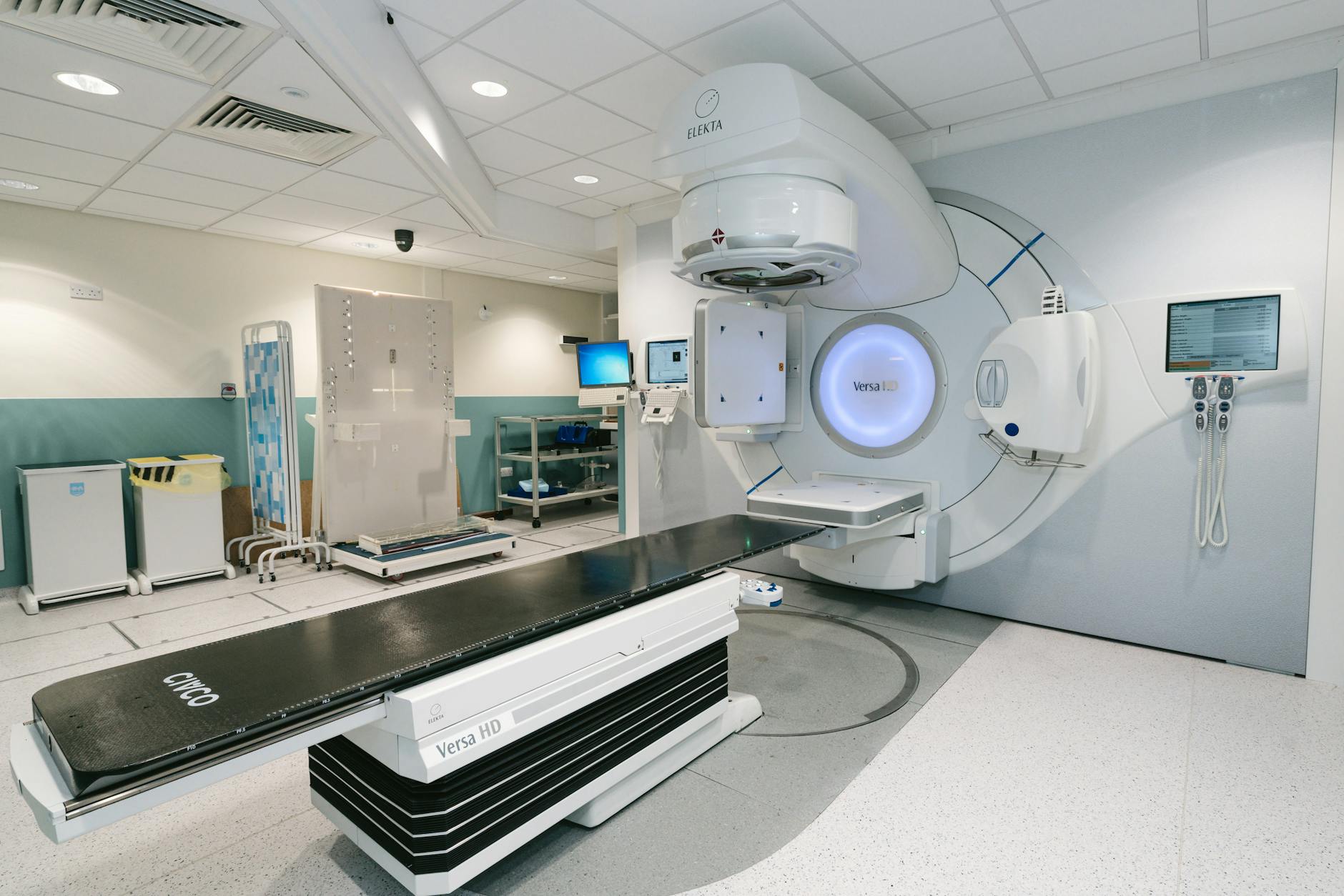
Chapter 3 is the longest block shown in the extracted contents. It starts with a description of EBRT and then lists a sequence of sections dedicated to technical specifications across multiple equipment types and associated systems.
| Section | Start page |
|---|---|
| 3.1 Description of EBRT | 10 |
| 3.2 Technical specifications for LINACs | 11 |
| 3.3 Technical specifications for cobalt-60 teletherapy units | 19 |
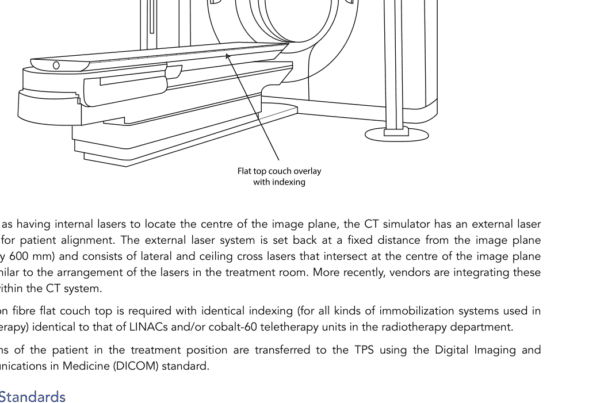
| 3.4 Technical specifications for CT simulators | 22 |
| 3.5 Technical specifications for conventional simulators | 26 |
| 3.6 Technical specifications for external beam treatment planning systems (TPS) | 29 |
| 3.7 Technical specifications for oncology information systems (OIS), including a record and verify system (RVS) | 31 |
| 3.8 Technical specifications for patient immobilization equipment | 32 |
| 3.9 Technical specifications for mould room equipment | 34 |
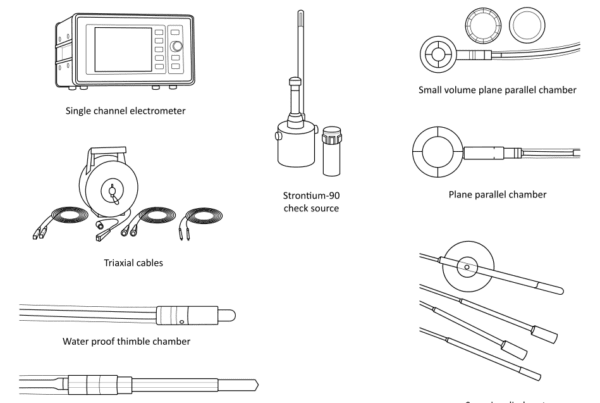
| 3.10 Technical specifications for dosimetry and quality control equipment | 36 |
| 3.11 Technical specifications for radiation safety equipment | 44 |
| 3.12 Technical specifications for orthovoltage X-ray units | 46 |
In the extracted text, section 3.8 appears twice in the contents list; it is kept once here, with the same numbering and starting page.
At a scope level, the contents make a key point: the EBRT chapter is not limited to treatment units. It also includes simulators, planning systems (TPS), information systems (OIS/RVS), immobilization, mould room equipment, dosimetry and quality control, and radiation safety.
The order of headings provides a readable “thread” through the chapter: description (3.1), treatment units (3.2–3.3), simulation and preparation (3.4–3.5), software systems (3.6–3.7), then supporting, quality, and safety topics (3.8–3.12).
If you want an indirect signal of where the text likely allocates more space, the contents are surprisingly helpful. Section 3.2 starts at page 11 and the next section begins at 19; section 3.10 starts at 36 and the next entry is at 44. Based purely on the distance between starting pages, those blocks stand out as the largest in this chapter.
Conversely, some entries have minimal separation (for example, 3.7 at 31 followed by 3.8 at 32). The contents do not give exact section lengths, but they do give a precise “where it starts” anchor for each topic.
Approximate page ranges (from the contents)
The contents only provide starting pages, so the ranges below are an approximation: each topic is mapped from its start page up to the page before the next topic begins. For the last entry in Chapter 3, the next chapter’s start (page 52) is used as the next anchor.
| Section | Start | Next start | Estimated range |
|---|---|---|---|
| 3.1 | 10 | 11 | 10 |
| 3.2 | 11 | 19 | 11–18 |
| 3.3 | 19 | 22 | 19–21 |
| 3.4 | 22 | 26 | 22–25 |
| 3.5 | 26 | 29 | 26–28 |
| 3.6 | 29 | 31 | 29–30 |
| 3.7 | 31 | 32 | 31 |
| 3.8 | 32 | 34 | 32–33 |
| 3.9 | 34 | 36 | 34–35 |
| 3.10 | 36 | 44 | 36–43 |
| 3.11 | 44 | 46 | 44–45 |
| 3.12 | 46 | 52 (Ch. 4) | 46–51 |
Related reading on this site: Radiotherapy Equipment Technical Specs for EBRT.
Chapter 4: Technical specifications for brachytherapy equipment
Chapter 4 collects the brachytherapy-related section set. In the excerpt, it begins on page 52 with a description of brachytherapy and then lists technical-specification sections for several items and systems.
| Section | Start page |
|---|---|
| 4.1 Description of brachytherapy | 52 |
| 4.2 Technical specification for HDR brachytherapy afterloaders, including accessories | 52 |
| 4.3 Technical specification for C-arm fluoroscopic X-ray units | 57 |
| 4.4 Technical specification for ultrasound imaging systems | 58 |
| 4.5 Technical specification for brachytherapy TPS | 59 |
| 4.6 Technical specifications for dosimetry and quality control equipment | 60 |
| 4.7 Technical specifications for radiation safety equipment | 62 |
The contents suggest a compact internal structure: description (4.1), a central equipment item with accessories (4.2), then imaging and planning systems (4.3–4.5), and finally supporting and safety equipment (4.6–4.7).
A small but useful detail: 4.1 and 4.2 share the same start page (52). That indicates the transition from the general description into the main specification block happens right at the beginning of the chapter.
Approximate page ranges (from the contents)
Using Chapter 5’s start (page 66) as the next anchor, the ranges below provide a rough navigation guide.
| Section | Start | Next start | Estimated range |
|---|---|---|---|
| 4.1 | 52 | 52 | 52 |
| 4.2 | 52 | 57 | 52–56 |
| 4.3 | 57 | 58 | 57 |
| 4.4 | 58 | 59 | 58 |
| 4.5 | 59 | 60 | 59 |
| 4.6 | 60 | 62 | 60–61 |
| 4.7 | 62 | 66 (Ch. 5) | 62–65 |
Chapter 5: Establishing a radiotherapy service
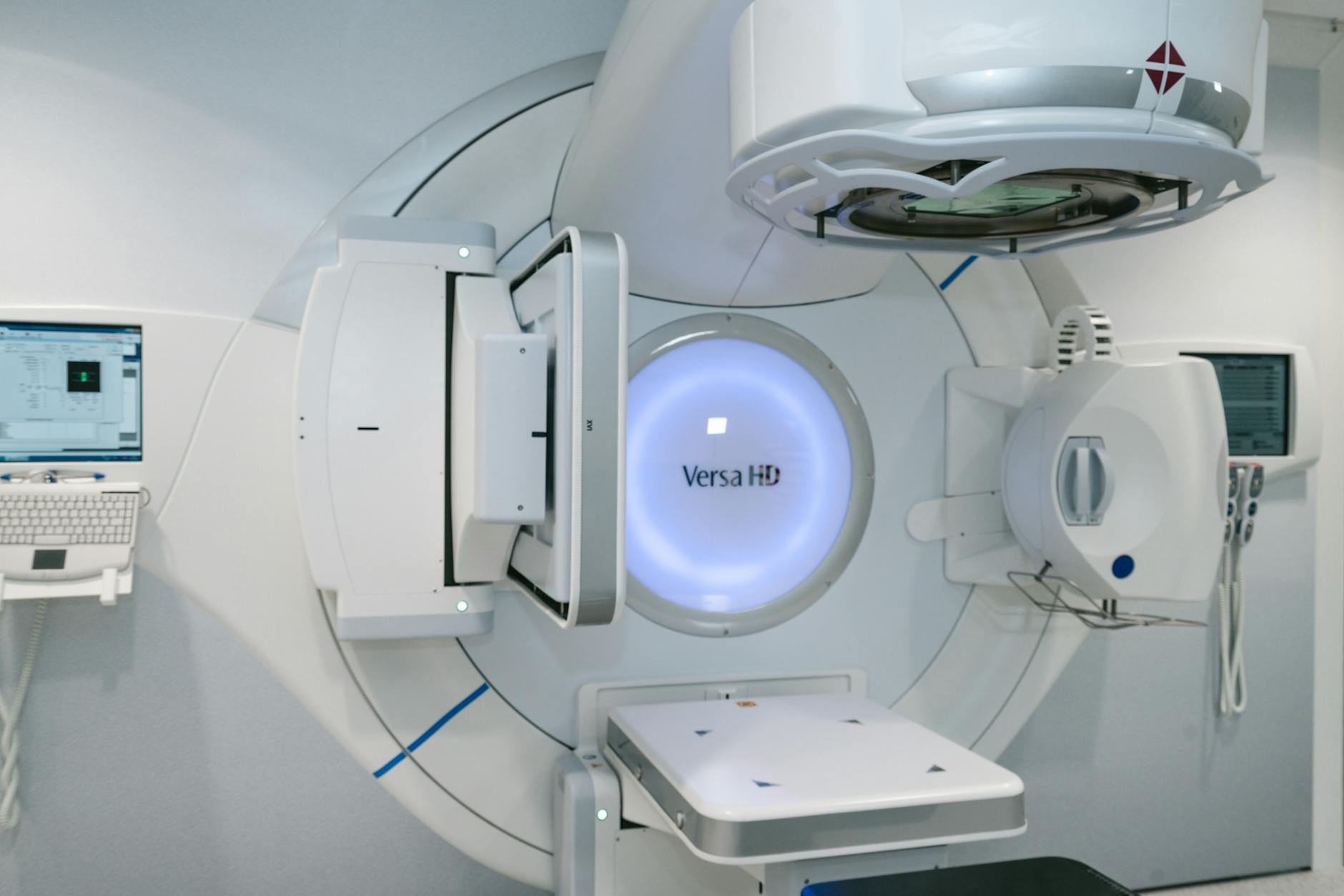
After the modality-specific technical-specification chapters, the contents point to a chapter focused on service establishment: project management, procurement and lifecycle, safety and quality management, and training of health professionals.
| Section | Start page |
|---|---|
| 5.1 Project management and implementation | 66 |
| 5.2 Equipment procurement, maintenance and lifecycle | 68 |
| 5.3 Patient safety and quality management | 72 |
| 5.4 Education and training of radiotherapy health professionals | 74 |
Based on starting pages alone (66, 68, 72, 74), the chapter reads like four clearly bounded blocks. Chapter 6 is listed from page 76, which also suggests a relatively compact chapter in terms of page span.
In the overall outline, Chapter 5 sits as the transition point: after the equipment-and-system specification chapters, the contents shift to how a radiotherapy service is established and managed, before moving into the “emerging” review chapter.
Chapter 6: Emerging technology and techniques in radiotherapy
The contents close with a chapter dedicated to emerging technologies and techniques, listing subsections from page 76 onward.
| Section | Start page |
|---|---|
| 6.1 Introduction | 76 |
| 6.2 Electronic brachytherapy | 76 |
| 6.3 Image guided and adaptive radiotherapy | 76 |
| 6.4 Hypofractionated radiotherapy and stereotactic radiotherapy | 77 |
| 6.5 Specialized linear accelerators | 78 |
| 6.6 Proton and light ion therapy | 78 |
The chapter is laid out as a quick review in labeled blocks: an introduction (6.1) followed by five specific topics (6.2–6.6), each with a direct technical heading.
Three entries (6.1, 6.2, 6.3) start on the same page (76), and 6.5 and 6.6 share page 78. At the contents level, that indicates a sequence of short items or very closely placed subsections, designed for fast scanning within the chapter.
For the full guide (and the language-specific landing page), return to Radiotherapy equipment: technical specifications guide. Use it as your entry point.