

CPT Code Marks Milestone for 3D Breast Ultrasound
QT Imaging Holdings has received approval from the American Medical Association’s CPT Editorial Panel for a Category III CPT code covering its 3D quantitative transmission volumetric ultrasound tomography of the breast. The new code, X579T, is scheduled for release July 1, 2026, and will take effect January 1, 2027. This represents a significant step toward reimbursement and broader clinical adoption of this innovative technology.
What Are Category III CPT Codes?
Category III CPT codes are designed to track emerging technologies and services, allowing for standardized reporting and data collection. While they do not guarantee immediate reimbursement, they are often viewed as an essential step toward broader coverage and payment discussions with public and private payers. For QT Imaging, this code represents validation of both the technology and its clinical foundation.
As Dr. Raluca Dinu, CEO of QT Imaging, explained: “Approval of our first CPT code is a meaningful validation of both the technology and its clinical foundation, and significantly enhances our commercial strategy, in particular, to prospective hospital accounts.”
The Breast Acoustic CT Technology
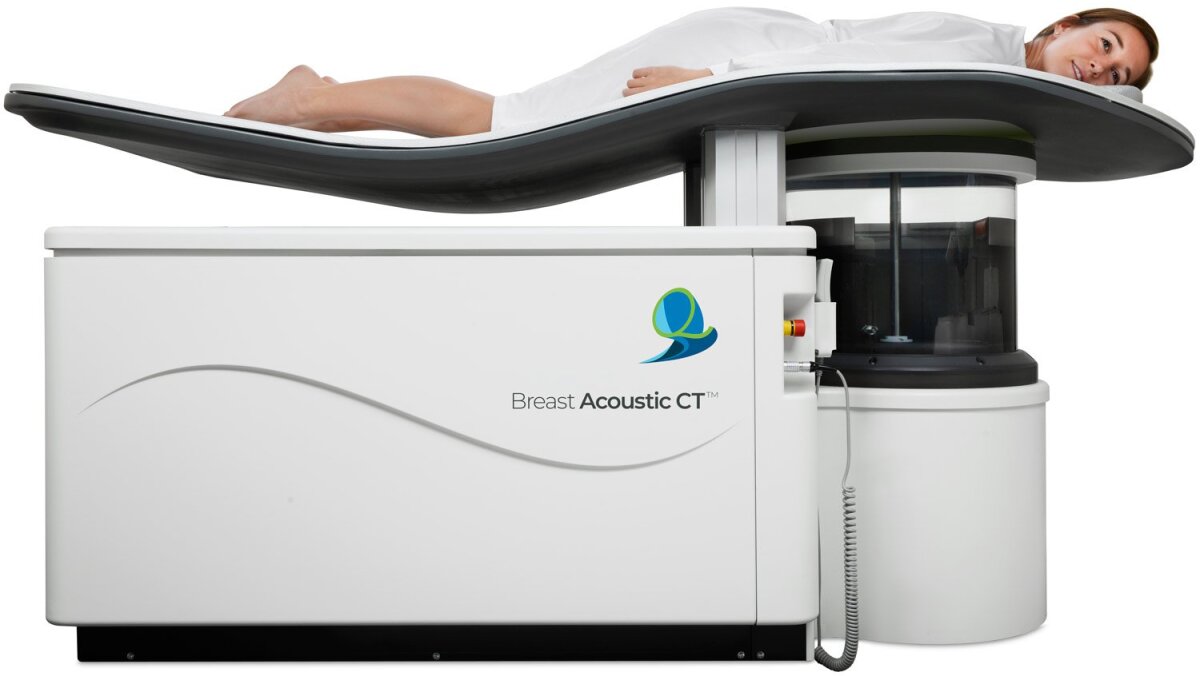
The QTI Breast Acoustic CT platform uses low-frequency sound waves to generate true 3D volumetric images of the breast — without ionizing radiation and without breast compression. Unlike conventional breast ultrasound, which is operator-dependent and produces 2D images, acoustic tomography generates quantitative and reproducible data, with particular utility in patients with dense breast tissue.
The technology represents a fundamentally different approach from digital mammography and tomosynthesis. While those rely on X-rays and compression, Breast Acoustic CT offers a more comfortable patient experience and complementary data that can assist clinical decision-making. For centers already using mammography as a screening tool, adding 3D tomographic ultrasound could improve detection in dense breasts.
Implications for Reimbursement and Adoption
Obtaining a CPT code is often the tipping point for adoption of new imaging technologies. Without a standardized code, hospitals and clinics face significant barriers to justifying the investment, as there is no established mechanism for billing and reimbursement. With code X579T, QT Imaging can facilitate discussions with health systems and payers about coverage policies and payment pathways.
Category III codes are intended to facilitate utilization tracking and clinical evaluation as technologies gain adoption. They can also support discussions with health systems and payers about coverage policies and payment pathways. This approach follows a path similar to other innovative imaging device approvals that started with regulatory clearance and coding before achieving widespread clinical adoption.
Future Outlook
QT Imaging, which trades on Nasdaq under the ticker QTI, plans to continue working with clinical partners and professional societies as it seeks additional CPT codes and broader market adoption. The combination of radiation-free imaging, compression-free examination, and quantitative volumetric data positions the technology as an attractive complementary modality, especially for screening women with dense breasts — a population known to have higher cancer risk and lower sensitivity to conventional mammography.
Source: DOTmed