

Bayer Expands MRXperion Injector Capabilities for High-Field MRI
The FDA has granted 510(k) clearance to Bayer for expanded capabilities of its MEDRAD MRXperion magnetic resonance (MR) injection system. The updated clearance extends the device’s labeled field strength compatibility to support MRI scanners up to 7 Tesla — a meaningful step forward that gives radiology departments greater flexibility across diverse MR suite configurations.
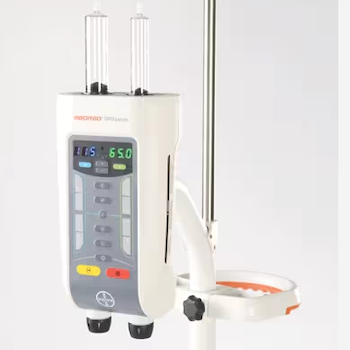
Beyond the 7T expansion, the clearance introduces Imaging Scanner Interface 2 (ISI2) capability, enabling direct communication between the injector and scanner system. This bidirectional integration helps streamline exam coordination and supports operational efficiency by automating steps that previously required manual technologist intervention.
In practice, injection protocols can now be automatically adjusted based on the parameters of the selected scanner sequence, reducing human error and improving reproducibility of contrast-enhanced examinations. For centers already using gadopiclenol and other MR contrast agents, this integration becomes especially relevant.
Clinical Impact of 7T Compatibility
The 7T compatibility is particularly significant because ultra-high-field MR is transitioning from research-only installations to clinical applications. In neuroimaging especially, 7T scanners deliver spatial resolution and tissue contrast that surpass the 1.5T and 3T standard — enabling visualization of fine anatomical structures that were previously difficult to resolve.
With MRXperion now cleared for this field strength range, radiology departments investing in 7T scanners won’t need to source alternative injection solutions. The same equipment can serve routine clinical workflows and advanced research applications alike — a significant operational and financial advantage for academic medical centers.
“MRXperion already has a strong track record of delivering dependable imaging performance across clinical settings, and this clearance reinforces and expands on its established reputation as a flexible solution that supports coordinated, efficient workflows across MR systems,” said Jill Carbone, Vice President and Head of Radiology North America Product & Pipeline at Bayer.
ISI2 Interface: Scanner-Injector Integration
The ISI2 functionality represents an important evolution in how MR injectors and scanners interact. In conventional setups, the technologist must manually configure injection parameters — flow rate, volume, start timing — independently from the scanner protocol. ISI2 partially automates this coordination.
The most direct benefit is temporal synchronization: contrast injection onset can be coordinated with specific sequences such as MR angiography or perfusion studies, where bolus arrival timing is critical for diagnostic quality. As modern MR systems employ increasingly complex protocols, ISI2 integration helps imaging centers handle high exam volumes without compromising standardization, as discussed in how to evaluate your MR or CT scanner service.
Bayer’s Integrated MR Portfolio
The expanded MRXperion clearance complements Bayer’s integrated MR portfolio spanning contrast media, injection systems, software and workflow solutions. This ecosystem approach allows the company to deliver end-to-end solutions for MR departments — from patient preparation through report delivery.
From a market perspective, this strategy positions Bayer competitively at a time when hospitals are seeking to consolidate vendors to simplify procurement, maintenance and training. An injection system that operates consistently across scanners from different manufacturers and different field strengths reduces the need for equipment-specific training.
Future Outlook
As 7T MRI continues its migration from research to clinical practice, demand for compatible peripheral devices will grow. The MRXperion clearance positions Bayer to capture this emerging market segment while maintaining relevance in the much larger 1.5T and 3T installed base. The integration capabilities introduced with ISI2 also signal a broader industry trend toward smarter, more connected imaging suites where equipment communicates seamlessly to optimize both workflow and diagnostic outcomes. Innovations like these align with the broader shift toward technology solutions transforming radiology workflows.
Source: ITN Online