
Siemens Healthineers has equipped the new University Heart and Vascular Center at the University Medical Center Hamburg-Eppendorf (UKE), in Germany, with an advanced set of imaging systems for cardiovascular diagnosis and treatment. The installation includes 13 angiography systems, a photon-counting CT scanner, a 3T MR system and an X-ray unit.
What was installed
The Erlangen-based company supplied 13 angiography systems for the cardiology and surgical departments, along with a photon-counting CT scanner, a 3-tesla MR system and an X-ray imaging unit. The equipment will be used in cardiac catheterization laboratories, hybrid procedure rooms and the center’s cardiovascular imaging department.
According to Siemens Healthineers, the technology was chosen to support more precise image-guided procedures and clinical decision-making. The company says the systems may help streamline workflows and reduce examination times in certain clinical settings.
A complete cardiovascular center
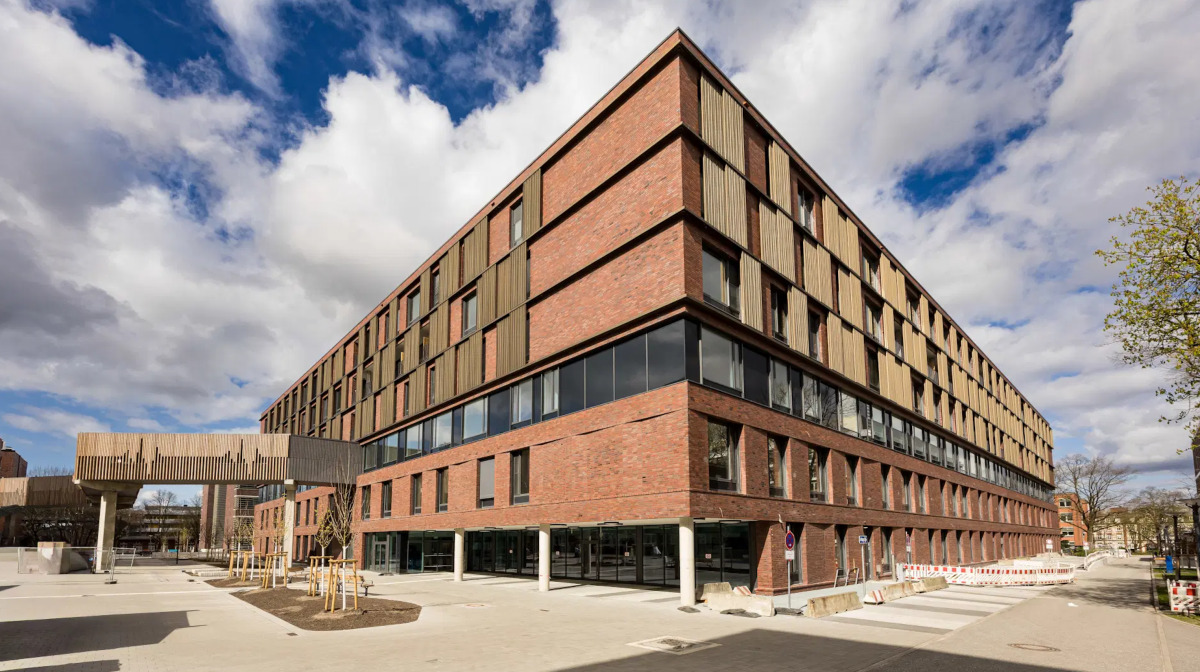
The new UKE Heart and Vascular Center includes 379 inpatient beds, nine operating rooms — three of them hybrid — ten cardiac catheterization laboratories and a dedicated cardiovascular imaging center. The facility is designed to serve both adult and pediatric patients with cardiovascular conditions, consolidating diagnosis, interventional cardiology and surgery in a single space.
That consolidation is not trivial: bringing imaging, intervention and surgery under one roof shortens the path from diagnosis to treatment — decisive in cardiovascular emergencies, where every minute counts. Serving children and adults in the same center also concentrates rare-case expertise, which matters for congenital heart disease, where case volume drives outcomes.
Technical context: photon counting and hybrid rooms
The technological highlight is the photon-counting CT scanner. Unlike conventional detectors, which convert X-rays into light before measuring them, these detectors directly count each photon and record its energy. The result is higher spatial resolution, a better signal-to-noise ratio and spectral imaging capability — features especially useful for assessing calcified coronary arteries and stents, tasks notoriously difficult on traditional CT. In cardiology practice, this translates into less “blooming” from calcifications and stents, coronary CT angiography at lower radiation dose and potential contrast-media reduction — gains that directly affect the safety of patients with limited renal function and overall diagnostic quality.
Hybrid rooms, in turn, combine a full operating theater with fixed high-resolution angiography. They enable minimally invasive image-guided procedures — such as transcatheter aortic valve implantation (TAVI) — with the safety of being able to convert to open surgery without moving the patient. Dose control in these environments is critical, a topic we have covered when analyzing how reducing radiation in coronary catheterization improves safety for patients and staff.
The role of 3T MR in cardiology
The 3-tesla MR system rounds out the arsenal by offering tissue characterization no other modality matches. Cardiac MR quantifies ventricular function, measures flow and, above all, identifies fibrosis, edema and infiltration through techniques such as late gadolinium enhancement and T1/T2 mapping. This is decisive in diagnosing myocarditis, infarction, cardiomyopathies and infiltrative diseases such as cardiac amyloidosis.
In a center that concentrates clinical, interventional and surgical cardiology, having high-field MR within the same workflow means making decisions based on robust tissue information — not just anatomy. The 3T platform delivers a higher signal-to-noise ratio, allowing faster or higher-resolution sequences.
Research partnership and implications
Beyond the installation, Siemens Healthineers and UKE plan to establish a long-term research collaboration focused on cardiology, radiology and data-driven medicine. The organizations say the partnership is expected to include joint innovation initiatives and clinical research projects.
The move fits the manufacturer’s broader strategy of repositioning its imaging portfolio — as we have discussed regarding the renewal of Siemens’ imaging leadership in 2026. For hospitals, the trend toward integrated bundles (equipment plus research partnership) changes how technology is acquired, bringing manufacturers and academic centers closer together.
Outlook and the broader landscape
The Hamburg case serves as a reference for the future of high-complexity cardiovascular centers. Photon-counting CT is still scarce in many countries but tends to reach reference centers and university hospitals first. Combining angiography, cardiac MR and advanced CT in a single workflow, together with data integration, is the path toward shorter diagnostic times and more personalized treatment. As artificial intelligence advances in automated detection of vascular events, these centers are expected to become even more efficient and safe.
Data integration is the other half of the story. Modern cardiovascular centers generate enormous volumes of images, hemodynamic measurements and electronic records; tying them together is what turns isolated exams into a longitudinal view of each patient. The Siemens-UKE research collaboration explicitly targets data-driven medicine, signaling that the value of a center like this lies not only in its scanners but in how it learns from the data they produce. For health systems elsewhere, it is a preview of how imaging procurement is shifting from buying boxes to building data-rich, research-active platforms.
Source: DOTmed