The FDA has cleared Mammo Risk, the first artificial intelligence software that estimates breast cancer risk directly from a 3D mammogram (tomosynthesis), with no extra imaging required. Built by DeepHealth, the tool calculates a patient’s likelihood of developing breast cancer at three, four and five years and is compatible with devices from multiple vendors.
The clearance, announced on November 24, 2026 through the 510(k) pathway (record K262709), positions image-based risk assessment as a new bridge between screening and prevention. DeepHealth, a RadNet subsidiary, bills the product as the first image-based breast cancer risk solution for 3D mammography, including combined 2D/3D workflows.
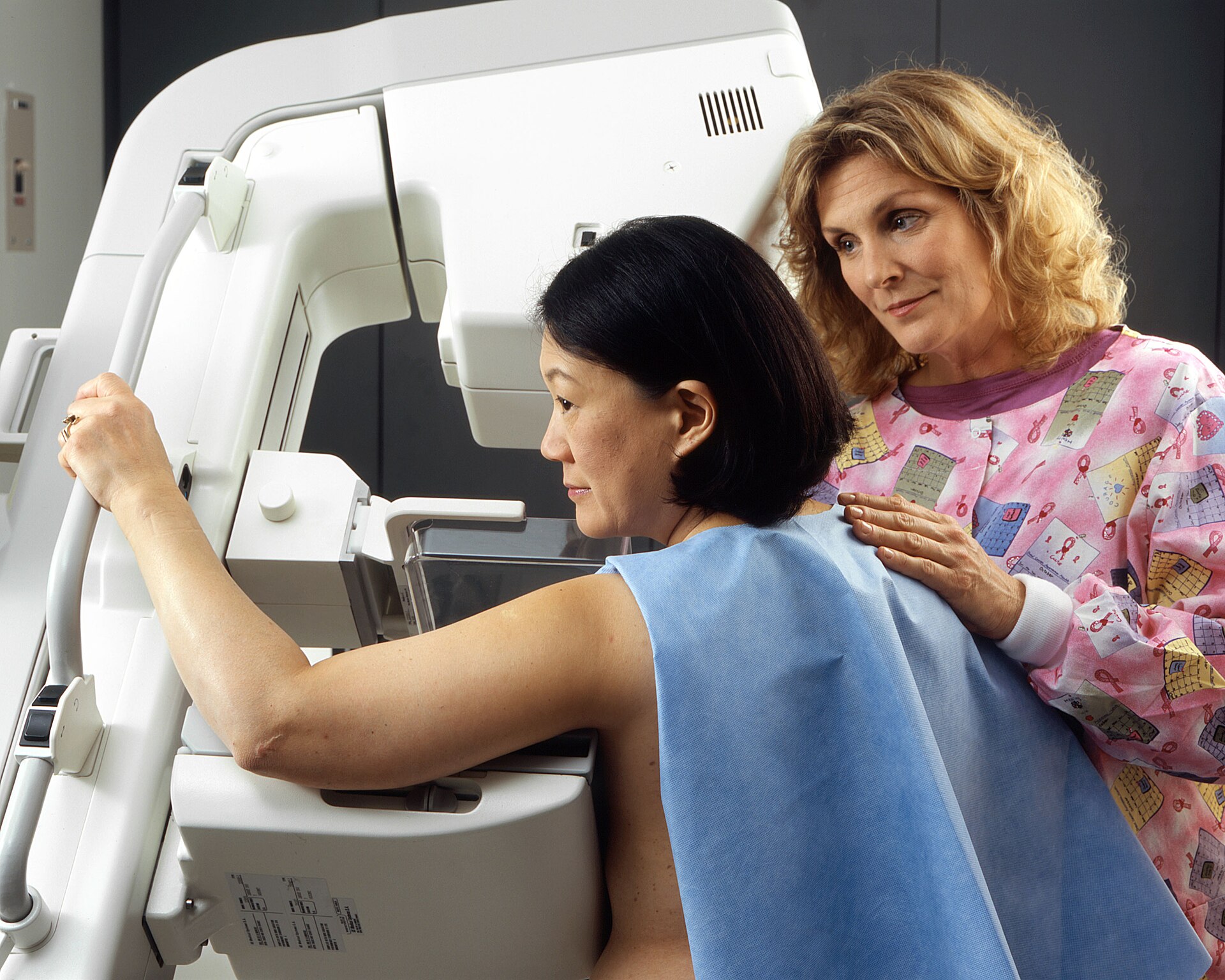
What the FDA cleared
Mammo Risk reads mammograms that have already been acquired and returns risk estimates across three time horizons. No additional scan is needed; the algorithm reuses the routine screening study. DeepHealth notes that tomosynthesis is now available at more than 90 percent of U.S. mammography facilities, widening the tool’s potential reach, and that the software was trained on 220,000 studies.
In an independent, multicenter pivotal study of more than 65,000 screening mammograms across 10 U.S. sites, the company says predictive performance held up in subgroups that traditional models have served poorly, including Black women and women with dense breasts. “By launching the first image-based risk assessment software for 3D mammography, we are moving beyond just detecting cancer towards enabling preventive pathways,” said Niccolo Stefani, business and product leader of clinical AI at DeepHealth, in the announcement.
Image-based risk versus questionnaires and density
Established risk models such as Tyrer-Cuzick and Gail rely on questionnaires: family history, age, reproductive factors and, in some versions, breast density reported by the radiologist. Image-based assessment flips that logic. Instead of summing self-reported clinical factors, the model reads the mammogram’s pixels directly and extracts parenchymal patterns that human reading does not quantify.
Breast density is only one of those signals. The promise of image-based assessment is to go beyond density, capturing tissue texture and architecture tied to future cancer. That ties each woman’s risk estimate to her own image rather than to recalled family history or data many patients cannot supply. The distinction between detection and risk-prediction models remains central: they are different tasks, validated differently.
Why tomosynthesis changes the calculation
Tomosynthesis acquires several low-dose projections that are reconstructed into thin slices of the breast. That reduces the tissue overlap that hampers conventional 2D mammography and tends to perform better in dense breasts, now the dominant screening modality in the U.S. Earlier image-based risk work was validated mostly on 2D exams; clearance specifically for the 3D acquisition matters precisely because tomosynthesis has become the screening standard at many sites. Efficiency gains from AI applied to tomosynthesis, such as work on high-risk lesions in DBT, reinforce the shift toward native processing on the 3D volume.
The CPT code and the road to reimbursement
The American Medical Association has created a Category III CPT code, effective January 1, 2027, to track the use of image-based breast cancer risk assessment technologies. Category III codes cover emerging technologies: they measure utilization and build evidence, and do not guarantee payment. In practice this creates a formal way to record how often these systems are used and to support future coverage decisions by payers with data.
Where it fits in screening, and the Latin America angle
In risk-stratified screening, a reliable estimate could steer supplemental imaging, such as MRI or ultrasound, toward higher-risk women and more personalized intervals for the rest. DeepHealth built Mammo Risk on an earlier, CE-marked generation: in a study led by the Karolinska Institute and published in Science Translational Medicine, drawing on more than 154,000 women undergoing 3D mammography in the U.S., the earlier technology showed an estimated 2.4-fold sensitivity over the Tyrer-Cuzick model when selecting the 12 percent at highest risk for supplemental screening. That figure, importantly, comes from the earlier generation, not the pivotal study of the newly cleared product.
In Brazil and much of Latin America, tomosynthesis is still rolling out unevenly, concentrated in private and reference services, while large parts of the public network still run 2D. There is no local clearance for this specific software, and the estimates come from U.S. populations, which calls for caution before any direct transfer. The company’s trajectory is worth noting: DeepHealth had already obtained FDA clearance for AI in breast ultrasound.
Limitations and what to watch
Prediction is not diagnosis. Mammo Risk flags the probability of future disease; it does not identify a present cancer or replace the workup of suspicious findings. The announcement describes “strong predictive performance” but, so far, offers no peer-reviewed accuracy metrics for the cleared product; the 2.4-fold figure refers to the earlier model. The decisive step will be prospective: showing that acting on the score reduces late-stage cancer and mortality, which has not yet been demonstrated. Add the reimbursement uncertainty inherent to a Category III code and the need to validate performance outside the populations where the model was tested. Predicting cancer risk from imaging is not new, as shown by models that flagged risk years ahead of diagnosis; what is different now is regulatory clearance for the 3D acquisition.
Source: Diagnostic Imaging — Mammography News: FDA Clears AI Software for Predicting Five-Year Risk from DBT. DeepHealth announcement via Imaging Technology News.