
What if advanced cancer could be treated systemically using heat generated by magnetic nanoparticles, without the resistance mechanisms that limit chemotherapy? That is the bet described by Ofer Shalev, cofounder and CEO of New Phase, in an article arguing that the convergence of physics, biology, chemistry and engineering is the path to transforming how cancer therapies are developed.

The problem oncology has not solved
In clinical practice, most patients with advanced cancer receive chemotherapy, radiotherapy, immunotherapy or targeted biological treatments. Over time, many of these therapies lose effectiveness as tumor cells adapt or develop resistance. The usual response is to switch to a new line of therapy, which tends to add side effects — sometimes cumulative — and does not always halt disease progression.
There is also a timing problem. In many cases, the oncologist cannot tell whether a treatment is working until weeks or months after it begins. Meanwhile, cancer mortality remains high and the number of deaths rises every year. This cluster of limitations is what drives the search for approaches that stay effective even as a tumor evolves, with lower toxicity and preserved quality of life.
How magnetic hyperthermia works
New Phase’s proposal starts with magnetic nanoparticles: tiny, engineered particles that circulate through the body and preferentially accumulate in tumor tissue. When activated by an external energy source — here, non-ionizing magnetic radiation — these particles generate localized heat capable of damaging cancer cells while sparing the surrounding healthy tissue.
The mechanism is the crux. By applying a systemic treatment based on paramagnetic nanoparticles and magnetic hyperthermia, the idea is to destroy tumor cells with heat — a strategy that, according to the author, tends to be less prone to the resistance mechanisms seen with many drugs. Because heat does not “negotiate” with the cell’s biology the way a drug does, the treatment could in principle be repeated as often as needed, given the low toxicity already demonstrated in preclinical studies and, now, in early human testing.
Oncologic hyperthermia: an old idea in new clothes
Hyperthermia is not exactly new in oncology. For decades, controlled heating of tumors (generally between 40 °C and 45 °C) has been studied as a way to sensitize cells to radiotherapy and chemotherapy, since heat impairs DNA repair and increases local blood flow and oxygenation. The challenge has always been delivering that heat selectively and uniformly, without warming healthy tissue.
This is where nanoparticles change the game. By concentrating the heating at the level of the tumor itself, magnetic-nanoparticle-mediated hyperthermia pursues the selectivity that regional techniques could not achieve. There are already clinical precedents for the concept: iron-oxide nanoparticle systems approved in Europe for glioblastoma showed the approach is feasible, even if narrowly applied. What New Phase emphasizes is the systemic angle — nanoparticles that circulate and seek out the tumor, rather than being injected directly into the lesion.
The concept of bio-convergence
One of the biggest challenges of this work is what is often called bio-convergence: the need to integrate knowledge from several scientific and engineering disciplines into a single therapeutic system. Unlike conventional cancer treatments, grounded mainly in pharmacology or biology, magnetic hyperthermia — a field of interventional oncology — requires the successful convergence of chemistry, physics, biology, imaging science and medical engineering.
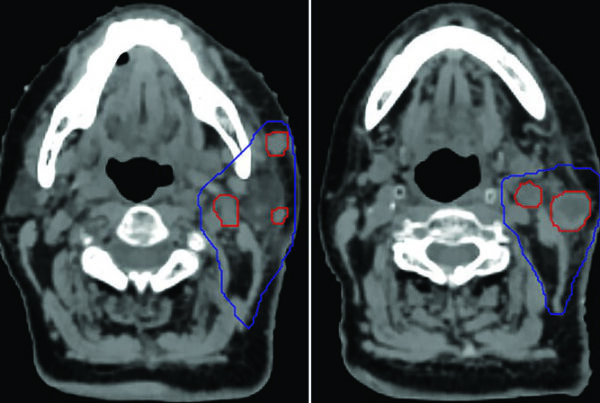
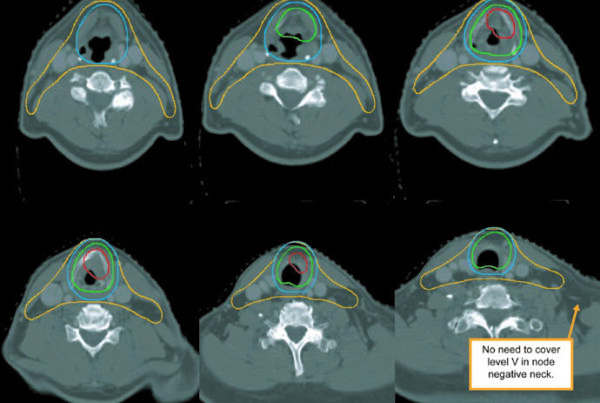
This is exactly where radiology comes in. Imaging science is essential to map where the nanoparticles accumulate, monitor heat deposition and confirm tumor response — a role that aligns directly with the logic of theranostics, where diagnosis and therapy move together. Without high-quality imaging, there is no way to guide or verify a therapy so dependent on precise localization.
Implications and cautions
For those working in oncology and imaging, a balance of enthusiasm and skepticism is warranted. The piece is authored by the executive of a company with a direct interest in the technology, and the results, while promising, are still in early stages of human validation. Thermal and nanoparticle-based therapies have been explored before, with real challenges in biodistribution, safety and reproducibility. None of this invalidates the proposal, but it calls for the usual critical reading.
If confirmed in larger trials, a systemic, repeatable, low-toxicity therapy would also have economic impact — a sensitive point given the rising cost of cancer care and the financial toxicity that falls on patients and health systems. For now, the core message is less about an imminent cure and more about a method: complex problems like cancer are unlikely to be solved by any single discipline working alone. The next milestones to watch are peer-reviewed human data, clear evidence on how well the nanoparticles target tumors versus healthy organs, and whether the heat dose can be measured and reproduced reliably from one patient to the next.
Source: DOTmed — opinion piece by Ofer Shalev (New Phase).