

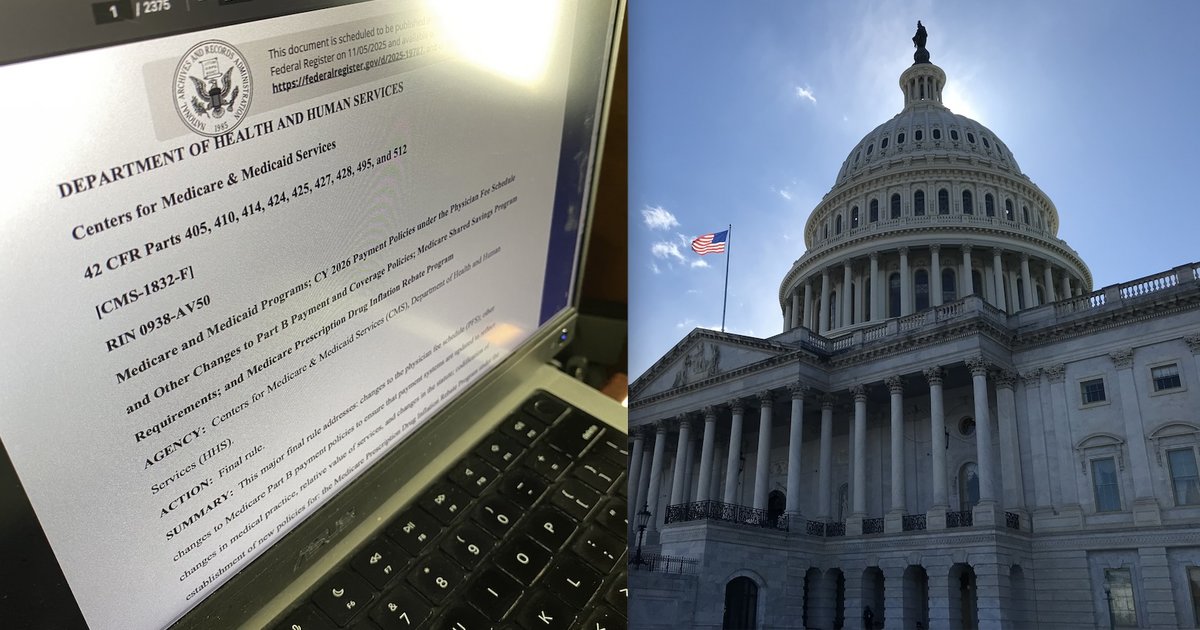
After two and a half years of waiting, the U.S. federal government has issued the final rule that reshapes the No Surprises Act, the law that shields patients from so-called surprise medical bills. The core of the regulation is the arbitration process used to settle payment disputes between doctors and insurers — and for radiology, it changes important pieces of the financial game.
What changes in arbitration
The 607-page rule updates the Independent Dispute Resolution (IDR) process — the mechanism for settling payment quarrels. The Centers for Medicare & Medicaid Services (CMS) finalized changes across seven fronts, with the spotlight on communication between the parties, open negotiation before arbitration, and the rules for batching claims.
The most celebrated change was financial: the administrative fee dropped from $115 to $15 per party, per dispute — an 85% reduction. For radiology, where many charges carry a low unit value, the old fee made arbitration economically impractical even when a payment was clearly below what was owed. The rule also caps batching at 50 items per dispute and requires arbitration entities to decide eligibility within five business days.
The rule also redefines the “extenuating circumstances” that allow deadlines to be extended — for instance, an unexpectedly high volume of disputes or failures in the federal IDR portal. And it reinforces the government’s right to collect unpaid administrative fees, in line with federal debt-collection laws. “Americans should never be blindsided by unexpected medical bills,” said Health and Human Services Secretary Robert F. Kennedy Jr., arguing that the rule “cuts through bureaucratic delays and strengthens transparency” between payers and providers.
Communication, negotiation, and an insurer registry
Radiologists reported difficulty obtaining the information needed to resolve disputes. The rule’s answer was to require insurers to communicate data using specific coding and to disclose details at the moment of denial or payment — such as the name of the affected health plan. The aim is to cut the volume of ineligible disputes clogging the system.
The original law already provided a 30-business-day open-negotiation period before arbitration, but the government received “numerous reports” that parties weren’t truly negotiating. Now there will be official notices marking the start and end of negotiation. In addition, insurers subject to IDR must register and receive an identification number, making it easier for physicians to know exactly who they are dealing with.
A divided reaction in radiology
The sector responded in mixed fashion. The American College of Radiology (ACR) said it was “pleased” with the expanded bundling of disputes, the reduced fee, and the requirement that insurers provide information with the initial payment. The MGMA, representing more than 15,000 practices, stressed that the lower fee “removes a real barrier” to access, especially for small practices.
Radiology Associates of North Texas (RANT), an independent group and fierce critic of the law, was blunt: the rule makes “incremental improvements” but doesn’t fix the core problems. The group estimates it has spent over $50 million on batching restrictions and argues that the qualifying payment amount (QPA) — the benchmark that anchors negotiations — remains “significantly below market,” functioning as a price-setting mechanism that favors insurers. “This rule improves how disputes are processed, but it does not fix how they are valued, resolved, or paid,” summarized Dave Walker, an executive at the group.
Why it matters beyond U.S. borders
Even as a strictly American regulation, the theme echoes in any health system with tension between providers and payers. In Brazil, the closest equivalent pain point is the “glosa” — the total or partial denial of payment by insurers. Anyone tracking the financial impact of that problem knows how much revenue it drains; it’s worth revisiting our analysis of financial claim denials and their impact on health institutions to see the parallel.
The logic is the same: without clear rules on communication, deadlines, and arbitration, the bill lands on the provider. The American reform also speaks to the broader legislative push from Congress — a topic we detailed in covering how the U.S. Congress is advancing medical payment reform. And since much of the dispute revolves around coding, the correct application of radiology CPT codes in 2026 becomes even more decisive for avoiding denials.
Next steps and what to watch
The rule takes effect on a staggered schedule: the new communication codes apply 60 days after publication in the Federal Register, while changes to the definition of a batched dispute apply to negotiations beginning 90 days later. The American College of Emergency Physicians (ACEP) summed up the prevailing mood: finalizing these reforms is an important step, “but it is only the first” — success will depend on firm enforcement and real consequences for noncompliance. For imaging-service managers, the lesson is universal: billing governance, clean data, and coding discipline remain the best defense against lost revenue.
Source: Radiology Business