
NewVue has signed an agreement with Strategic Radiology that puts its workflow orchestration platform within reach of 50 independent practices and more than 2,500 radiologists across the United States. The August 18 announcement is not a sale: it adds NewVue to the coalition’s group purchasing program, with preferred pricing and a training package for member practice teams. The market signal is more interesting than the contract — it shows how practices that cannot replace their PACS are buying modernization in layers instead.
Who the two parties are
Strategic Radiology is not a radiology company: it is a national coalition founded in 2009, made up of 50 independently owned practices that together employ more than 2,500 radiologists. The model exists precisely as a counterweight to consolidation — instead of selling equity to private equity, the practices keep ownership and share scale in purchasing, benchmarking and patient safety. One little-known detail is worth recording: the coalition operates the first imaging-specific Patient Safety Organization recognized by AHRQ in the US.
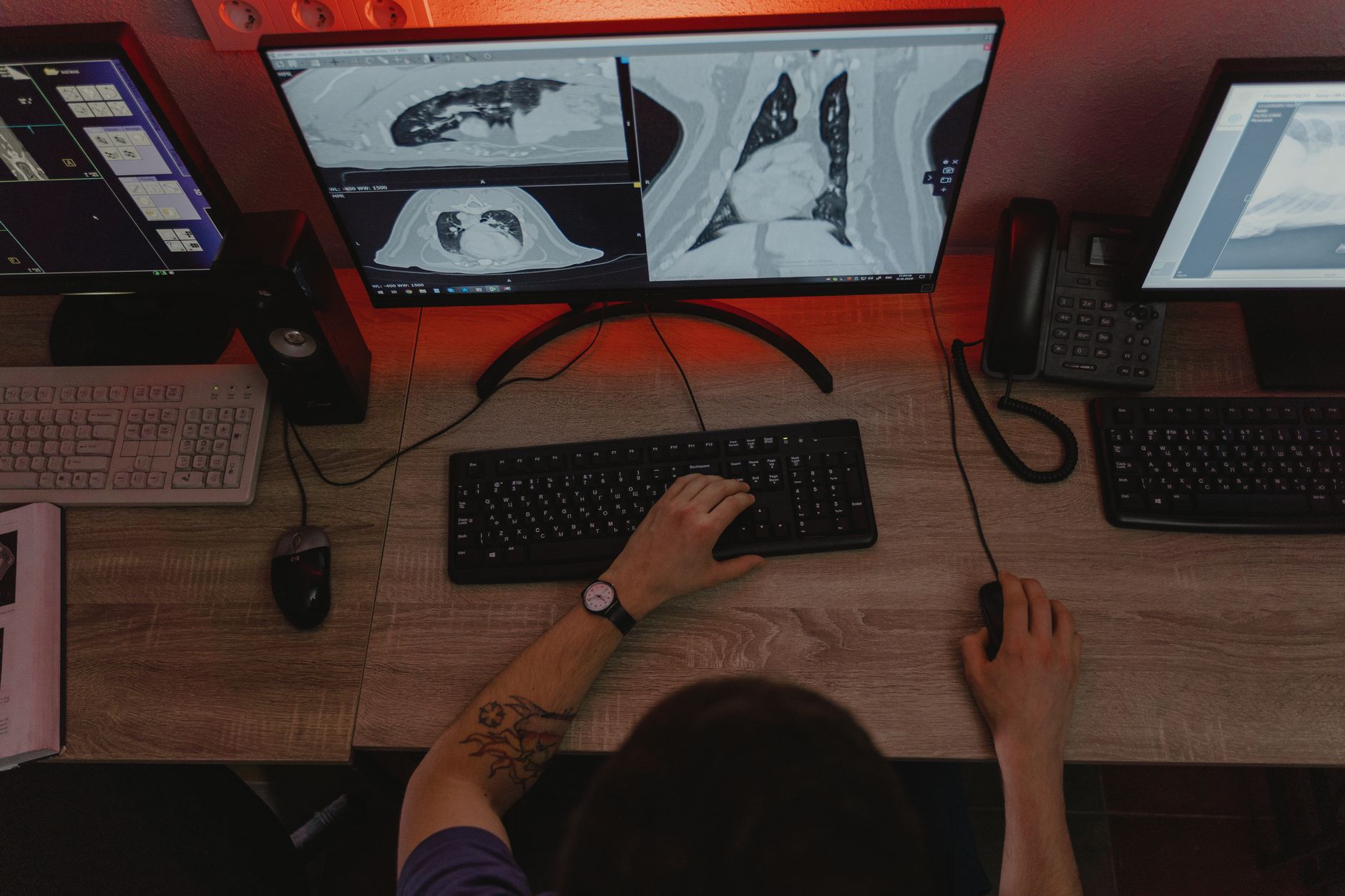
On the other side, NewVue sells cloud-native workflow orchestration software. The architecture is the central point: the platform is PACS-agnostic, runs alongside whatever PACS the practice already owns, connects to existing clinical systems (RIS and EHR) and pulls case assignment, patient context and native reporting into one workspace — what the company calls the “Radiologist’s Cockpit.” No rip-and-replace: nothing legacy has to be switched off for the layer to go live.
Both executives were blunt about the economics. “Technology should create meaningful value… by giving practices a more flexible and cost-effective path to modernization,” said Kyle Lawton, CEO and co-founder of NewVue. Scott Bundy, MD, FACR, CEO and chair of Strategic Radiology, added that “adding NewVue to our group purchasing agreement gives our member practices more cost-effective access to technology.”
What “worklist orchestration” actually solves
The term deserves unpacking, because it has become sales jargon that hides a concrete technical problem. In a multi-site practice, the traditional worklist is a by-product of the PACS: it shows what arrived, sorted by date or by a static priority. As the group grows, that list stops working, because assigning a case is no longer trivial. It has to account for reading subspecialty, the radiologist’s state licensure, the turnaround-time contract with the referring hospital, clinical priority, load already assigned and shift availability.
The orchestration layer is the software that solves that routing above the PACS. And it is the layer most installed PACS never had, because they were designed as archive and viewer, not as a work distribution system across multiple sites. The classic symptom is the radiologist opening five windows per case — PACS worklist, viewer, dictation system, hospital EHR and the AI tool’s dashboard.
That last item deserves emphasis. Siloed AI integration is now one of the biggest hidden costs in digital radiology: every vendor ships its own panel, its own queue and its own notification. A platform that consolidates those results inside the reporting environment does not improve the algorithm — it improves the odds that someone looks at its output. It is the same argument we followed when NewVue folded native reporting into its radiologist cockpit: cutting context switching is measurable productivity, not comfort.
Why the purchasing model matters more than the product
The detail worth noticing in this deal is not the technology — it is the channel. Independent practices compete against consolidated groups that have the capital to rewrite an entire software stack. A 30-radiologist practice has neither that budget nor that IT team, which is why it typically stays locked to an aging PACS for another decade. Buying through a collective agreement, at a price negotiated on behalf of 2,500 physicians and with training included, is the realistic way for that practice to adopt modern technology without a migration project.
It is also an answer to the problem we have discussed as the technical debt radiology accumulated by digitizing first: the specialty computerized ahead of every other and now carries the hospital’s oldest stack. A layered architecture — cloud on top, legacy PACS underneath — is the only route that does not require pausing interpretation during the swap.
What to check before buying orchestration
For anyone evaluating this class of platform, the “PACS-agnostic” claim needs testing at three concrete points. First, integration: does the layer consume only standard DICOM Query/Retrieve and HL7/FHIR, or does it depend on one vendor’s proprietary connector? Second, ownership of workflow data — who keeps the turnaround, productivity and assignment metrics when the contract ends? Third, latency: a cloud platform that has to load a 3,000-image chest study can add seconds per case, and seconds per case multiplied by 40,000 exams a year turn into working hours.
There is a fourth point, less technical and more important: the success metric. Orchestration is sold as an efficiency gain, but it is only auditable if the practice measures turnaround before and after, by modality and by site. Without a baseline the project becomes unmeasurable — and it is worth remembering that report turnaround has been rising for a decade in the US, which means holding steady would already count as a result.
The wider picture
The arrangement translates directly to markets with even more fragmented structures. Physician cooperatives, regional teleradiology groups and imaging center networks face exactly the same dilemma: they must distribute exams among radiologists in different cities, with different subspecialties and different turnaround contracts, on top of a heterogeneous PACS estate that often has no upgrade agreement.
The transferable lesson is to negotiate collectively for what you cannot buy alone — and to demand standards-based interoperability as a contract clause, not a promise. When information exchange rests on an open standard it works even between rival vendors’ systems, as the case of hospital image exchange without CDs shows. When it rests on a proprietary connector, every new site becomes a new project.
Source: NewVue / Strategic Radiology — official partnership announcement