
Vendor capabilities verified from official websites in June 2026; pricing and regulatory status change — re-check before purchase.

Manual contouring is still one of the heaviest, least-glamorous burdens in a radiotherapy department. Delineating organs-at-risk and nodal volumes slice by slice consumes hours of dosimetrist and physician time, and inter-observer variability means two clinicians often disagree on the same anatomy — a real source of plan-quality drift. As case loads climb and staffing stays flat, teams increasingly evaluate AI auto-contouring (and adjacent workflow tools) to claw back time and standardize structures. The honest promise of this guide: there is no single winner. The best AI auto-contouring software for radiotherapy in 2026 depends on your TPS, the modalities you treat (CT vs. MR), your deployment constraints (cloud vs. on-prem vs. air-gapped), regulatory jurisdiction, and budget. We evaluated each vendor on production-confirmed capabilities, structure/model coverage, integration effort, editing and review workflow, deployment options, and regulatory posture — favoring verifiable facts over marketing. If you want to see a collaborative, fully in-browser approach in practice, you can book a live demo as you read.

Quick answer — top picks

  • Best for real-time collaboration & browser access — AutoSeg (RT Medical): the only option with true multi-user, per-structure-locked editing in a 100% in-browser editor (the “Google Docs of contouring”).
  • Best overall library & automation — Radformation AutoContour (radformation.com): broad, mature OAR library with a well-oiled automated workflow.
  • Best inside Varian/Ethos — Varian (varian.com): tightest fit if you live in Eclipse/Ethos and want auto-contouring built into the same ecosystem.
  • Best inside RayStation — RayStation Deep Learning Segmentation (raysearchlabs.com): native DLS models for shops already standardized on RayStation.
  • Best built-in QA metrics & on-prem/air-gap — Carina INTContour (carinamedical.com): contour QA metrics baked in, with strong on-prem and air-gapped deployment.
  • Best guideline-based nodal coverage — MVision (mvision.ai): elective nodal CTV models built around published consensus guidelines.
  • Best vendor-neutral TPS reach — MIM (mimsoftware.com): the MIM platform plugs into a wide range of TPS and clinical systems.
  • Best modality breadth + cleared tumor segmentation — TheraPanacea (therapanacea.eu): wide modality coverage and rare cleared tumor-segmentation models (most tools do OARs/nodal CTV, not GTV).
  • Best Brazilian/ANVISA option — AutoSeg (RT Medical) & SegmentaR: ANVISA RDC 657/2022-aligned choices for Brazilian departments, with AutoSeg adding browser collaboration and zero-click TPS return.

See collaborative, zero-click auto-contouring on your own cases.

Schedule a demonstration

Swipe the table sideways to see all columns →

AI auto-contouring software for radiotherapy, compared (capabilities verified June 2026).
Software Structures Modalities Integrated editor Access TG-263 Regulatory Tumor/GTV Pricing
AutoSeg ★ Our pick 100+ (models; ≤162) CT MR ✓ Yes Browser FDA CE ANVISA ISO/IEC ✗ No Quote-only Get a demo
Radformation AutoContour 480 models CT MR CBCT ✓ Yes Workstation FDA CE ANVISA TGA ✗ No Quote-only Details
Limbus AI (Limbus Contour) 260+ CT MR CBCT ✓ Yes Workstation FDA CE ANVISA TGA ✗ No Quote-only Details
MVision AI Contour+ 300+ ROI CT MR ✗ No Cloud FDA CE TGA ✗ No Quote-only Details
MIM Contour ProtégéAI+ ~159 CT MR ✓ Yes Workstation FDA ✗ No Quote-only Details
Varian Ethos / AI-Rad Companion Organs RT 108 OAR CT CBCT ✗ No Cloud FDA CE ~ Research Quote-only Details
RayStation Deep Learning Segmentation 201 models CT CBCT MR ✓ Yes In-TPS ~ FDA CE ✗ No Quote-only Details
Mirada DLCExpert ~99 (CT) CT ✗ No Cloud FDA CE ✗ No Quote-only Details
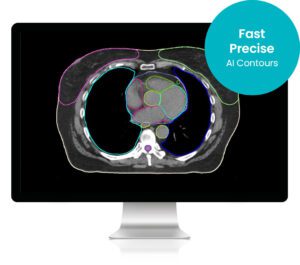
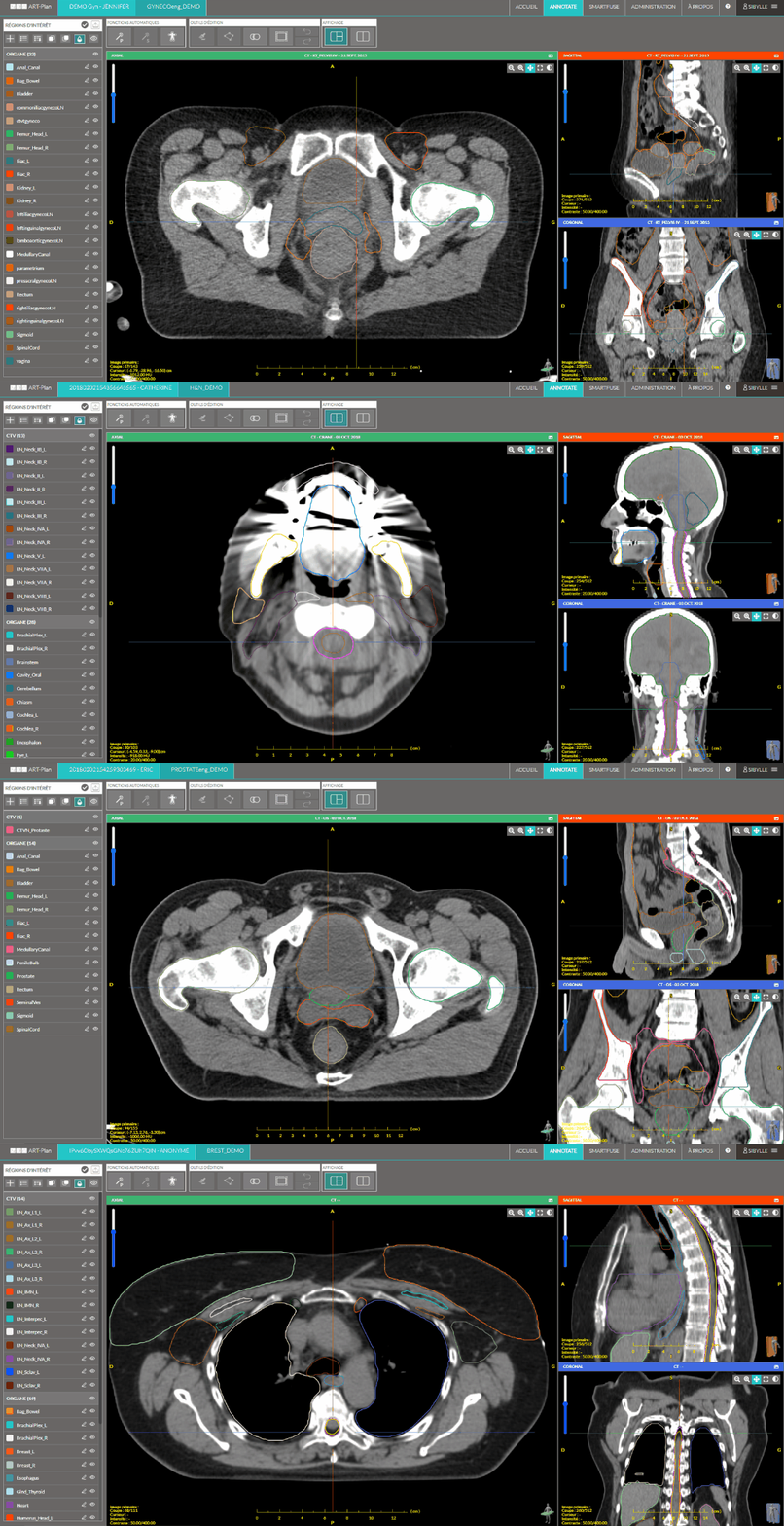
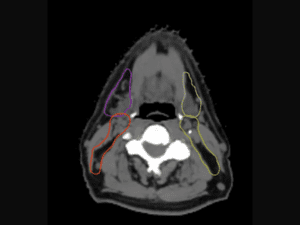
TheraPanacea ART-Plan (Annotate) 200+ CT MR CBCT PET ✓ Yes Cloud FDA CE TGA ✓ Yes Quote-only Details
Manteia AccuContour 300+ OAR CT MR PET-CT 4D ✓ Yes Workstation FDA CE ~ Research Quote-only Details
Carina INTContour 120+ CT MR PET ✓ Yes Browser ~ FDA ~ Research Quote-only Details
Siemens AI-Rad Companion Organs RT / syngo.via RT 200+ CT MR ~ Partial Cloud/Scanner FDA CE ✗ No Quote-only Details
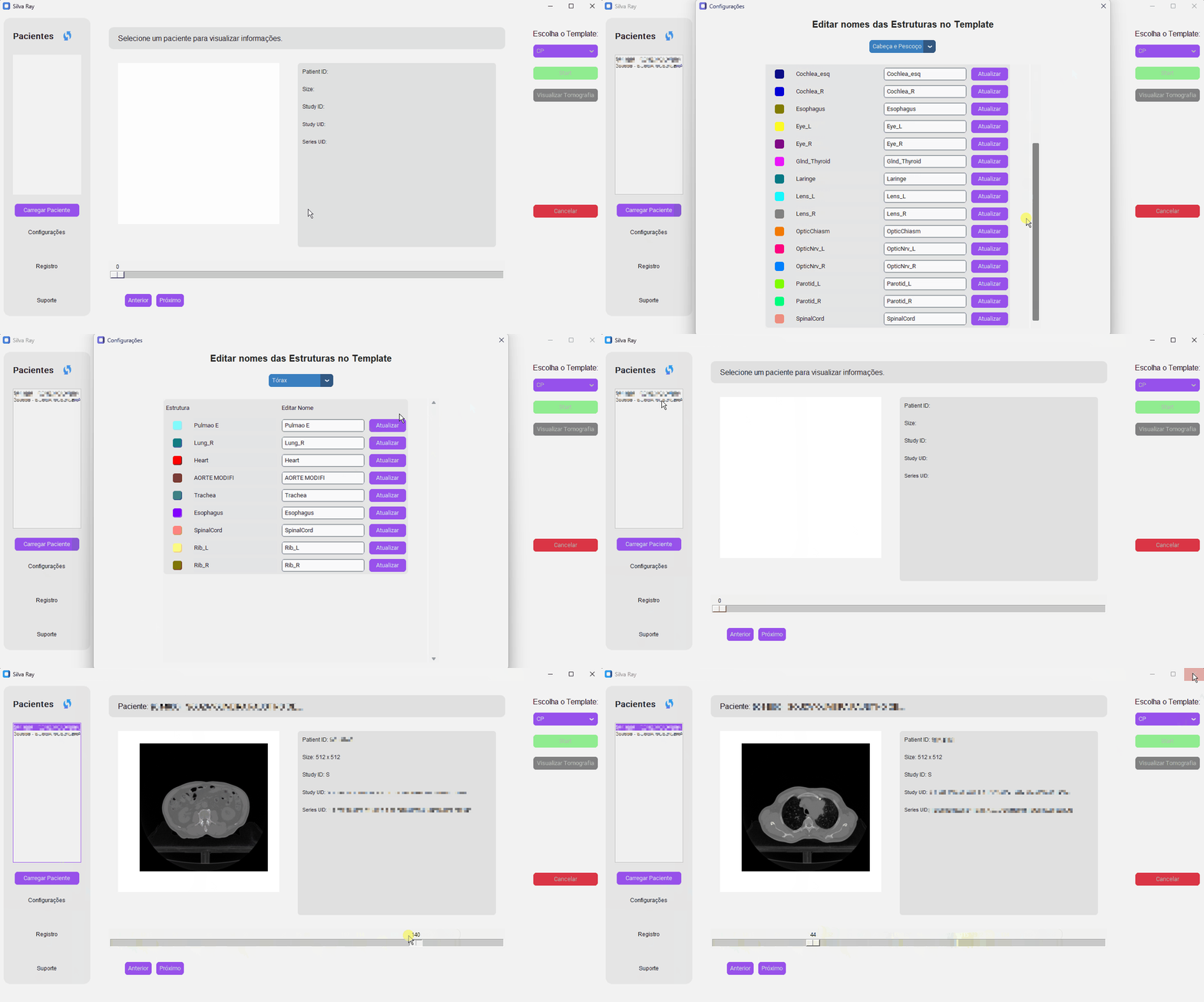
SegmentaR (Silva Ray) ~56 OAR CT ✗ No Cloud (thin client) FDA CE ANVISA ✗ No Quote-only Details

Why evaluate auto-contouring alternatives?

AI auto-contouring has moved from novelty to clinical routine, but the market is uneven. Many departments adopt the first tool bundled with their TPS or imaging vendor, only to discover its limits once it is embedded in daily workflow. Switching costs are real, so the time to scrutinize alternatives is before you commit — not after the OARs come back mislabeled or the editor sends you back to the TPS for every correction. A genuinely useful evaluation looks past the demo and tests how a tool behaves across your actual protocols, scanners, and review chain.

These are the pains clinical buyers — medical physicists, dosimetrists, radiation oncologists, and RT department heads — most often raise:

  • Limited structure count and scope. Headline numbers usually count models, not distinct anatomies, and most tools cover OARs plus elective nodal CTV — not tumor/GTV. Confirm what is actually segmented for your sites.
  • CT-only coverage. Many engines ignore MR, leaving brain, prostate, and gyn workflows without support.
  • No integrated editor. If corrections require round-tripping to the TPS, the time saved by AI evaporates.
  • No TG-263 nomenclature. Non-standard structure names break downstream automation, plan checks, and registries.
  • TPS lock-in and scripting dependence. Plugins and custom scripts create fragile, vendor-bound pipelines.
  • Opaque pricing. Quote-only is normal, but hidden per-structure or per-study fees are not.
  • Support and language. Time-zone gaps and English-only support slow clinical adoption.
  • Weak validation and QA. Real-world DSC frequently trails marketing claims; insist on site-specific evidence.
  • Data sovereignty and compliance. LGPD/HIPAA controls, on-prem and air-gapped options matter for PHI.
  • Learning curve. Heavy installs and steep UIs stall rollout.
  • No review-approval-traceability workflow. Regulated practice needs reviewer/approver roles and a defensible audit trail.
  • No real-time collaboration. Without multi-user editing, contouring stays a single-seat bottleneck.

How we evaluated

This guide reflects vendor capabilities verified against official product documentation and websites as of June 2026, cross-referenced where possible with independent, peer-reviewed studies. We are clinicians and engineers, not resellers; our goal is to help medical physicists, dosimetrists, radiation oncologists, and procurement teams shortlist tools that fit a real radiotherapy workflow. We scored each platform across eleven criteria that matter at the treatment-planning bench:

  • Structures & scope — which OARs and CTVs are covered, and by how many distinct models.
  • Modalities — CT, MR, CBCT, and PET support.
  • Integrated editor — whether you can review and correct contours without leaving the tool.
  • Real-time collaboration — concurrent multi-user editing, locking, and presence.
  • Deployment / install model — on-prem, cloud, air-gapped, and client footprint.
  • TPS integration & scripting needs — how cleanly results return to Eclipse, Monaco, RayStation, and others.
  • Automation — degree of zero-click, end-to-end operation.
  • TG-263 conformance — standardized structure nomenclature. See our TG-263 primer.
  • Regulatory status — FDA 510(k), CE-MDR, and ANVISA clearances.
  • QA & metrics — published accuracy and built-in quality controls.
  • Pricing transparency — note that across this market, all pricing is quote-only.

Reading accuracy claims: DSC, HD95, and “models vs. anatomies”

Vendors usually report the Dice Similarity Coefficient (DSC), a 0–1 overlap score between the AI contour and a reference; 1.0 is perfect, and roughly 0.8+ is often considered clinically usable for larger OARs, though small or low-contrast structures score lower. HD95 (the 95th-percentile Hausdorff distance, in mm) measures worst-case boundary error while ignoring outliers — a low HD95 means few large surface deviations. Both matter: a structure can have good DSC yet a problematic edge near a critical organ. Real-world DSC frequently falls below marketing figures, so we treat published numbers as directional, not guaranteed.

Note too that a “100+ structures” headline counts models, not distinct anatomies — one model may emit many labels, and most tools segment OARs and elective nodal CTV, not the tumor/GTV itself.

Limitations: many specifications are vendor self-reported and unverified by us; capabilities change between releases; and because pricing is quote-only, cost comparisons reflect structure, not figures.

In-depth reviews: every tool, compared

★ AutoSeg

Best for: Teams that want browser-based, real-time collaborative contouring with a fully automated, vendor-neutral DICOM workflow.

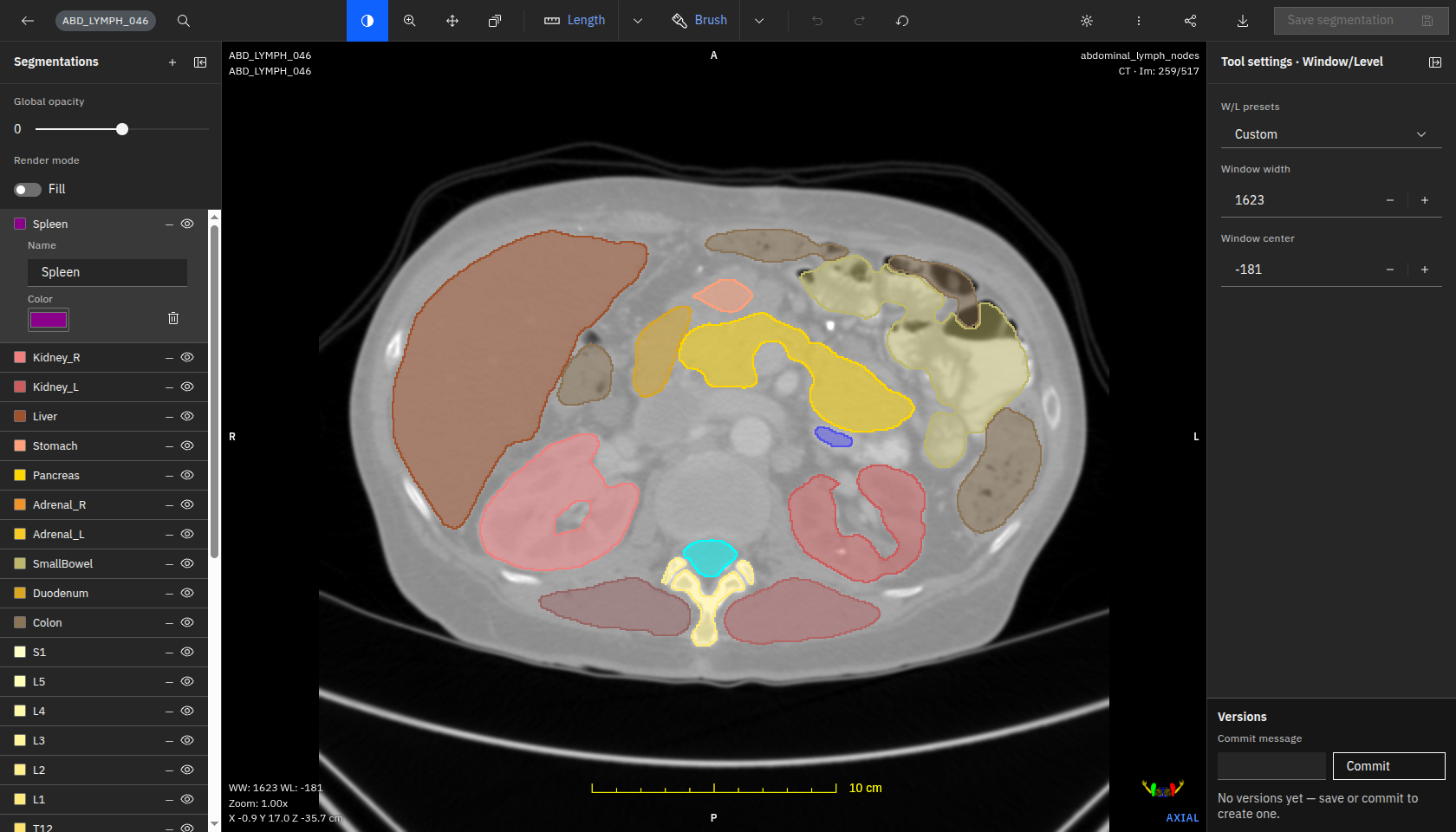
AutoSeg in-browser collaborative contouring editor
AutoSeg's in-browser, real-time collaborative contouring editor (RT Medical Systems).

AutoSeg, part of RT Medical Systems’ RTConnect suite, is our top pick for 2026 because it rethinks auto-contouring as a team workflow rather than a single-user batch job. AI handles organs-at-risk and normal anatomy; clinicians draw and refine targets (PTV/CTV/GTV) together in a 100% in-browser editor. Its defining feature is real-time collaborative editing — per-structure locks and live presence, effectively a “Google Docs of contouring” — paired with an end-to-end zero-click pipeline that delivers RTSTRUCT back to your TPS automatically.

Integration is pure DICOM (C-STORE/C-ECHO + RTSTRUCT), so it works with Eclipse, Monaco, RayStation and others with no scripting or plugins. It deploys on-prem, in the cloud, or fully air-gapped (Kubernetes-native), giving departments genuine control over data sovereignty. For LATAM buyers in particular, it holds ANVISA RDC 657/2022 and is built to ISO 13485, IEC 62304 Class C and ISO 14971 with LGPD/HIPAA controls.

It is younger and more regionally focused than the global incumbents, and does not claim FDA 510(k) or CE-MDR. But for teams that value collaboration, browser access, and a hands-off workflow, it is the most compelling option we evaluated. Book a live demo or talk to the AutoSeg team to see the collaborative editor on your own cases.

  • Real-time collaborative editing — multi-user with per-structure locks and live presence; multiple clinicians work the same plan simultaneously.
  • 100% in-browser editor (Cornerstone3D/WebGL2): 2D/3D spherical brush, threshold, flood-fill and measurements; zero-install, runs on Windows/Mac/Linux/tablet.
  • End-to-end zero-click automation, including RTSTRUCT delivery back to the TPS via autoseg-desktop.
  • Vendor-neutral DICOM integration (C-STORE/C-ECHO + RTSTRUCT) — any TPS, no scripting or plugins.
  • User-selectable multi-model AI per protocol: 100+ CT structures (TotalSegmentator, up to 162 models), 44 MR, ~33 brain (MR), plus dedicated male-pelvis/gyn/neural nnU-Net models.
  • CT and MR modalities; native TG-263 nomenclature.
  • On-prem / cloud / air-gapped deployment (Kubernetes-native) for full data sovereignty.
  • Multi-tenant RBAC (physician / contour_reviewer / contour_approver) + SSO + WORM audit trail.
  • Regulatory: ANVISA RDC 657/2022; built to ISO 13485, IEC 62304 Class C, ISO 14971; LGPD/HIPAA. (No FDA/CE claimed.)

Pros

  • Only tool in this guide with true real-time, multi-user collaborative contouring (per-structure locks + live presence)
  • Zero-install, 100% in-browser editor works on any OS or tablet
  • Genuinely vendor-neutral via pure DICOM — no scripting or plugins for Eclipse, Monaco, RayStation, etc.
  • End-to-end zero-click workflow returns the RTSTRUCT to the TPS automatically
  • Flexible deployment including fully air-gapped on-prem for strict data sovereignty
  • User-selectable AI model per protocol across a broad CT/MR/brain library
  • Enterprise governance: RBAC, SSO and WORM audit trail
  • ANVISA-cleared and built to ISO 13485 / IEC 62304 Class C / ISO 14971 — strong fit for LATAM/Brazil

Cons

  • Younger and more regionally focused than global incumbents
  • No FDA 510(k) or CE-MDR clearance, which may exclude it from some US/EU procurement
  • AI segments OARs/normal anatomy only — targets (PTV/CTV/GTV) must still be drawn manually (true of most tools)
  • Some advanced editor operations (Boolean/margin/3D crop) and same-structure CRDT multiplayer are on the roadmap, not yet shipped
  • Pricing is quote-only

Why it’s our pick. AutoSeg is our recommended pick because it competes on workflow and collaboration rather than on a longer marketing list of structures. The combination is genuinely hard to find elsewhere: real-time multi-user editing in the browser, a vendor-neutral pure-DICOM pipeline that needs no scripting or plugins, and a zero-click loop that returns the RTSTRUCT to the TPS without manual export. Flexible deployment — including fully air-gapped on-prem — gives departments real data sovereignty, and ANVISA RDC 657/2022 clearance plus an ISO 13485 / IEC 62304 Class C / ISO 14971 quality basis make it a strong fit for Brazilian and broader LATAM buyers. We also weight independent scientific evaluation: the auto-segmentation-evaluation work by Huhn et al. (ESER 2026) on a computational tool for similarity-metric assessment, their ESER 2026 study on commercial auto-segmentation for prostate radiotherapy, and Nildo Júnior's 2025 IFSC M.Sc. dissertation on clinical evaluation of deep-learning auto-segmentation reflect the kind of rigorous, metric-driven QA mindset that should anchor any clinical deployment. In fairness, AutoSeg is younger and more regional than the global incumbents and carries no FDA/CE clearance — but for teams whose priority is collaborative, automated, vendor-neutral contouring with control over their data, it is the most compelling choice we evaluated.

When to choose it: Choose AutoSeg if your team wants browser-based, real-time collaborative contouring with a fully automated, vendor-neutral DICOM workflow; if you need flexible deployment (on-prem, cloud, or air-gapped) for data sovereignty; or if you operate in Brazil/LATAM and need ANVISA RDC 657/2022 compliance with strong governance (RBAC, SSO, WORM audit).

When to avoid it: Avoid it if your procurement strictly requires FDA 510(k) or CE-MDR clearance, if you need fully automated tumor/GTV segmentation (no current tool reliably delivers this), or if you specifically depend on shipped features that are still on AutoSeg's roadmap, such as in-editor Boolean/margin operations or same-structure multiplayer editing.

Verdict: Our 2026 top pick: the strongest option for teams that value collaborative, automated, vendor-neutral contouring with full control over deployment and data — with the honest caveats that it is younger, regionally focused, and carries no FDA/CE clearance.

Radformation AutoContour

Best for: High-volume clinics in the Varian/Eclipse ecosystem that want the largest model library plus planning-structure automation.

Radformation AutoContour interface
Public screenshot from Radformation AutoContour's official website, shown here as a referenced visual. Source: https://radformation.com/autocontour/autocontour

Radformation AutoContour (v2.7) is one of the most established auto-segmentation tools on the market, distinguished above all by the breadth of its model library — 480 guideline-based models, including 115 dedicated lymph-node models — across CT, MR, and CBCT. It sits inside the broader Radformation suite (ClearCheck, ClearCalc), and its tight Eclipse API integration makes it especially compelling for departments already standardized on Varian. As with virtually all tools in this category, it contours OARs, elective nodal CTVs, and planning structures, not tumor/GTV.

  • 480 guideline-based models (115 lymph-node models) — the deepest library among mainstream vendors, with TG-263-compliant nomenclature.
  • Modalities: CT, MR, and CBCT (useful for adaptive/IGRT workflows).
  • Editor: pencil, adaptive brush, interpolation, and Edit Assist for fast manual correction (desktop/server install).
  • Integration: DICOM RTSTRUCT to any TPS, plus a direct Eclipse API path for Varian shops.
  • Deployment: on-prem or cloud, via desktop/server installation.
  • Regulatory: broad clearances — FDA 510(k), EU MDR CE, TGA, ANVISA, Health Canada, and Thai FDA.

Pros

  • Largest model library on the market (480 models, 115 nodal) with TG-263-compliant naming
  • Broadest regulatory footprint of any vendor here — FDA 510(k), CE MDR, TGA, ANVISA, Health Canada, Thai FDA
  • Deep Varian/Eclipse integration via API plus planning-structure automation
  • Part of an integrated suite (ClearCheck/ClearCalc) that streamlines downstream plan QA

Cons

  • No real-time collaborative editing — single-user correction workflow
  • Desktop/server install rather than a 100%-in-browser editor; no air-gapped option stated
  • Strongest value is realized inside the Varian/Eclipse ecosystem

Pricing: Quote-only. Pricing is not published; expect site-license/per-clinic quoting, often bundled with the wider Radformation suite.

How it compares to AutoSeg. AutoContour and AutoSeg solve overlapping problems with different center of gravity. AutoContour's strength is sheer library depth (480 models), planning-structure automation, and a mature Eclipse API path — ideal if you live in the Varian world and value the largest catalog plus an integrated QA suite. AutoSeg's differentiators lie in workflow and openness: a 100%-in-browser, multi-platform editor with real-time collaborative editing (per-structure locks and live presence), an end-to-end zero-click pipeline that returns the RTSTRUCT all the way back to the TPS, and vendor-neutral DICOM integration with no scripting or plugins. AutoSeg also offers on-prem, cloud, and air-gapped deployment, plus a built-in review→approval→audit workflow (RBAC + WORM audit). On regulatory breadth AutoContour is clearly ahead today (FDA/CE and more), whereas AutoSeg holds ANVISA RDC 657/2022 and is built to ISO 13485 / IEC 62304 Class C without claiming FDA/CE. The honest framing: choose AutoContour for catalog depth and Varian-native automation; choose AutoSeg when browser-based collaboration, vendor-neutrality, and air-gap flexibility matter more.

When to choose it: You are a high-volume, Varian/Eclipse-centric department that wants the broadest model and nodal library, planning-structure automation, and the widest set of regulatory clearances.

When to avoid it: You need real-time multi-user contouring, a fully browser-based editor, vendor-neutral no-scripting integration across mixed TPS vendors, or an air-gapped deployment.

Verdict: The deepest model library and strongest planning automation in the Varian/Eclipse ecosystem, backed by the broadest regulatory clearances — but without real-time collaboration or a browser-based editor. A safe, capable default for Varian-heavy clinics.

Limbus AI (Limbus Contour)

Best for: Clinics wanting a proven, local, no-GPU standalone auto-contouring install with broad regulatory clearance

Limbus AI (Limbus Contour) interface
Public screenshot from Limbus AI (Limbus Contour)'s official website, shown here as a referenced visual. Source: https://limbus.ai/

Limbus AI (Limbus Contour) is one of the most established names in deep-learning auto-contouring, with a deep base of independent peer-reviewed validation behind it. Its signature strength is operational simplicity: a standalone workstation install on Windows 10+ that runs without a dedicated GPU and keeps PHI local, making it unusually easy for IT-constrained departments to adopt. Following Radformation’s 2024 acquisition, Limbus Contour is being folded into the unified Radformation AutoContour platform, so buyers should clarify which product line and license they are actually purchasing.

  • 260+ structures (OARs plus elective nodal CTVs) with TG-263 nomenclature support
  • Modalities: CT, MR, and CBCT
  • Standalone workstation install (Windows 10+) that runs without a dedicated GPU; on-prem local processing (no cloud PHI) plus a cloud option
  • Built-in review/edit step to inspect and adjust contours before export
  • Vendor-neutral DICOM RTSTRUCT output, with Eclipse (ESAPI) integration
  • Broad regulatory clearance: FDA 510(k) K201232, EU MDR CE (2025), TGA, ANVISA, Health Canada, and Thai FDA

Pros

  • Mature product with a strong independent, peer-reviewed validation base — a genuine differentiator in a market full of unvalidated claims
  • Very low IT barrier: standalone local install, no GPU required, PHI stays on-site
  • Broad multi-jurisdiction regulatory clearance (FDA 510(k), EU MDR CE, TGA, ANVISA, Health Canada, Thai FDA) eases procurement in many regions
  • Large structure library (260+) across CT, MR and CBCT with TG-263 naming

Cons

  • Post-acquisition consolidation into Radformation AutoContour creates uncertainty around long-term product identity, licensing and roadmap
  • Standalone per-workstation desktop model is not a real-time multi-user collaborative workflow
  • Like nearly all tools, it auto-segments OARs and elective CTVs only — explicitly not tumor/GTV — so the headline structure count reflects models, not a turnkey tumor solution

Pricing: Quote-only; no public pricing. Confirm whether you are licensing legacy Limbus Contour or the unified Radformation AutoContour, and on what per-seat or per-workstation basis.

How it compares to AutoSeg. Limbus and AutoSeg solve the same core problem but with different architectures. Limbus excels as a local, low-IT-footprint desktop install with deep published validation and broad multi-region clearance — strong reassurances for risk-averse procurement. AutoSeg (https://rtmedical.com.br/en/rtconnect/) differs in deployment and workflow: a 100% in-browser editor with real-time collaborative editing (per-structure locks and live presence), end-to-end zero-click automation including RTSTRUCT return to the TPS, vendor-neutral DICOM with no scripting or plugins, deployment across on-prem, cloud or air-gapped Kubernetes, and a built-in review→approval→audit (RBAC + WORM) governance workflow. On regulatory breadth Limbus is currently ahead — it holds FDA 510(k) and EU MDR CE marks, which AutoSeg does not claim (AutoSeg cites ANVISA RDC 657/2022 and is built to ISO 13485 / IEC 62304 Class C / ISO 14971). Buyers prioritizing a proven standalone install with the widest clearances may prefer Limbus; those prioritizing browser-based collaboration, zero-click TPS round-trip and flexible deployment will favor AutoSeg.

When to choose it: Choose Limbus when you want a battle-tested, locally installed auto-contouring tool with minimal IT overhead (no GPU, PHI on-site) and need broad regulatory clearance — especially FDA 510(k) or EU MDR CE — for procurement in your jurisdiction.

When to avoid it: Avoid it if you need real-time multi-user collaborative editing, a fully browser-based multiplatform editor, end-to-end zero-click RTSTRUCT delivery back to the TPS, or air-gapped Kubernetes deployment — or if the post-acquisition migration into AutoContour makes long-term product continuity a concern.

Verdict: A mature, well-validated and low-IT-barrier local auto-contouring solution with class-leading regulatory breadth; the main caveat is the ongoing consolidation into Radformation AutoContour, which buyers should clarify before signing.

MVision AI Contour+

Best for: Clinics that prioritize broad guideline-based nodal coverage plus a dedicated Dice/Hausdorff QA tool.

MVision AI Contour+ interface
Public screenshot from MVision AI Contour+'s official website, shown here as a referenced visual. Source: https://mvision.ai/contour/

MVision AI Contour+ is a cloud-first auto-contouring service from Finland-based MVision AI, paired with the Workspace+ platform and the separate Verify QA module. Its strongest selling point is breadth of guideline-aligned coverage: 300+ ROIs, including roughly 90 lymph-node regions mapped to 25+ published clinical guidelines, which is genuinely useful for elective nodal CTV work. Like nearly all tools in this category, it segments OARs and elective nodal volumes rather than tumor/GTV.

  • 300+ ROIs across CT and MR, including ~90 lymph-node areas aligned to 25+ clinical guidelines
  • Verify QA tool computes Dice and Hausdorff distance of contours against a reference set
  • Cloud service with a browser-based platform (Workspace+); on-prem deployment available on request
  • DICOM integration with Eclipse (via API), RayStation and Monaco
  • Strong regulatory clearances: FDA 510(k), EU MDR CE mark, Australia TGA, and others
  • No integrated freehand editor: corrections are made downstream in the TPS

Pros

  • Very broad, guideline-mapped nodal coverage (~90 lymph-node areas across 25+ guidelines)
  • Dedicated Verify QA tool with quantitative Dice and Hausdorff metrics versus a reference, supporting commissioning and ongoing audit
  • Wide international regulatory footprint: FDA 510(k), EU MDR CE, TGA and more
  • Established TPS integrations (Eclipse API, RayStation, Monaco)

Cons

  • No integrated contour editor: all freehand correction happens back in the TPS, adding round-trips
  • No real-time multi-user collaboration or per-structure locking
  • Cloud-first architecture; on-prem is available but not the default, which can matter for air-gapped or data-residency-sensitive sites
  • TG-263 nomenclature is not explicitly stated

Pricing: Quote-only; pricing is not published and depends on site, volume and deployment model.

How it compares to AutoSeg. MVision and AutoSeg solve overlapping problems with different philosophies. MVision leads on sheer catalog breadth (300+ ROIs, ~90 nodal areas) and on its standalone Verify QA tool with Dice/Hausdorff metrics, plus a wider set of regulatory clearances including FDA 510(k) and EU MDR CE — areas where AutoSeg, cleared under ANVISA RDC 657/2022 and built to ISO 13485 / IEC 62304 Class C / ISO 14971 (no FDA/CE claimed), is more regional today. Where AutoSeg differentiates is the editing and review experience: a 100% in-browser, multiplatform editor with real-time collaborative editing (per-structure locks and live presence), versus MVision's model where corrections move back into the TPS with no in-app collaboration. AutoSeg is also end-to-end zero-click including RTSTRUCT return to the TPS, uses pure vendor-neutral DICOM with no scripting or plugins, ships on-prem/cloud/air-gapped from the same Kubernetes-native build, and carries a built-in review→approval→WORM-audit workflow with RBAC and SSO. For a clinic whose priority is the widest possible guideline-mapped nodal library plus quantitative QA, MVision is a strong fit; for one that wants collaborative in-browser editing and a closed-loop, auditable contouring workflow, AutoSeg fits better.

When to choose it: Choose MVision if your top priorities are maximal guideline-mapped nodal coverage, quantitative QA via the Verify Dice/Hausdorff tool, and broad international clearances (FDA 510(k), CE, TGA), and your team is comfortable editing contours inside the TPS.

When to avoid it: Avoid it if you need an integrated browser-based editor, real-time multi-user collaboration, a fully zero-click round-trip back to the TPS, or an on-prem/air-gapped-first deployment with a built-in approval-and-audit workflow.

Verdict: Excellent guideline-aligned nodal coverage backed by a genuine quantitative QA tool, but no integrated freehand editor and no collaboration — best as a high-breadth contour generator that hands editing back to the TPS.

MIM Contour ProtégéAI+

Best for: Clinics already standardized on the MIM platform that want true zero-click contouring triggered at CT simulation.

MIM Contour ProtégéAI+ interface
Public screenshot from MIM Contour ProtégéAI+'s official website, shown here as a referenced visual. Source: https://www.mimsoftware.com/radiation-oncology/contour-protegeai-plus

MIM Contour ProtégéAI+ (v2.0) is the deep-learning auto-contouring module inside MIM Software’s radiation-oncology platform, now part of GE HealthCare. It auto-segments roughly 159 structures across CT and MR, can fire automatically the moment a CT-SIM dataset arrives, and routes results back through DICOM-RT to your TPS. It is one of the few solutions in this guide carrying FDA 510(k) clearance, including for the 2026 v2.0 release, plus an FDA-accepted PCCP for shipping future models.

  • ~159 contoured structures (OARs and nodal levels) across CT and MR — no tumor/GTV segmentation
  • True zero-click workflow: auto-triggers at CT-SIM via MIM Workflows, no manual launch
  • Review and editing inside the established MIM viewer with automated contour QA protocols (Dice/HD reported in validation)
  • Vendor-neutral TPS reach over DICOM-RT: Eclipse, RayStation, Monaco, Pinnacle
  • TG-263 compliant, customizable naming templates
  • Deploys on-prem or cloud on the MIM desktop/server platform

Pros

  • Genuine FDA 510(k) clearance — including the 2026 v2.0 build — plus an FDA PCCP for future model updates, which matters in regulated procurement
  • Zero-click automation that starts at simulation, minimizing manual steps for high-throughput clinics
  • Broad, vendor-neutral DICOM-RT delivery to major TPS systems (Eclipse, RayStation, Monaco, Pinnacle)
  • Mature, widely deployed MIM ecosystem with built-in contour QA and TG-263 templating

Cons

  • Greatest value assumes you already run (or will adopt) the MIM platform; editing and review live in the MIM viewer, not a browser
  • No tumor/GTV contouring — OARs and nodal levels only (true of most peers, but worth stating)
  • The ~159 figure counts models/structure outputs, not 159 independently validated anatomies; real-world DSC can trail validation numbers
  • No real-time multi-user collaborative editing; review is single-user within the desktop/server application

Pricing: Quote-only; pricing is not published and depends on platform footprint, modules, and deployment.

How it compares to AutoSeg. Both tools deliver vendor-neutral DICOM-RT integration and zero-click automation, and MIM has a regulatory edge for US buyers with its FDA 510(k) clearance and PCCP — AutoSeg is cleared under ANVISA RDC 657/2022 and built to ISO 13485 / IEC 62304 Class C / ISO 14971 without claiming FDA or CE. Where they diverge is workflow architecture: AutoSeg's editor is 100% in-browser (Cornerstone3D/WebGL2) and runs on Windows, Mac, Linux, and tablets with no install, whereas MIM's review and editing happen in the desktop/server MIM viewer. AutoSeg adds real-time collaborative editing — per-structure locks and live presence, a "Google Docs of contouring" model — plus a structured contour_reviewer to contour_approver workflow with WORM audit, while MIM is a strong single-user review experience with automated QA protocols. Both push RTSTRUCT back to the TPS; AutoSeg's pure DICOM (C-STORE/C-ECHO) approach requires no scripting or plugins, and it explicitly supports on-prem, cloud, and air-gapped deployments. MIM is the safer choice if you are already invested in its platform and need FDA paperwork; AutoSeg is the choice if browser-based multi-user review and air-gapped flexibility are priorities.

When to choose it: Choose MIM if you already operate the MIM platform, need FDA 510(k)/PCCP regulatory coverage, and want auto-contouring that fires automatically at CT simulation.

When to avoid it: Avoid if you want a zero-install, browser-based editor with real-time multi-user collaboration, or if you are not prepared to adopt the broader MIM ecosystem.

Verdict: A mature, FDA-cleared, vendor-neutral auto-contouring solution that is hard to beat for clinics already running MIM. Less compelling if browser-based collaborative review or a lighter-weight footprint is what you are after.

Varian Ethos / AI-Rad Companion Organs RT

Best for: Varian/Siemens Healthineers departments standardized on Eclipse, ARIA, and Ethos online adaptive therapy

Varian Ethos / AI-Rad Companion Organs RT (Siemens Healthineers) packages AI auto-contouring across two tightly integrated paths: cloud-based AI-Rad Companion Organs RT for offline planning and the on-board Ethos engine that drives daily online adaptive radiotherapy on CBCT/HyperSight. It is purpose-built for shops already living inside the Varian ecosystem, where contours flow natively into Eclipse, Velocity, and ARIA without bolting on a third-party system.

The standout is Ethos adaptive: segmentation, influencer/target review, and re-planning happen at the console while the patient is on the table — a workflow few competitors match clinically. For conventional planning, AI-Rad Companion Organs RT covers a broad OAR set delivered through the teamplay cloud.

  • AI-Rad Companion Organs RT: 108 OAR models (CT); Ethos engine: 70+ structures for adaptive workflows
  • Modalities limited to CT and CBCT — no MR-cleared OAR models
  • Auto-segments OARs only; targets (GTV/CTV) remain research/manual, not a cleared feature
  • FDA 510(k)-cleared (AI-Rad Organs RT, Ethos 2.0) and CE-marked — strong regulatory posture for US/EU sites
  • No standalone contouring editor — editing happens in Eclipse, Velocity, or the Ethos console
  • Deployment as cloud (AI-Rad via teamplay) plus on-prem (Ethos/Velocity)

Pros

  • Best-in-class for Varian-centric departments: contours land natively in Eclipse/ARIA with no integration scripting
  • Ethos enables true online adaptive contouring and re-planning at the console with the patient on the table
  • FDA 510(k) and CE clearances for the AI models and Ethos 2.0 — meaningful for regulated US/EU procurement
  • Broad CT OAR coverage (108 models in AI-Rad Companion Organs RT)
  • Backed by Siemens Healthineers scale, support, and the teamplay cloud platform

Cons

  • CT/CBCT only — no MR-cleared OAR segmentation, a real gap for MR-guided/brain workflows
  • No standalone, vendor-neutral editor; you are tied to Eclipse/Velocity/the Ethos console for corrections
  • No real-time multi-user collaboration or per-structure locking
  • TG-263 nomenclature handling not documented
  • Strongly optimized for the Varian stack — less attractive for mixed-vendor or non-Varian TPS environments
  • No built-in accuracy/QA dashboard; independent studies show real-world DSC varies by site and OAR

Pricing: Quote-only, typically bundled into a teamplay cloud subscription and/or the Ethos/Eclipse licensing structure. No public list pricing; expect ecosystem-level commercial terms.

How it compares to AutoSeg. Both tools auto-segment OARs (neither contours tumor/GTV as a cleared feature), but they target different buyers. Varian's strength is depth inside its own ecosystem — Ethos online adaptive and native Eclipse/ARIA flow — paired with FDA/CE clearances AutoSeg does not currently claim. AutoSeg's differentiators are orthogonal: a 100% in-browser, multiplatform editor with real-time collaborative editing (per-structure locks plus live presence), versus Varian's edit-in-the-TPS model with no collaboration. AutoSeg is vendor-neutral via pure DICOM (C-STORE/C-ECHO + RTSTRUCT) with no scripting or plugins — connecting to Eclipse, Monaco, RayStation and others — and offers end-to-end zero-click automation including RTSTRUCT return to the TPS, where Varian keeps you within its stack. AutoSeg also adds user-selectable multi-model AI per protocol, CT and MR coverage, on-prem/cloud/air-gapped deployment, and an RBAC review to approval to WORM-audit workflow. If your site is all-Varian and prioritizes adaptive and cleared regulatory status, Varian is hard to beat; if you need cross-vendor neutrality, collaborative browser-based editing, MR, or air-gapped deployment, AutoSeg fits better.

When to choose it: Choose Varian if your department is standardized on Eclipse/ARIA and especially if you run or plan Ethos online adaptive therapy on CBCT/HyperSight, and FDA/CE clearance is a procurement requirement.

When to avoid it: Avoid if you run a mixed-vendor TPS fleet, need MR-based OAR segmentation, want a vendor-neutral browser editor with real-time collaboration, or require air-gapped deployment outside the Varian/teamplay stack.

Verdict: The strongest choice inside the Varian ecosystem — outstanding for Ethos adaptive and native Eclipse/ARIA integration — but CT/CBCT-only, with no MR-cleared OARs, no standalone editor, and no real-time collaboration.

RayStation Deep Learning Segmentation

Best for: RayStation TPS sites wanting native, in-TPS deep-learning contouring with fully local inference.

RayStation Deep Learning Segmentation interface
Public screenshot from RayStation Deep Learning Segmentation's official website, shown here as a referenced visual. Source: https://www.raysearchlabs.com/machine-learning-in-raystation/

RayStation Deep Learning Segmentation (RaySearch Laboratories) is auto-contouring built directly into the RayStation treatment planning system rather than a standalone product. The v2025 release ships 201 deep-learning segmentation models spanning CT, CBCT and MR, with inference running on a local GPU inside your existing RayStation install. For departments already standardized on RayStation, it is one of the most tightly integrated options on the market — contours land natively in the planning workspace with no separate application, export step or DICOM hop.

  • 201 deep-learning segmentation models (v2025), focused on organs at risk and elective nodal CTV — not tumor/GTV.
  • Modalities: CT, CBCT and MR, broadening utility for adaptive and MR-guided workflows.
  • Local GPU inference inside the RayStation TPS — no data leaves the site, no cloud dependency.
  • Native RayStation editing tools (smart brush, interpolation) for review and correction in the same workspace.
  • DICOM, RayCare OIS integration, and Eclipse interoperability via scripting.
  • Mature regulatory pedigree: FDA 510(k) for the RayStation ML segmentation (8B); CE/MDR. Note the newest v2025 DLS is “subject to clearance in some markets.”

Pros

  • Deeply native to RayStation — contours appear directly in the TPS with no extra application or export step
  • Fully local GPU inference keeps all patient data on-premise (strong privacy posture)
  • Broad model library (201 models) across CT, CBCT and MR, useful for adaptive/MRgRT
  • Established regulatory clearances (FDA 510(k), CE/MDR) on the core ML segmentation

Cons

  • Value is essentially conditional on RayStation being your TPS — little benefit otherwise
  • On-prem only; no cloud or vendor-managed deployment option
  • No real-time multi-user collaborative editing; contouring is single-user in the TPS
  • Cross-TPS interoperability (e.g. Eclipse) leans on scripting rather than turnkey DICOM
  • Newest v2025 DLS clearance status varies by market, so verify availability locally

Pricing: Quote-only. Delivered as a feature/option of the RayStation TPS rather than a separately priced product; pricing is negotiated as part of your RayStation licensing.

How it compares to AutoSeg. The two solve different problems. RayStation DLS is the right answer when RayStation is your TPS: native, local, private, and integrated, with structures appearing directly in the planning workspace. AutoSeg is vendor-neutral — it connects to any TPS (Eclipse, Monaco, RayStation, and others) over pure DICOM (C-STORE/C-ECHO + RTSTRUCT) with no scripting or plugins, and returns the RTSTRUCT end-to-end zero-click. Editing and review also differ: AutoSeg runs a 100% in-browser editor with real-time multi-user collaboration (per-structure locks plus live presence) and a multi-tenant review→approval→WORM-audit workflow, whereas RayStation editing is single-user inside the TPS. AutoSeg additionally offers on-prem, cloud and air-gapped deployments and user-selectable multi-model AI per protocol, while RayStation is on-prem and uses its own model set. If you are committed to RayStation and want everything inside the TPS, RayStation DLS is excellent; if you run a mixed or multi-vendor estate, or want collaborative browser-based review with a formal approval trail, AutoSeg fits better.

When to choose it: Choose it if RayStation is your planning system and you want auto-contouring that lives natively in the TPS with fully local inference and no external data flow.

When to avoid it: Avoid it if you do not run RayStation, need cloud or air-gapped deployment, want vendor-neutral DICOM integration across multiple TPSs, or require real-time collaborative editing and a formal review/approval/audit workflow.

Verdict: Excellent if RayStation is your TPS — native, local, private and well-integrated; largely irrelevant if it is not. Remember the model count reflects models, not distinct anatomies, and it targets OARs/nodal CTV rather than tumor.

Mirada DLCExpert

Best for: Clinics that want the original FDA-cleared deep-learning contour engine with hands-off server automation.

Mirada DLCExpert interface
Public screenshot from Mirada DLCExpert's official website, shown here as a referenced visual. Source: https://mirada-medical.com/radiation-oncology/

Mirada DLCExpert from Mirada Medical was the first deep-learning auto-contouring product to earn FDA 510(k) clearance (2018), and it remains a credible, clinically proven OAR engine. It runs as a server-side “Workflow Box” (with an optional DLCOnline cloud path) that ingests CT, generates contours from consensus-guideline-trained models, and pushes results downstream with minimal user interaction. It is a focused, mature tool rather than a broad multi-modality platform.

  • FDA 510(k)-cleared (2018, first DL auto-contouring) and CE marked
  • ~99 CT organ-at-risk structures from consensus-guideline-based models
  • Zero-click, server-side automation via the Workflow Box; DLCOnline cloud option
  • CT-only; no MR auto-contouring
  • Standard DICOM in/out; TPS interoperability via export (no named deep connectors)
  • External validation reported as Dice/Hausdorff metrics; no built-in QA dashboard

Pros

  • One of the most regulatory-mature engines on the market — FDA 510(k) and CE, with a long real-world track record
  • True zero-click server automation: scans go in, OAR contours come out without manual steps
  • Models built on published consensus guidelines, giving predictable, defensible OAR definitions
  • On-prem (Workflow Box) and cloud (DLCOnline) deployment options

Cons

  • CT-only — no MR support, a real limitation for brain, prostate, and adaptive MR workflows
  • No native editor: review and correction happen in Mirada RTx or your TPS, adding a context switch
  • TPS integration is export-based with no named deep connectors, so site-specific scripting may be needed
  • No built-in QA/metrics dashboard; validation relies on external Dice/HD analysis

Pricing: Quote-only; pricing depends on deployment (Workflow Box vs. DLCOnline) and structure scope. Request a formal quote from Mirada.

How it compares to AutoSeg. Mirada and AutoSeg share a zero-click automation philosophy, and Mirada has the stronger regulatory pedigree with its FDA 510(k) and CE marking (AutoSeg is ANVISA RDC 657/2022 cleared and built to ISO 13485 / IEC 62304 Class C, but does not claim FDA/CE). Where they diverge is workflow and scope. AutoSeg is multi-modality (CT and MR, including dedicated brain, male-pelvis, gyn, and neural nnU-Net models) and bundles a 100% in-browser editor with real-time multi-user collaboration — per-structure locks and live presence — so review and correction happen in the same place the contours are generated. Mirada is CT-only and pushes editing out to Mirada RTx or the TPS. AutoSeg's zero-click loop is end-to-end including RTSTRUCT return to the TPS, with vendor-neutral, no-scripting DICOM (C-STORE/C-ECHO) to any TPS, plus an explicit review-to-approval-to-WORM-audit RBAC workflow and on-prem/cloud/air-gapped deployment. If your need is a single proven CT OAR engine with the broadest clearances, Mirada is a strong, honest choice; if you need MR coverage and a collaborative in-browser approval workflow, AutoSeg fits better.

When to choose it: Choose Mirada if you primarily need CT OAR auto-contouring, value the most established FDA/CE regulatory footprint, and are comfortable doing edits in your TPS or Mirada RTx.

When to avoid it: Avoid it if you need MR auto-contouring, an integrated collaborative editor, a built-in approval/audit workflow, or zero-click RTSTRUCT return without site-specific export scripting.

Verdict: A pioneering, regulatory-mature deep-learning OAR engine with solid server automation, held back by being CT-only and keeping editing outside the tool. Best as a dependable CT contour engine rather than an all-in-one platform.

TheraPanacea ART-Plan (Annotate)

Best for: Clinics needing the widest modality and structure breadth, including regulatory-cleared tumor segmentation

TheraPanacea ART-Plan (Annotate) interface
Public screenshot from TheraPanacea ART-Plan (Annotate)'s official website, shown here as a referenced visual. Source: https://www.therapanacea.eu/

TheraPanacea ART-Plan (Annotate) is a cloud-based auto-contouring platform from the Paris-based vendor TheraPanacea, positioned around the broadest modality and anatomy coverage in this guide. It spans CT, MR, CBCT and PET, and is one of the very few products whose regulatory clearances extend beyond OARs and nodal CTVs into selected tumor targets. For departments that want one cloud tool to cover diverse disease sites and imaging modalities, Annotate is a serious contender.

  • 200+ structures (number of models, not distinct anatomies): OARs, lymph nodes, and some target volumes
  • Four modalities: CT, MR, CBCT and PET — the widest imaging breadth in this comparison
  • Cleared tumor segmentation: FDA 510(k) (including K242822 for tumors, 2025) covers select targets such as prostate CTVn and gyn CTVt
  • Regulatory: FDA 510(k), CE Class IIb (MDR), and TGA — strong for US, EU and Australian markets
  • Cloud web app with an integrated viewer/editor; DICOM export to any TPS
  • Structure naming follows consensus guidelines (TG-263 conformance not explicitly stated)

Pros

  • Broadest modality coverage in this guide (CT, MR, CBCT, PET) from a single platform
  • Rare regulatory-cleared tumor/target segmentation (FDA K242822, 2025), not just OARs and elective nodal CTV
  • Strong multi-jurisdiction regulatory footprint: FDA 510(k), CE Class IIb, and TGA
  • Very large structure library (200+ models) across many disease sites

Cons

  • Cloud-only — no on-prem or air-gapped deployment for sites with strict data-residency or network-isolation requirements
  • No real-time multi-user collaborative editing (no per-structure locks or live presence)
  • DICOM export to any TPS, but no named deep TPS connectors and no fully zero-click RTSTRUCT return workflow described
  • No public in-product Dice/Hausdorff QA dashboard for ongoing accuracy monitoring

Pricing: Quote-only; pricing is not published and depends on modality mix, structure sets, and volume. Request a quote directly from TheraPanacea.

How it compares to AutoSeg. The two products optimize for different things. TheraPanacea's edge is breadth and clearances: four modalities (adding CBCT and PET beyond AutoSeg's CT and MR) and FDA/CE/TGA clearances that uniquely extend to selected tumor targets — something AutoSeg does not claim, as AutoSeg carries ANVISA RDC 657/2022 and is built to ISO 13485 / IEC 62304 Class C without FDA 510(k) or CE-MDR. AutoSeg's differentiators lie in workflow and deployment: real-time collaborative editing in a 100% in-browser editor (per-structure locks plus live presence, the "Google Docs of contouring"), end-to-end zero-click automation including RTSTRUCT return to the TPS, vendor-neutral pure-DICOM integration with no scripting or plugins, flexible on-prem / cloud / air-gapped install, and a built-in reviewer to approver workflow with WORM audit. Annotate is cloud-only with a single-user cloud editor and DICOM export rather than a deep zero-click return loop. If cleared tumor segmentation and maximum modality breadth are decisive, TheraPanacea leads; if collaborative editing, deployment flexibility, and an integrated review-and-approval audit trail matter more, AutoSeg leads.

When to choose it: Choose TheraPanacea when you need CBCT or PET coverage, the largest structure library, or regulatory-cleared tumor/target segmentation, and a cloud deployment is acceptable.

When to avoid it: Avoid it if you require on-prem or air-gapped hosting, real-time collaborative contouring, or a fully zero-click RTSTRUCT return to your TPS.

Verdict: A standout for modality breadth and the rare cleared tumor segmentation, backed by FDA, CE and TGA. The trade-offs are its cloud-only model and lack of real-time collaboration or a zero-click TPS return loop.

Manteia AccuContour

Best for: Clinics wanting an all-in-one contouring, fusion, and dose-review workstation with self-training model support

Manteia AccuContour interface
Public screenshot from Manteia AccuContour's official website, shown here as a referenced visual. Source: https://www.manteiatech.com/

Manteia AccuContour from Manteia Technologies is a feature-dense radiotherapy workstation that bundles AI auto-contouring with multimodal image fusion, a full viewer/editor, and dose-review tooling. It supports CT, MR, PET-CT, and 4D datasets, and pairs with a separate QA Solution and the optional Mozi TPS, positioning it as a near-complete contouring-to-planning bench rather than a single-purpose segmentation engine.

Marketing cites 300+ OARs and 20+ targets, but the FDA 510(k) clearance (K191928, 2020) is scoped to CT OAR contouring only — a distinction clinical buyers should verify against the structures they actually intend to use.

  • Models/structures: 300+ OARs and 20+ targets marketed; cleared scope is CT OAR-only (note: “structure count” reflects models, not distinct anatomies)
  • Modalities: CT, MR, PET-CT, and 4D, with multimodal fusion for review
  • Editor: Full desktop workstation viewer/editor for contour creation and correction
  • Self-training: Supports site-specific model training to adapt to local protocols
  • Integration: DICOM-RT export to any TPS; optional tight coupling with Manteia’s Mozi TPS
  • Deployment: On-prem workstation, cloud SaaS, or hybrid; separate QA Solution with Dice/HD metrics reported in studies

Pros

  • Broad multimodal support (CT, MR, PET-CT, 4D) with strong fusion and dose-review tooling in one workstation
  • FDA 510(k) cleared (K191928) for CT OAR contouring — useful where a US regulatory pathway matters
  • Self-training capability lets sites tune models to local contouring conventions
  • Companion QA Solution and optional Mozi TPS make it a near-end-to-end ecosystem

Cons

  • Marketed 300+ OARs / 20+ targets exceeds the cleared CT-OAR-only scope — buyers must confirm what is validated vs. promotional
  • Primarily a workstation-installed tool; no real-time multi-user collaborative editing
  • Target/GTV claims should be treated cautiously — like most tools, validated strength is OARs and elective nodal CTV, not tumor
  • TG-263 nomenclature support not confirmed; CE marking referenced only via secondary source

Pricing: Quote-only; pricing varies by modules (contouring, fusion, QA Solution, optional Mozi TPS) and on-prem vs. cloud/hybrid deployment.

How it compares to AutoSeg. Both deliver auto-contouring with full-featured editors, but the workflow philosophies differ. AccuContour is a powerful workstation-centric ecosystem — fusion, dose review, QA, and an optional in-house TPS — best suited to sites that want one vendor's bench. AutoSeg is built around a 100% in-browser editor (Cornerstone3D/WebGL2) with real-time collaborative editing — per-structure locks and live presence — that AccuContour's installed-workstation model does not match. AutoSeg also emphasizes end-to-end zero-click automation including RTSTRUCT return to the TPS, vendor-neutral DICOM integration (C-STORE/C-ECHO) with no scripting or plugins against any TPS, and on-prem/cloud/air-gapped Kubernetes deployment, plus a formal physician→reviewer→approver RBAC workflow with WORM audit. On regulatory pathway, AccuContour holds an FDA 510(k) (CT OAR) where AutoSeg does not claim FDA/CE; AutoSeg is built to ISO 13485 / IEC 62304 Class C / ISO 14971 under ANVISA RDC 657/2022. The honest choice hinges on whether you want an integrated single-vendor workstation suite (AccuContour) or a collaborative, vendor-neutral, browser-based contouring pipeline (AutoSeg).

When to choose it: Choose AccuContour if you want a single-vendor workstation that combines auto-contouring, multimodal fusion, dose review, and QA — and value an FDA-cleared CT OAR pathway plus the option to self-train models or add the Mozi TPS.

When to avoid it: Avoid it if you need real-time multi-user collaborative editing, a fully browser-based multiplatform editor, strictly vendor-neutral no-scripting integration, or air-gapped Kubernetes deployment — and if marketed-vs-cleared scope ambiguity is a procurement concern.

Verdict: A feature-rich, multimodal contouring-and-fusion workstation with fast editing and a real FDA-cleared CT OAR pathway; just confirm that the structures you need fall within the validated scope rather than the broader marketed claims.

Carina INTContour

Best for: Air-gapped clinics wanting 100% on-prem, browser-based contouring with built-in contour QA metrics.

Carina INTContour interface
Public screenshot from Carina INTContour's official website, shown here as a referenced visual. Source: https://www.carinaai.com/

Carina INTContour (Carina Medical) is a browser-based auto-contouring application deployed entirely on-premise, with no cloud dependency, making it a natural fit for data-sovereignty-conscious and air-gapped radiotherapy departments. It segments 120+ structures (OARs plus nodal groups) across CT, MR, and PET, and is notable for shipping a built-in Contour QA Tool that reports DSC, Hausdorff Distance, Mean Surface Distance, and Surface-DSC, which few peers offer natively. It is one of the few vendors here cleared via FDA 510(k) (K212274, 2022).

  • 120+ structures (OARs and nodal groups) auto-segmented across CT, MR, and PET.
  • 100% on-premise, browser-based application — no cloud required, suitable for air-gapped networks.
  • Built-in Contour QA Tool reporting DSC, Hausdorff Distance, Mean Surface Distance, and Surface-DSC.
  • Browser viewer with smart-interpolation editing tools.
  • FDA 510(k) cleared (K212274, 2022).
  • DICOM connectivity plus Eclipse integration via ESAPI; runs as a standalone web app.

Pros

  • FDA 510(k) clearance (K212274) — a meaningful regulatory credential for US-based buyers.
  • 100% on-prem / air-gapped deployment gives strong data sovereignty with no cloud exposure.
  • Built-in quantitative QA metrics (DSC, HD, MSD, Surface-DSC) support contour acceptance workflows out of the box.
  • Browser-based access avoids per-workstation thick-client installs.
  • Broad modality coverage including PET alongside CT and MR.

Cons

  • No real-time collaborative editing — single-user contouring, not multi-user with locks/presence.
  • On-prem only; no cloud or hybrid option for sites that want it.
  • TG-263 naming is configurable but not explicitly named/enforced.
  • Tumor/GTV and nodal contouring remain investigational, not production OAR-level.
  • Eclipse integration leans on ESAPI; broadest TPS coverage may need DICOM workarounds versus pure vendor-neutral routing.

Pricing: Quote-only; pricing is not published and depends on deployment and structure-model scope.

How it compares to AutoSeg. Carina INTContour is the closest peer to AutoSeg on the two dimensions buyers care most about here: browser-based access and on-prem data sovereignty, and it goes further than many with its native QA-metrics tool and an FDA 510(k) clearance that AutoSeg does not claim. The differences are mostly about workflow scope. AutoSeg adds real-time collaborative editing in the browser (per-structure locks and live presence) where INTContour is single-user; AutoSeg delivers end-to-end zero-click automation including RTSTRUCT return to the TPS via autoseg-desktop; and AutoSeg's DICOM integration is vendor-neutral with no scripting or plugins (C-STORE/C-ECHO + RTSTRUCT to any TPS), whereas INTContour's Eclipse path uses ESAPI. AutoSeg can also run on-prem, cloud, or air-gapped rather than on-prem only, and ships a multi-tenant review-to-approval-to-WORM-audit workflow with RBAC and SSO. INTContour is a strong, regulatory-credentialed choice for a single-site air-gapped clinic; AutoSeg fits teams that need multi-user collaboration, flexible deployment, and a governed approval audit trail.

When to choose it: Choose INTContour if you need a 100% on-prem or air-gapped browser tool, value an FDA 510(k) clearance, and want built-in DSC/HD/MSD/Surface-DSC QA metrics for single-user contour review.

When to avoid it: Avoid if you need real-time multi-user collaboration, cloud or hybrid deployment flexibility, vendor-neutral no-scripting routing to a wide TPS mix, or a formal multi-tenant review-approval-audit workflow.

Verdict: A credible, regulatory-backed peer on browser access, data sovereignty, and built-in QA — best for air-gapped single-site clinics, but on-prem-only and without real-time collaboration.

Siemens AI-Rad Companion Organs RT / syngo.via RT

Best for: Siemens imaging sites wanting at-scanner (DirectORGANS) or cloud OAR contouring at scale

Siemens AI-Rad Companion Organs RT / syngo.via RT interface
Public screenshot from Siemens AI-Rad Companion Organs RT / syngo.via RT's official website, shown here as a referenced visual. Source: https://www.siemens-healthineers.com/radiotherapy/cancer-treatment-software/ai-rad-companion-organs-rt

Siemens AI-Rad Companion Organs RT / syngo.via RT is the radiotherapy auto-contouring portfolio from Siemens Healthineers, spanning a cloud service (teamplay), the syngo.via RT workstation, and DirectORGANS contouring generated directly at SOMATOM CT scanners. It targets departments already invested in Siemens imaging that want OAR segmentation available from acquisition through to the TPS.

The headline coverage is 200+ structures across CT and MR, including brain metastases on MR. As with every vendor, treat the count as the number of validated models rather than distinct anatomies, and note the tool contours organs at risk and nodal volumes, not the tumor/GTV.

  • 200+ contouring models across CT and MR, including brain mets on MR
  • Three delivery modes: cloud (teamplay), syngo.via RT workstation, and DirectORGANS at-scanner on SOMATOM systems
  • OAR and elective nodal volumes — no tumor/GTV auto-segmentation
  • DICOM connectivity with documented integrations to Eclipse and Velocity
  • FDA 510(k) cleared (2020) and CE marked
  • Editing in syngo.via RT; the cloud product pushes results to the TPS for downstream review

Pros

  • Genuine at-scanner contouring (DirectORGANS) is a real workflow advantage for Siemens SOMATOM sites
  • Established regulatory clearance: FDA 510(k) (2020) and CE marking
  • Cloud + on-prem + at-scanner deployment options scale well across multi-site networks
  • Broad 200+ model library covering both CT and MR, including brain metastases

Cons

  • No real-time multi-user collaborative editing
  • Value is strongest inside the Siemens ecosystem; less compelling for vendor-neutral, mixed-fleet sites
  • Validation comes from studies rather than a live in-product QA dashboard
  • Pricing is quote-only and tied to teamplay subscription

Pricing: Quote-only, typically via a teamplay subscription. Pricing varies with deployment mode (cloud vs. workstation vs. at-scanner) and site scale; request a formal quote.

How it compares to AutoSeg. Both are credible OAR auto-contouring platforms, and Siemens brings clearances AutoSeg does not claim (FDA 510(k) and CE). The contrast is one of philosophy. Siemens is strongest as an integrated extension of its own imaging chain — DirectORGANS at the SOMATOM scanner is a real differentiator no browser tool replicates. AutoSeg, by contrast, is deliberately vendor-neutral and scanner-agnostic: pure DICOM (C-STORE/C-ECHO + RTSTRUCT) with no scripting or plugins, so it slots into Eclipse, Monaco, RayStation and mixed fleets without favoring one OEM. Editing is the clearest divergence — AutoSeg offers 100% in-browser, multi-user editing with per-structure locks and live presence ('Google Docs of contouring') plus a built-in physician → reviewer → approver workflow with WORM audit, whereas Siemens editing happens in the syngo.via RT workstation without real-time collaboration. AutoSeg also delivers end-to-end zero-click including RTSTRUCT return to the TPS, and supports on-prem, cloud, and fully air-gapped deployment for sites that cannot use a vendor cloud.

When to choose it: Choose Siemens if your department runs SOMATOM scanners and Siemens imaging infrastructure, wants at-scanner DirectORGANS contouring, and values having FDA 510(k)/CE-cleared models across a large multi-site cloud deployment.

When to avoid it: Avoid it if you need real-time collaborative editing, run a vendor-neutral mixed scanner/TPS fleet, require fully air-gapped deployment, or want a built-in review-and-approval audit workflow rather than workstation-based editing.

Verdict: A compelling, well-credentialed choice for Siemens scanner sites and large multi-site cloud rollouts. The lack of real-time collaboration and its ecosystem tilt are the main trade-offs for vendor-neutral buyers.

SegmentaR (Silva Ray)

Best for: Brazilian clinics wanting a national, ANVISA-registered, no-local-GPU OAR tool

SegmentaR (Silva Ray) interface
Public screenshot from SegmentaR (Silva Ray)'s official website, shown here as a referenced visual. Source: https://silvaraysoftware.com.br/segmentar

SegmentaR (Silva Ray) is, to our knowledge, the first Brazilian-developed auto-segmentation tool to carry a domestic ANVISA registration, which makes it notable for clinics that prioritize a national supplier and local regulatory standing. Its scope is deliberately narrow: CT-only organ-at-risk (OAR) segmentation across three anatomical regions (head & neck, thorax, pelvis), delivered through a thin local client that sends studies to cloud GPU inference. There is no separate contouring editor and no tumor/GTV segmentation; structures are reviewed and edited inside your existing TPS.

  • ~56 OAR models spanning head & neck, thorax, and pelvis (CT only)
  • Cloud GPU inference via a thin local client — no on-site GPU hardware required
  • DICOM-based exchange (no named TPS connectors advertised)
  • ANVISA registration 83339490001; LGPD-aligned data handling (no FDA 510(k) or CE-MDR claimed)
  • No published Dice/Hausdorff metrics and no independent validation located
  • Editing performed in the TPS — no dedicated in-product editor advertised

Pros

  • First Brazilian auto-segmentation tool with a domestic ANVISA registration — useful for clinics favoring a national, locally-regulated supplier
  • Cloud GPU inference removes the need to buy or maintain on-premise GPU hardware, lowering the entry barrier for smaller clinics
  • Thin local client keeps installation light; straightforward CT OAR coverage for the three most common treatment regions
  • LGPD-aligned, a relevant consideration for Brazilian data-residency and privacy requirements

Cons

  • Narrow scope: CT only, three regions, ~56 OARs, and no tumor/GTV — many departments will still segment a large fraction of structures manually
  • No advertised contouring editor and no collaboration features; all correction happens in the TPS
  • No published Dice/Hausdorff accuracy data and no independent validation found, so clinical performance is hard to assess pre-purchase
  • Cloud-only inference may not suit air-gapped sites or institutions with strict no-cloud policies; no on-prem option stated
  • No named TPS connectors and no stated TG-263 nomenclature support

Pricing: Quote-only; no public pricing published.

How it compares to AutoSeg. SegmentaR and AutoSeg overlap on automated CT OAR segmentation and a DICOM-based workflow, but their footprints differ markedly. SegmentaR is a focused, cloud-inference CT OAR tool with editing delegated to the TPS, whereas AutoSeg adds a 100%-in-browser editor with real-time multi-user collaboration (per-structure locks and live presence), end-to-end zero-click automation that returns the RTSTRUCT all the way back to the TPS, and a vendor-neutral, no-scripting DICOM integration that works with any C-STORE/C-ECHO-capable TPS. AutoSeg also offers on-prem, cloud, and air-gapped deployment plus a built-in review to approval to WORM-audit workflow with RBAC and SSO. Both carry ANVISA standing (neither claims FDA/CE). For a Brazilian clinic that only needs CT OAR coverage for the common regions and is comfortable editing in its TPS, SegmentaR is a credible, lightweight national option; teams needing broader modality/structure coverage, in-product editing, collaboration, or flexible deployment will find AutoSeg the wider fit.

When to choose it: Choose SegmentaR if you are a Brazilian clinic that wants a national, ANVISA-registered supplier, needs only CT OAR segmentation for head & neck, thorax, and pelvis, prefers cloud inference with no local GPU, and is content to review and edit contours inside your existing TPS.

When to avoid it: Avoid it if you need MR support, broader/structure-rich coverage, tumor or nodal CTV segmentation, an integrated editor, multi-user collaboration, on-prem or air-gapped deployment, or published/independently validated accuracy data before buying.

Verdict: A pioneering, ANVISA-registered Brazilian CT OAR tool that is genuinely useful for clinics wanting a national, GPU-free option — but its narrow scope, absence of an editor or collaboration, and lack of published accuracy data limit it to a focused OAR-acceleration role rather than an end-to-end contouring platform.

See collaborative, zero-click auto-contouring on your own cases.

Schedule a demonstration

Best auto-contouring software by use case

No single tool wins for everyone. Below we name the most honest fit per scenario, weighing accuracy, integration effort, deployment model, regulatory posture, and total cost. A recurring theme: most of these products auto-segment organs-at-risk (OARs) and elective nodal CTVs well, but none reliably contours the tumor/GTV — that remains a clinician task. Where a vendor markets headline Dice (DSC) figures, expect real-world performance on your scanners and protocols to land lower, so always validate locally before clinical use.

Best for the small clinic

For a single-site department that wants results without a project plan, Limbus AI (Limbus Contour) and https://rtmedical.com.br/en/rtconnect/ (AutoSeg) are the strongest honest fits. Limbus is known for fast, low-friction deployment and a broad OAR library at a workstation-friendly footprint. AutoSeg is compelling here because it is 100% in-browser with zero-click, vendor-neutral DICOM integration — no per-seat installs, no scripting — so a small team can start contouring without dedicated IT. Both are quote-only on price; get written quotes for your case volume.

Best for large, multi-site / enterprise

Enterprises standardizing across many linacs and sites should look at MIM Contour ProtégéAI+, RayStation Deep Learning Segmentation, and AutoSeg. MIM and RayStation bring mature enterprise workflows and broad installed-base familiarity, though they typically presume their own ecosystem. AutoSeg differentiates on Kubernetes-native deployment, multi-tenant RBAC (physician / contour_reviewer / contour_approver) with SSO and a WORM audit trail, plus real-time multi-user editing — useful when sites share a contouring pool. Validate centralized governance and per-site model selection against your TPS mix.

Best for technical teams

Teams with scripting and research appetite get the most from RayStation Deep Learning Segmentation and TheraPanacea ART-Plan (Annotate), both of which expose configurability and advanced workflows for power users. AutoSeg also suits technical teams that want infrastructure control — on-prem, cloud, or air-gapped on Kubernetes — combined with user-selectable, multi-model AI chosen per protocol rather than a single fixed engine.

Best for non-technical users

If you want clinicians contouring on day one with minimal training, Limbus Contour, Radformation AutoContour, and AutoSeg are the easiest to adopt. Radformation and Limbus are widely praised for clean, simple workflows. AutoSeg’s end-to-end zero-click pipeline — including RTSTRUCT return to the TPS — means a non-technical user can launch a case and receive structures back without touching scripts or plugins, while the in-browser editor keeps the learning curve low.

Best for browser-based / multiplatform access

AutoSeg is the clearest fit: a 100% in-browser editor built on Cornerstone3D/WebGL2 with 2D/3D spherical brush, threshold, flood-fill, and measurements, running on Windows, Mac, Linux, and tablets with nothing to install. MVision AI Contour+ is also cloud-delivered and worth comparing if you prefer a managed SaaS contouring service. If your priority is reviewing and editing from any device — including a tablet at a tumor board — the browser-native approach has a real edge over workstation-bound tools.

Best for multimodality (CT / MR / CBCT)

For MR-guided and adaptive contexts, Varian Ethos (with AI-Rad Companion Organs RT) and TheraPanacea ART-Plan are established for adaptive/CBCT-driven workflows, and MVision covers multiple modalities. AutoSeg supports both CT and MR today, with 100+ CT structures (TotalSegmentator, up to 162), 44 MR structures, ~33 brain MR structures, and dedicated male-pelvis / gyn / neural nnU-Net models. Note: AutoSeg’s production modalities are CT and MR; if CBCT-based adaptive segmentation is your core need, confirm CBCT support explicitly with each vendor rather than assuming it.

Best for data sovereignty / air-gapped

Sites with strict data-residency or fully offline requirements should shortlist AutoSeg, RayStation, and MIM, all of which can run on-premises. AutoSeg is purpose-built for this: on-prem, private cloud, or fully air-gapped Kubernetes deployment, with WORM audit logging and LGPD/HIPAA controls — a strong fit for government, military, or regulated institutions that cannot send imaging to a vendor cloud. Many cloud-first competitors (e.g., MVision) are excellent but assume external data transit, which can be a non-starter here.

Best for fastest vendor-neutral migration

AutoSeg is the standout for low-switching-cost adoption. Its integration is pure DICOM (C-STORE / C-ECHO plus RTSTRUCT) against any TPS — Eclipse, Monaco, RayStation and others — with no scripting, plugins, or TPS lock-in, so you can pilot alongside your existing system without re-architecting. TPS-coupled options like RayStation, Varian Ethos, or MIM can be excellent but tend to pull you deeper into a single vendor’s ecosystem.

Best value

All products here are quote-only, so “value” depends on your volume and IT cost, not a list price. Radformation AutoContour and Limbus Contour are frequently cited as cost-effective for straightforward OAR workloads. AutoSeg competes on total cost of ownership rather than sticker price: browser delivery removes per-workstation installs, vendor-neutral DICOM avoids integration consulting, and air-gapped/on-prem options can reduce recurring cloud fees. Request comparative quotes scoped to your annual case count.

Best for compliance (LGPD / ANVISA, Brazil / LATAM)

For Brazilian and broader LATAM buyers, AutoSeg is the most directly aligned option: it carries ANVISA RDC 657/2022 regularization and is built to ISO 13485, IEC 62304 Class C, and ISO 14971, with LGPD and HIPAA controls plus a WORM audit trail and role-based approval workflow. SegmentaR (Silva Ray) is another Brazil-oriented entrant worth evaluating locally. Important caveat: AutoSeg does not claim FDA 510(k) clearance or CE-MDR marking, so for U.S. or EU procurement you will need vendors that hold those specific certifications.

Best for tumor / GTV segmentation

Be skeptical of any tool marketed as solving this. The current generation — across all vendors listed, including AutoSeg — reliably handles OARs and elective nodal CTVs, not autonomous tumor/GTV delineation, which still requires physician definition. TheraPanacea ART-Plan and research-oriented platforms are the most active in tumor-related and adaptive contouring, but GTV outputs should be treated as a starting point for clinician review, never as final. If a salesperson claims fully automatic GTV, ask for site-specific, peer-reviewed evidence and run your own validation before trusting it clinically.

Ready to see the vendor-neutral, zero-click workflow on your own DICOM data? Book a live demo or https://rtmedical.com.br/en/contact/. For structure-naming alignment across vendors, see our https://rtmedical.com.br/en/tg-263-structure-naming-radiotherapy/ guide.

Alternatives to the leading brands

No single auto-contouring platform is the right fit for every department. Model coverage, editor quality, deployment constraints, integration effort, and regulatory posture all vary — and so do the priorities of the medical physicist, the dosimetrist, and the procurement lead signing the contract. Below we summarize who each of the leading brands suits best, where it tends to fall short, and which credible alternatives are worth shortlisting alongside it. As always in this regulated market: structure counts refer to the number of models, not distinct anatomies; most of these tools auto-segment OARs and elective nodal CTV rather than tumor/GTV; and every price is quote-only.

Radformation AutoContour alternatives

Radformation AutoContour suits high-throughput clinics already invested in the Radformation ecosystem (ClearCalc, ClearCheck) that want fast, well-validated OAR segmentation tightly integrated into an Eclipse-centric workflow. Its main limitations are that it leans toward a Windows/desktop deployment model, OAR-and-nodal coverage (not GTV), and — since the 2024 acquisition of Limbus — a consolidation that reduces vendor independence for buyers who value a neutral supply chain. Credible alternatives depend on what you are optimizing for. If you want a comparable structure library with a different commercial owner, evaluate MVision AI. If broad OAR coverage at scale is the driver, Limbus AI overlaps heavily (though it is now the same parent company). And if you specifically want a vendor-neutral, fully in-browser option with real-time collaborative editing, RT Medical https://rtmedical.com.br/en/rtconnect/ AutoSeg is worth a side-by-side trial — https://rtmedical.com.br/en/contact/.

Limbus AI alternatives

Limbus AI suits departments that want a large, mature OAR model library and a contouring assistant that has been widely published and clinically evaluated. It is a strong, well-regarded choice for routine head-and-neck, thoracic, abdominal, and pelvic OAR work. Its main limitations: it is now owned by Radformation (April 2024), so it no longer represents an independent vendor; coverage is OAR/elective-nodal rather than GTV; and real-world DSC on smaller or more variable structures can sit below headline figures, so local validation matters. Worth shortlisting against it: MVision AI for a comparably broad cloud-delivered model set under separate ownership; MIM ProtégéAI+ if you already run MIM for fusion and review; and RT Medical AutoSeg https://rtmedical.com.br/en/rtconnect/ if you need a non-Radformation, vendor-neutral platform with a 100% in-browser editor and per-structure collaborative locks. Book a comparison at https://rtmedical.com.br/en/contact/.

MVision AI alternatives

MVision AI suits clinics that want a cloud-delivered, broad-coverage contouring service with a strong European footprint and an independent ownership structure — appealing if you specifically want to avoid the Radformation–Limbus stack. Its main limitations are that the cloud-first model can be a barrier for sites with strict data-residency or air-gap requirements, and, like its peers, it focuses on OARs and elective nodal CTV rather than tumor/GTV. Sensible alternatives: Limbus AI or Radformation AutoContour if you prefer the consolidated North American leader and Eclipse-tight integration; MIM ProtégéAI+ if review and registration live in MIM. If on-prem, cloud, and air-gapped deployment all need to be on the table from one Kubernetes-native platform — with user-selectable AI models per protocol — evaluate RT Medical AutoSeg https://rtmedical.com.br/en/rtconnect/; see it live at https://rtmedical.com.br/en/contact/.

MIM Contour ProtégéAI+ alternatives

MIM Contour ProtégéAI+ suits departments already standardized on MIM Software for image fusion, adaptive review, and dose evaluation, where adding AI contouring inside a familiar environment lowers training overhead. Its main limitation is that the value proposition is strongest when you are committed to the MIM platform; for clinics that are not, the broader workstation can be more than they need, and contour generation again targets OARs/nodal CTV rather than GTV. Credible alternatives: Limbus AI or MVision AI for a focused, dedicated auto-contouring engine that pushes structures straight back to any TPS by DICOM. And if your priority is a vendor-neutral, no-scripting DICOM integration (C-STORE/C-ECHO + RTSTRUCT) with end-to-end zero-click RTSTRUCT return and real-time multi-user editing in the browser, compare RT Medical AutoSeg https://rtmedical.com.br/en/rtconnect/ directly — request a walkthrough at https://rtmedical.com.br/en/contact/.

SegmentaR alternatives

SegmentaR suits price-sensitive or regionally focused clinics looking for a lighter-weight entry point into AI auto-contouring, often where a smaller curated model set covers the bulk of routine cases. Its main limitations tend to be narrower structure coverage, less mature multi-site deployment and audit tooling, and integration that may require more manual handling than the larger vendors. If you outgrow it, the natural step-ups are MVision AI or Limbus AI for a substantially broader, better-validated model library. For clinics that need enterprise-grade governance without enterprise complexity — multi-tenant RBAC (physician / contour_reviewer / contour_approver), SSO, and a WORM audit trail, plus ANVISA RDC 657/2022 and a quality system built to ISO 13485, IEC 62304 Class C, and ISO 14971 — RT Medical AutoSeg https://rtmedical.com.br/en/rtconnect/ offers a clear upgrade path while keeping a 100% in-browser, multiplatform editor. Try it at https://rtmedical.com.br/en/contact/.

What the Radformation–Limbus consolidation means

In April 2024, Radformation acquired Limbus AI, bringing two of the most widely deployed auto-contouring products under a single owner. For buyers, the practical effect is that what once looked like two independent shortlisting options is now one corporate stack. That is not inherently negative — consolidated roadmaps and combined validation data can benefit existing customers — but it does reduce genuine vendor diversity in the market and concentrates negotiating leverage on the supplier side. Departments that deliberately want an independent, non-Radformation, vendor-neutral contouring engine — to avoid lock-in, to preserve dual-sourcing options, or simply to keep competitive tension in future procurement — should make sure their shortlist includes at least one supplier outside that stack. Strong independent options include MVision AI, MIM ProtégéAI+, and RT Medical AutoSeg https://rtmedical.com.br/en/rtconnect/, which adds pure-DICOM integration with any TPS, on-prem/cloud/air-gapped deployment, and real-time collaborative editing. See where it fits at https://rtmedical.com.br/en/contact/.

TG-263 and standardized structure nomenclature — why it matters

For decades, every clinic named its contours its own way: “PTV,” “ptv_70,” “Parotid_L,” “L Parotid,” “lt parotid.” The AAPM Task Group 263 (TG-263) report set out to end that chaos by defining a standardized, machine-readable convention for naming regions of interest (ROIs) and dose objects. The result is a controlled vocabulary that every system — and every human — can interpret the same way.

This is not cosmetic. Standardized nomenclature underpins several things clinical buyers care about deeply:

  • Interoperability across the TPS and OIS — structures flow between Eclipse, Monaco, RayStation, ARIA and Mosaiq without manual renaming.
  • Patient safety — fewer ambiguous or mismatched structures means fewer dose-objective and plan-evaluation errors.
  • Automation reliability — auto-planning, scripting and zero-click workflows break the moment a structure name is unexpected; consistent names keep pipelines robust.
  • Multi-center trials and registries — pooled, comparable data is impossible without common names.
  • Clean data and auditability — standardized structures make audit logs, retrospective analysis and AI training datasets meaningfully queryable.

Among the tools reviewed, Radformation/Limbus, MIM and RT Medical’s AutoSeg support TG-263 nomenclature natively; several others describe their outputs as “guideline-based” without explicitly committing to the TG-263 convention — worth probing during evaluation. For a deeper treatment of the naming scheme and how to roll it out, see our complete TG-263 guide.

Where AI auto-contouring still struggles (and why review matters)

No auto-contouring model is uniformly reliable, and a credible buyer’s guide has to say so plainly. Several categories consistently degrade performance, regardless of vendor:

  • Small, thin or low-contrast structures — the optic chiasm, optic nerves and brachial plexus are notoriously hard; a few voxels of error can swing the Dice score dramatically even when the contour is clinically usable.
  • Tumor / GTV — most tools, AutoSeg included, segment OARs and elective nodal CTV, not the gross tumor. GTV remains a physician task; treat any “tumor auto-contouring” claim with skepticism.
  • Poor soft-tissue contrast and artifacts — IV contrast timing, dental/metal implants, stents and beam-hardening all confuse models trained on cleaner data.
  • Out-of-distribution and post-surgical anatomy — resections, prostheses, unusual habitus or pediatric cases fall outside training distributions and are where silent failures hide.

This is precisely why mandatory clinician QA before clinical use is non-negotiable. Two things make that review trustworthy: objective evaluation — Dice and Hausdorff distance computed against trusted references rather than relying on marketing DSC figures — and a real review/approval workflow with accountable sign-off. AutoSeg is built around this: real-time collaborative review with per-structure locks, distinct contour_reviewer and contour_approver roles, and a WORM audit trail of who changed and approved what. For the evaluation methodology behind these claims, see RT Medical’s research (Huhn et al. 2026). Auto-contouring accelerates the clinician; it does not replace their judgment.

Which auto-contouring software should you choose?What matters most to you?Real-time collaboration & browser accessAutoSegLargest model library + Varian/EclipseRadformation AutoContourAlready running RayStationRayStation DLSOn-prem / air-gap + built-in QA metricsCarina INTContour / AutoSegCleared tumor (GTV) segmentationTheraPanacea ART-PlanBrazil / ANVISA / Portuguese supportAutoSeg / SegmentaR
Decision tree: which auto-contouring software fits your clinic.

FAQ

What are the main AI auto-contouring software products in 2026?

The 2026 landscape includes Limbus AI (now part of Radformation), MIM Contour ProtégéAI, RaySearch RayStation Deep Learning Segmentation, Siemens Healthineers AI-Rad Companion / syngo.via RT, Mirada DLCExpert, Varian Ethos/ARIA tools, TheraPanacea ART-Plan, Oncostudio, and RT Medical AutoSeg (RTConnect suite). They differ widely in deployment, TPS integration, collaboration, and regulatory clearances — so shortlist by your workflow, not by structure counts alone.

Which auto-contouring software is most accurate — and what do DSC and HD95 actually mean?

There is no single “most accurate” tool; accuracy is anatomy- and dataset-specific. DSC (Dice Similarity Coefficient) measures volumetric overlap (1.0 = perfect); HD95 (95th-percentile Hausdorff distance, in mm) measures boundary error while ignoring outliers. Large OARs score high DSC easily; small or low-contrast structures look worse. Real-world DSC often falls below marketing figures, so always validate on your scanners and protocols before trusting any vendor’s numbers.

How much time does AI auto-contouring really save, and how much manual editing remains?

Reported savings range from roughly 30–70% of contouring time, but editing never disappears. Large OARs often need little correction; small, low-contrast, or post-surgical anatomy and any nodal CTV usually require careful review. Targets (GTV/CTV-T) still demand clinician judgment. The realistic gain is faster first drafts plus consistency, not unattended automation — budget reviewer time and a QA step for every patient.

Cloud vs on-premise vs browser-based: which deployment fits my clinic (LGPD/HIPAA)?

On-premise / air-gapped keeps PHI inside your network — ideal for strict LGPD/HIPAA data-residency needs. Cloud eases scaling and updates but requires a signed DPA/BAA and clear data-flow controls. Browser-based editing (no client install) improves access across Windows/Mac/Linux/tablet regardless of where compute runs. AutoSeg supports all three (on-prem, cloud, air-gapped) with a 100% in-browser editor, so deployment can follow your compliance posture.

Which tools are vendor-neutral and integrate with my TPS (Eclipse/ARIA, RayStation, Monaco, Pinnacle, MIM)?

Integration depth varies. Some vendors favor their own ecosystems (e.g. RayStation, MIM, Varian), while others bridge via scripts or plugins. The most portable approach is pure DICOM (C-STORE/C-ECHO with RTSTRUCT), which works with any TPS — Eclipse/ARIA, Monaco, RayStation, Pinnacle, MIM — without scripting. AutoSeg uses this vendor-neutral DICOM path and returns RTSTRUCT to the TPS, avoiding lock-in and custom plumbing.

What is the regulatory status (FDA 510(k), CE-MDR, ANVISA) of each product?

Status differs by market and product, so verify the exact cleared version and indications directly with each vendor and your regulator. Many established tools hold FDA 510(k) and/or CE-MDR clearances. RT Medical AutoSeg holds ANVISA RDC 657/2022 registration and is built to ISO 13485, IEC 62304 Class C, and ISO 14971, with LGPD/HIPAA controls; it does not currently claim FDA 510(k) or CE-MDR.

How much does auto-contouring software cost / how does licensing work?

Pricing is quote-only across the market — no public price lists. Common models include annual subscriptions, per-seat or concurrent-user licenses, per-study/volume pricing, and on-prem appliance plus support fees. Total cost should also factor deployment (cloud vs on-prem hardware), integration effort, model updates, and training. Request quotes from several vendors using the same patient-volume assumptions so the comparison is apples-to-apples.

What changed when Radformation acquired Limbus AI?

Radformation’s acquisition of Limbus AI folded a widely used deep-learning auto-contouring product into Radformation’s broader automation/QA suite (e.g. ClearCheck, AutoContour). For buyers this means tighter bundling, unified support and sales, and a likely shared roadmap. Evaluate how licensing, integration, and pricing now sit within the combined portfolio, and confirm current clearances and standalone availability directly with Radformation.

Does the software do targets/GTV or only OARs, and which modalities (CT/MR/CBCT)?

Most tools auto-segment OARs and, in some cases, elective nodal CTV — not the tumor/GTV, which still requires clinician delineation. Modality coverage is mainly CT, with growing MR support; CBCT is less common and often tied to adaptive platforms. AutoSeg supports CT and MR (100+ CT structures via TotalSegmentator up to 162, 44 MR, ~33 brain MR, plus dedicated pelvis/gyn/neural nnU-Net models) — OAR/elective-nodal focused, not GTV.

Can multiple users review and edit contours collaboratively in real time?

Most products use a single-user, sequential workflow — one clinician edits, then hands off. True real-time multi-user editing is rare. AutoSeg offers live collaborative editing with per-structure locks and presence indicators (the “Google Docs of contouring”), so a physicist and physician can work the same case simultaneously without overwriting each other. Note: today this is per-structure locking; simultaneous co-editing of the same structure (CRDT) is roadmap.

Is AutoSeg a good fit, and how does it compare?

AutoSeg fits clinics wanting vendor-neutral DICOM integration (any TPS, no scripting), flexible on-prem/cloud/air-gapped deployment, a 100% in-browser editor, real-time collaboration, and end-to-end zero-click RTSTRUCT return. It adds user-selectable multi-model AI, multi-tenant RBAC + SSO + WORM audit, and ANVISA RDC 657/2022 registration. It does not claim FDA/CE or GTV segmentation. If you need FDA/CE today or CBCT, weigh alternatives — otherwise it is a strong contender. Request a demo · https://rtmedical.com.br/en/contact/

Which auto-contouring software should you choose?

There is no single winner — the right tool depends on your infrastructure, caseload, and governance needs. Here is how the field shakes out by buyer profile.

  • Best overall: RT Medical AutoSeg, for clinics that want zero-click delivery back to the TPS, real-time collaborative editing, and user-selectable AI models in one vendor-neutral platform.
  • Best by budget: all serious vendors are quote-only, so compare on total cost — per-structure brushwork, integration scripting, and workstation licenses add up. AutoSeg’s pure-DICOM, no-scripting integration removes a recurring hidden cost.
  • Best by technical profile: if you run mixed CT and MR protocols and want to pick the model per anatomy (100+ CT, 44 MR, dedicated pelvis/gyn/neural nnU-Net), AutoSeg’s multi-model approach fits best.
  • Best for enterprise / multi-site: AutoSeg, thanks to Kubernetes-native deployment, multi-tenant RBAC, SSO, and a WORM audit trail.
  • Best by access model: for a 100% in-browser editor (Win/Mac/Linux/tablet), AutoSeg; teams committed to a TPS-embedded workstation may prefer their TPS vendor’s native module.
  • Best for Brazil / LATAM: AutoSeg, with ANVISA RDC 657/2022 registration and LGPD controls. (Note: no FDA 510(k) or CE-MDR claimed.)

Every clinic’s data, protocols, and TPS mix are different, and contouring quality is best judged on your own cases. The fastest way to know whether AutoSeg fits your workflow is to see it run against your studies. Schedule a demonstration with RT Medical, bring a representative case, and evaluate the end-to-end loop — auto-contour, collaborative review, and RTSTRUCT return — on your own terms.

References

  1. Huhn A, Correa FR, Reis CS, Ramos Junior JNF. Development of a Computational Tool for the Evaluation of Auto-Segmented Structures Using Similarity Metrics. 2026. European Society of Radiology (ESER) — conference presentation.
  2. Huhn A, Ramos Junior JNF, Reis CS, Ribeiro G. Evaluation of the Effectiveness of a Commercial Auto-Segmentation Software for Anatomical Contours in Prostate Radiotherapy. 2026. European Society of Radiology (ESER) — conference presentation.
  3. José Nildo Júnior (advisor: Andrea Huhn). Avaliação Clínica da Autossegmentação Baseada em Deep Learning para Radioterapia em Pacientes com Câncer (M.Sc. dissertation, Medical Radiation Protection, IFSC). 2025. Instituto Federal de Santa Catarina (IFSC).