
What if it were possible to estimate a baby’s lung maturity while still in the womb — no needle, no invasive procedure — simply by analyzing the texture of the ultrasound image? That’s exactly the proposal of an artificial intelligence model presented at AIUM 2026 by Nicole Adelson, of Hofstra University — work that could change how we decide the best moment for delivery.
Why fetal lung maturity matters
Lung immaturity is one of the leading causes of high mortality in premature newborns. When the lungs haven’t yet produced enough surfactant, respiratory distress syndrome sets in — a serious and potentially fatal complication. Knowing, before delivery, what stage of maturation the fetal lung has reached helps the obstetrician and neonatologist plan antenatal corticosteroids, the timing of birth, and the respiratory support that will be needed.
The problem is how to measure it. Traditional assessment methods tend to be invasive — historically, sampling amniotic fluid via amniocentesis to analyze surfactant markers — and don’t always offer satisfactory accuracy. Hence the appeal of an alternative that uses only the image already routinely acquired in prenatal care.
How the model works
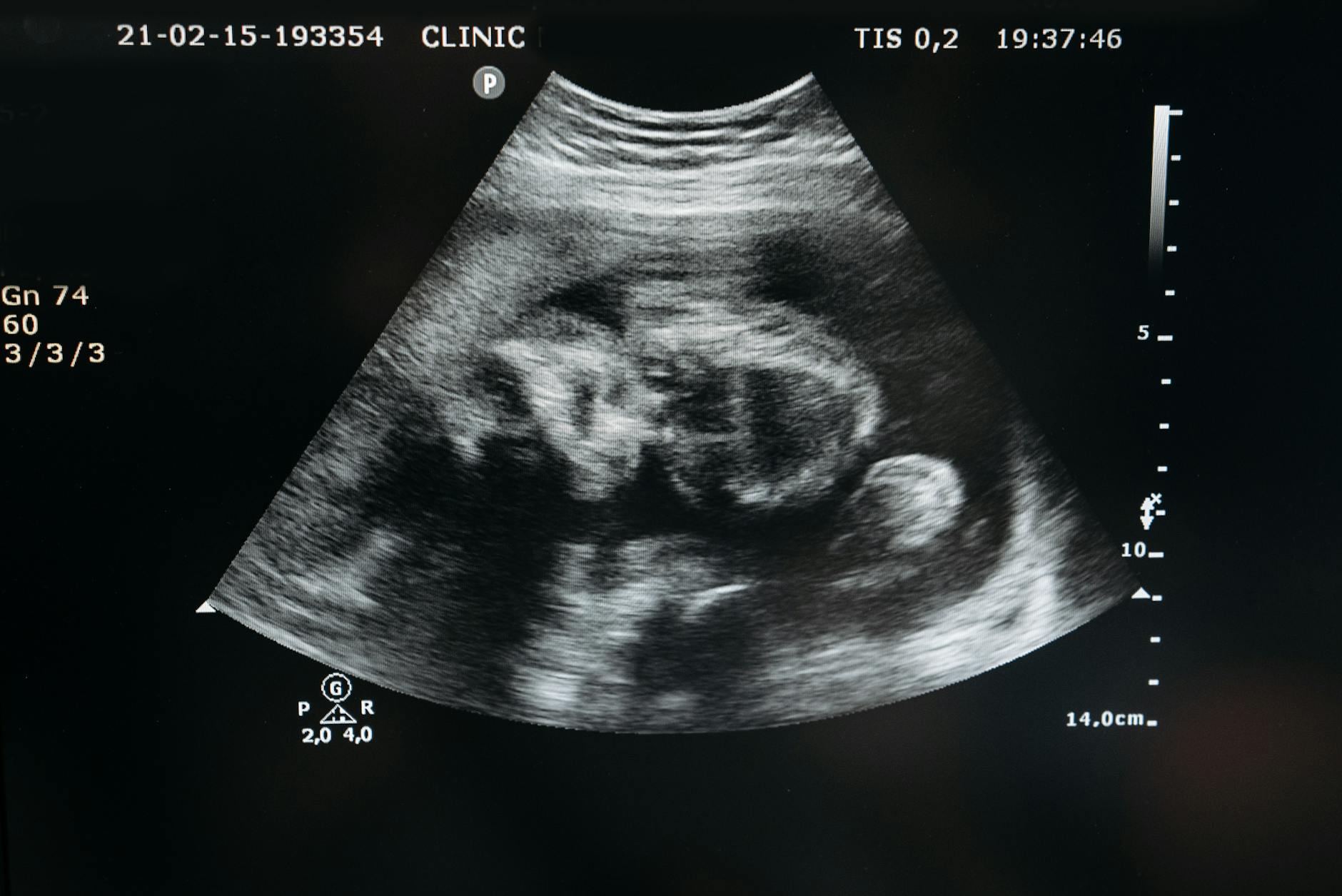
Adelson built a model based on convolutional neural networks (CNNs) to characterize fetal ultrasound images as pre-term or term. The technical strategy is elegant: the system quantitatively analyzes the fetal lung using dithering to highlight the image’s texture patterns, divides the region of interest into subregions and compares them against one another, computing a heterogeneity index that serves as a proxy for the degree of lung-tissue development.
The clinical logic behind it makes sense: as the lung matures, its microscopic architecture changes, and those changes translate into subtle texture differences in the image — differences hard to quantify by human eye but accessible to an algorithm trained for it. It’s the same pattern-analysis principle driving the broader growing role of AI in ultrasound.
From research to an app
An important strength of the project is how it was designed for practical use. The model is meant to work as an application in which the user selects the ultrasound image and the region of interest; the system then automatically returns whether the lung is classified as pre-term or term, along with the heterogeneity index. That’s the difference between a lab experiment and a tool that fits the professional’s real workflow.
This concern with usability connects the research to a broader trend in women’s-health imaging, where platforms aim to bring intelligence to the point of care — something also seen in solutions such as Trice Imaging’s Tricefy for women’s health.
The texture science behind the index
It’s worth unpacking the concept of heterogeneity, because it’s the heart of the method. In radiomics, “texture” isn’t what we casually see on the screen, but the set of statistical relationships between pixels: how uniform or irregular the grayscale tones are within a region. An immature lung and a mature lung scatter ultrasound in distinct ways, and those differences show up as variations in the image’s graininess.
By applying dithering and breaking the region of interest into comparable subregions, the model amplifies precisely those fine contrasts and condenses them into a number. The heterogeneity index, then, is an attempt to turn the tissue’s “appearance” into an objective, reproducible measure — the same kind of approach radiomics already uses in oncology to characterize tumors. The advantage is objectivity; the challenge is ensuring the number stays stable across different machines, presets, and operators.
Implications for clinical practice
If validated, a non-invasive tool for estimating lung maturity would have a direct impact on extremely sensitive decisions. In pregnancies at risk of preterm birth, it could help define whether to bring delivery forward, intensify corticosteroid therapy, or wait — always as decision support, never as a substitute for clinical judgment. In regions with limited access to laboratories and invasive procedures, the potential gain is even greater, since it repurposes a cheap and widely available exam.
The usual caveat applies: this is an early study, and AI models require prospective validation in diverse populations before any routine use. The heterogeneity index will need to be tested against real clinical outcomes and against existing gold standards to prove it measures what it promises to measure.
Outlook
Adelson’s work adds to a growing body of research applying radiomics and deep learning to obstetric imaging. The direction is clear: extract from routine exams the information that once only invasive procedures could provide. For Latin America, where obstetric ultrasound is widely accessible but specialized analysis isn’t always available, tools like this could democratize complex assessments — provided they come with rigorous validation, data governance, and responsible workflow integration.
Source: AuntMinnie — “AIUM: Ultrasound-based AI model could help measure fetal lung maturity”