
A Series E that pushes Aidoc into a new league
Aidoc, a leading clinical AI vendor for radiology, has closed a $150 million Series E round led by Goldman Sachs Growth, with additional contributions from General Catalyst, SoftBank Investment Advisors and NVentures, Nvidia’s venture arm. With this raise, the company crosses the $500 million mark in cumulative funding and reinforces a wider thesis: AI-driven clinical workflows are leaving the proof-of-concept stage and becoming hospital-grade infrastructure.
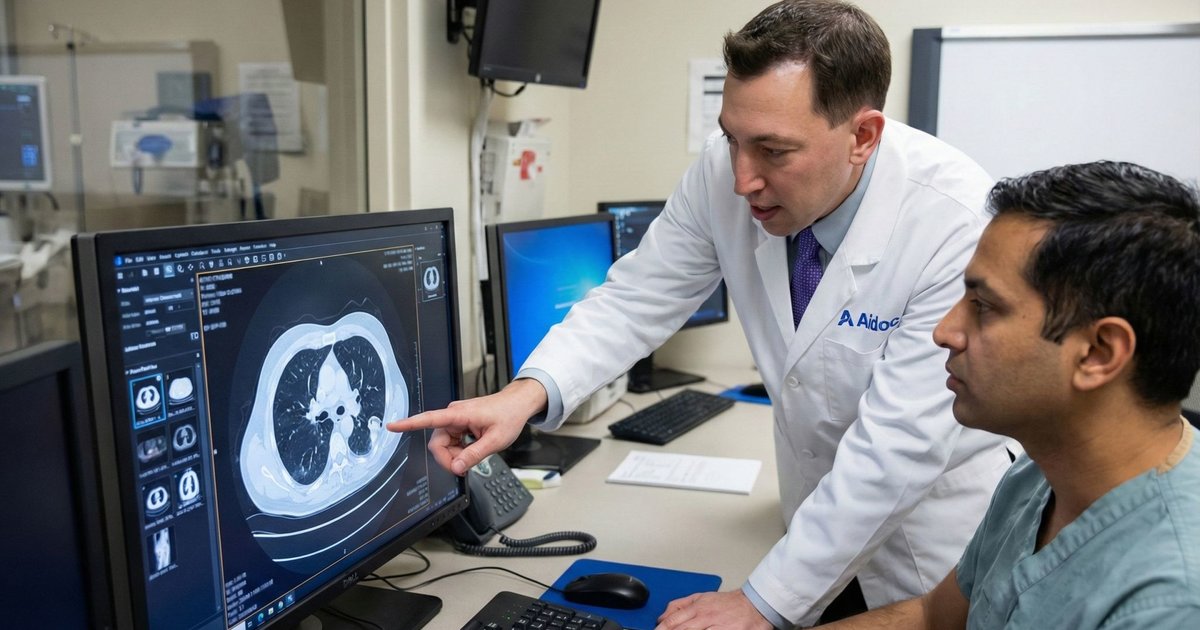
Who Aidoc is and why it matters
Founded in 2016 and headquartered in New York, Aidoc has become one of the global benchmarks for clinical AI. The company holds the largest set of Food and Drug Administration (FDA) clearances for computer aided detection (CAD) on the market, with deployments touching roughly 60 million patients per year across nearly 2,000 hospitals. To date, its technology has analyzed more than 110 million imaging cases, making Aidoc one of the few vendors with real-world clinical scale rather than pilot-only data.
The macro picture behind that growth is familiar to anyone tracking the field: U.S. and European hospitals have moved beyond pilots and started consolidating projects, looking for platforms that can orchestrate multiple algorithms under a centralized operational framework. That trend echoes integrations such as DeepTek’s tie-up with deepc, where radiology AI stops being a bag of disconnected tools and starts behaving as a native PACS layer.
Where the money goes: CARE Foundation Model and automated drafts
A significant portion of the new round will fuel Aidoc’s CARE Foundation Model, first introduced at RSNA 2024. Unlike disease-specific models, this foundation model is designed to adapt to a wide variety of clinical tasks with minimal additional training, applying the logic of large generalist models to the medical imaging domain.
Aidoc has also signaled new capabilities focused on automated radiology draft report creation. CEO and co-founder Elad Walach has stated that the goal is to cover the full clinical workflow from “pixel to draft report” within two years. That maps almost one-to-one onto the idea of a “radiology copilot” — a model that returns a skeleton report with findings, measurements and impressions, while the radiologist plays auditor and clinical validator. The economics of that approach connect directly with research on interpretation efficiency in radiology.
Why investors are betting on regulatory rigor
For Christian Resch, MBA, partner at Goldman Sachs Growth and Aidoc board member since February, the investment thesis hinges on a rare blend of advanced technology with regulatory discipline. “Aidoc pairs advanced technology with regulatory rigor in a way that few companies have achieved,” he said. From an institutional investor perspective, that profile lowers long-term regulatory risk and increases the company’s ability to sell into large hospital networks where procurement depends on robust clearances and auditable processes.
Nvidia’s involvement, through NVentures, is no accident either. As medical imaging foundation models grow in parameters and in supported modalities, the compute cost of training and inference becomes a meaningful line item in the company’s budget. Having Nvidia inside the cap table reinforces access to specialized hardware and to technical partnerships for scaling inference across hospital environments with strict latency requirements.
What changes in clinical practice
For radiologists working in diagnostic centers or hospital networks, three practical effects will likely materialize in the coming months. First, an expanded catalog of automatically detected findings, especially in CT and X-ray, with emphasis on critical conditions such as pulmonary embolism, intracranial hemorrhage and aortic dissection. Second, the gradual entry of generalist models capable of running across multiple protocols without parallel pipelines. And third, a closer step toward the era of AI-prewritten reports, where the radiologist becomes a clinical auditor rather than a producer of plain text.
That last point demands attention to local validation: each service must evaluate how these automated drafts behave in their own population, factoring in equipment, protocols and prevalence. Centers still relying on manual workflows should consider PACS and RIS modernization plans to be able to absorb these modules with proper DICOM SR and HL7 FHIR integration.
Wider context: a consolidating market
Funding rounds like Aidoc’s reinforce a consolidation pattern in the global radiology AI market. After years of fragmented growth, with dozens of vendors specializing in one or two pathologies, hospitals are now favoring single platforms that orchestrate several algorithms. In parallel, an ongoing wave of acquisitions and strategic partnerships is reshaping the market — a phenomenon also visible in AI tooling applied to radiation oncology, where integrated ecosystems are gaining ground over point solutions.
For emerging markets, the trend suggests local adoption will gain traction through partnerships with integrators and distributors that already operate in PACS, rather than isolated deployments. Even mid-sized centers can benefit if they have mature imaging pipelines, clinical data governance and the ability to validate model performance on local cohorts.
Outlook: AI as standard support by 2030
Walach was explicit about the long view: by 2030, every complex diagnostic decision should be supported by AI capable of enabling earlier detection and reducing preventable error. It is an ambitious target, but consistent with the adoption curve emerging across U.S. hospital networks. Limitations are real — model bias, cross-population generalization, prospective validation and integration cost — yet pressure for operational efficiency and lower diagnostic error keeps pushing adoption even in conservative health systems.
Aidoc’s move serves as a thermometer for what is coming: institutional investors are now treating clinical AI as infrastructure rather than ancillary software. For imaging service leaders, understanding that transition and anticipating integration and governance requirements has become part of the competitive playbook.