
The International Atomic Energy Agency (IAEA) and Fujifilm signed an agreement in late June 2026, during Director General Rafael Mariano Grossi’s visit to Japan, to expand diagnostic imaging, professional training and access to cancer services in low- and middle-income countries. The partnership falls under the agency’s Rays of Hope initiative and puts Fujifilm’s imaging and artificial-intelligence portfolio to work in regions that lack the equipment and specialists needed to diagnose cancer in time.
What the IAEA and Fujifilm agreed
The document was signed by IAEA Director General Rafael Mariano Grossi and Fujifilm President and CEO Teiichi Goto. It takes the form of a “practical arrangement” — a technical-cooperation framework that structures joint action on three fronts: making imaging technology available, training radiologists, technologists and medical physicists, and supporting diagnostic capacity-building in member states that cannot currently meet oncology demand.
Unlike a one-off equipment donation, the deal is built around sustainability: delivering a mammography unit or an ultrasound scanner achieves little if no one can operate, interpret and maintain it. Hence the emphasis on skills transfer and education, aligned with the regional Anchor Centres the IAEA has been building to serve as training and research hubs across each region.
Rays of Hope: closing the cancer gap
Launched in 2022, Rays of Hope confronts one of the most brutal inequalities in medicine. Roughly 70% of cancer deaths worldwide occur in low- and middle-income countries, which receive only about 5% of global spending on oncology. The equipment shortfall is stark: low-income nations would need on the order of eight times more radiotherapy machines just to reach the minimum target of one unit per 500 patients.
More than 100 countries have already requested IAEA support through the programme, and around 20 institutions have been designated Rays of Hope Anchor Centres — reference sites that concentrate training, research and innovation in their regions. The Fujifilm agreement adds to the agency’s earlier partnerships with manufacturers such as GE HealthCare and Varian and with the European Society of Radiology, forming a public-private network built around access to diagnosis.
Fujifilm’s imaging and AI arsenal
Fujifilm stopped being merely a photographic-film brand long ago. Today the company holds one of the broadest medical-imaging portfolios on the market: digital radiography (the FDR line plus mobile bedside and ICU units), full-field digital mammography and tomosynthesis, ultrasound, endoscopy — where it is a world leader — and information systems such as the Synapse PACS. That stack speaks directly to the digital transformation of radiology, in which image workflows move off paper and onto the network.
The most strategic component for low-resource settings, however, is artificial intelligence. Fujifilm’s REiLI platform applies deep learning to triage and study prioritisation, helping flag critical findings when no radiologist is available around the clock. The theme connects to the rise of AI vendors in medical imaging, whose tools are being validated to speed up diagnosis. The company’s competencies in nuclear medicine and contrast agents also sit close to the theranostics and molecular oncologic imaging that are gaining ground in precision oncology.
Imaging and radiotherapy: the capacity still missing
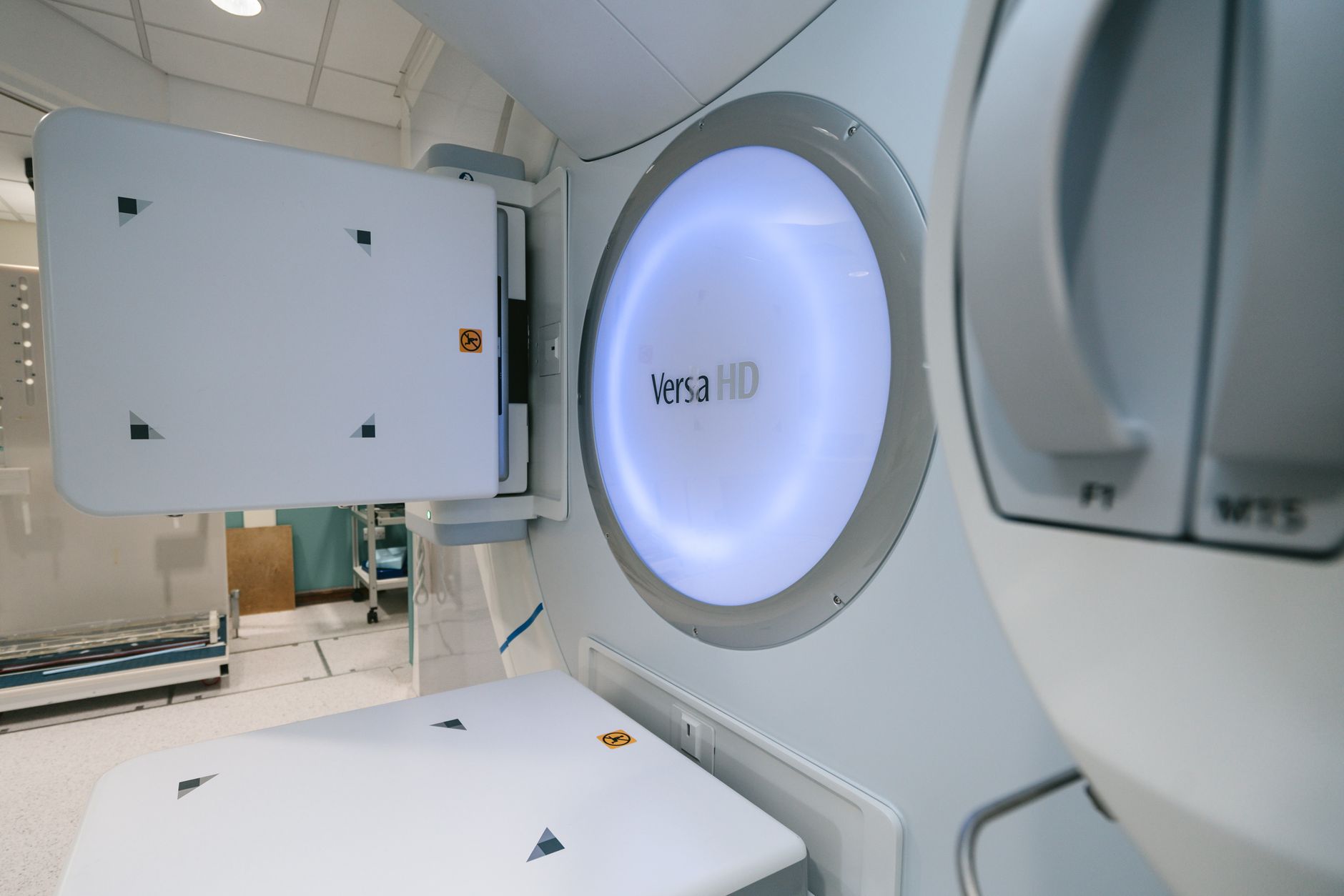
Fighting cancer requires a full chain: screening, diagnostic imaging, staging, planning and treatment. Radiotherapy depends on quality images to delineate the target volume and spare healthy organs; without adequate CT, MRI or PET, planning is compromised. That is why the IAEA treats diagnostic imaging and radiotherapy as parts of the same effort rather than as isolated programmes.
Workforce is the weakest link. A state-of-the-art linear accelerator or mammography system only delivers results with trained medical physicists, dosimetrists, technologists and radiologists. Telemedicine and teleradiology programmes help dilute the shortage of specialists, letting a report be issued remotely while reference centres supervise newly launched services. This is precisely where the AI embedded in Fujifilm’s equipment can make a difference, acting as a second pair of eyes where the human specialist is scarce.
Implications for clinical practice and beyond
For clinicians on the front line, agreements like this signal that access to diagnosis is no longer the sole problem of health ministries but has begun to mobilise industry. In Brazil and across Latin America, where public health systems live with long radiotherapy queues and equipment concentrated in wealthier regions, the Rays of Hope logic applies directly: expand installed capacity, train teams and use technology to bring diagnosis to remote areas.
AI triage in settings with few specialists is especially relevant to the Latin American reality. Tools that prioritise suspicious studies, flag pulmonary nodules or support mammography reading can shorten the interval between suspicion and confirmation of cancer — a window in which every week counts for prognosis.
Outlook
The IAEA-Fujifilm agreement will not close the access gap on its own, but it reinforces a path: long-term partnerships that pair equipment with training and financial sustainability. Reports co-sponsored by the IAEA have already shown that investing in imaging, treatment and care could avert millions of cancer deaths over the coming decades, with a positive economic return. The challenge now is to turn memoranda into installed machines, trained professionals and patients diagnosed in time — and success will be measured less by the number of agreements than by the number of lives actually reached.
Source: AuntMinnie; International Atomic Energy Agency (IAEA), Rays of Hope initiative.