
Radiology was the first medical specialty to go truly digital — and today it is paying the price for that head start. In an opinion piece by Nicholas Galante and Rish Seth, the argument is blunt: decades of new technologies layered onto aging infrastructure have produced what the authors call “digital rot,” an accumulation of fragmentation that erodes efficiency in the very field that embraced digital transformation earliest.
The specialty that digitized first
In the mid-2000s, radiology was technologically ahead of the rest of health care — not incrementally, but structurally, in how the work got done. The move from film to digital imaging was not a simple tool upgrade; it was a fundamental shift in operations. When the Baltimore VA Medical Center became the first filmless facility in 1993, it proved that an entire specialty could reorganize around a new technological foundation.
By the early 2010s, PACS had been deployed in nearly 90% of hospitals, effectively closing the chapter on physical film. That transformation required solving interoperability, and the DICOM standard created a common language for imaging data — years before the rest of health care. Around the same time, radiology adopted voice recognition more completely than any other area of medicine. Together, these developments made it the first digitally native specialty.
What “digital rot” means
The catch is that radiology kept building on what it had already built. Each new capability — advanced visualization, AI-assisted triage, enterprise imaging, structured reporting — was introduced into an environment designed for an era of lower imaging volumes and less data complexity. The systems were not designed wrong; they simply were not designed for what came next. That gradual degradation, new layers stacked on an outdated foundation, is what the authors label digital rot.
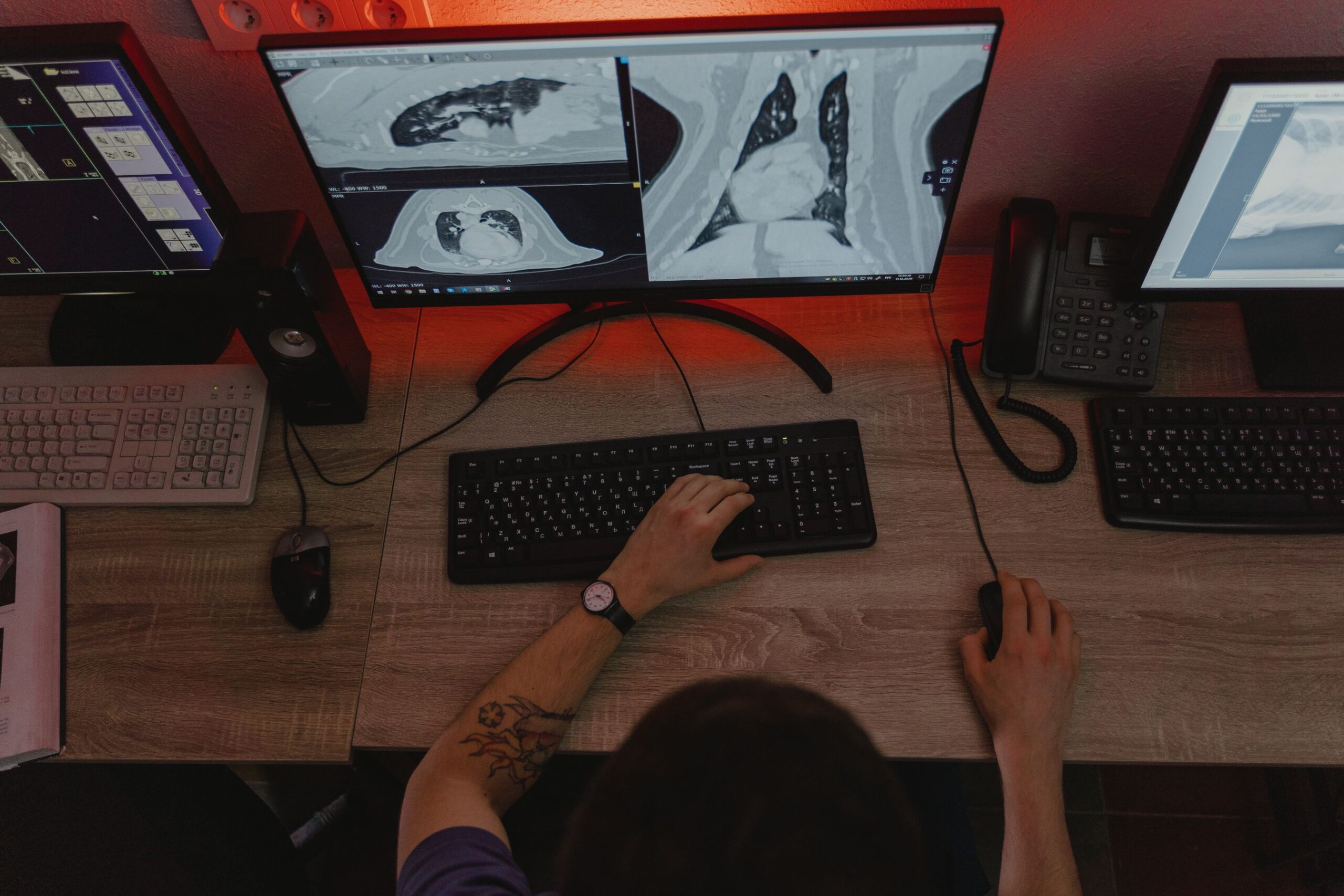
More capability brought more complexity. PACS was transformative and enabled more efficient, flexible reading. The expectation was that later technologies would deliver similar gains. In practice, the story is messier: each new tool entered an environment where integration was never fully resolved. Older systems created inefficiency through slowness; newer ones create it through fragmentation and interruption. The daily reality shows up as constant toggling between imaging and reporting, repetitive template navigation, and manual copying of information that should move on its own — with burnout rates estimated between 45% and 60%.
Who decides and who suffers
There is a political dimension, too. Radiologists are often not the primary decision-makers when these tools are selected; choices tend to be driven by administrative or financial priorities that do not always align with how the radiologist actually works. When tools are adopted that way, they tend to persist even when they fail to deliver value, and institutional knowledge becomes concentrated in a few individuals, creating bottlenecks and risk.
Meanwhile, the clinical reality keeps shifting: imaging volumes rise, data complexity grows, and turnaround expectations tighten, all while the workforce fails to grow proportionally — a mismatch we explored when covering the unfilled “zombie” jobs and the regional radiologist shortage. The paradox is cruel: the specialty generates more data than ever, yet much of it stays fragmented across systems and locked inside legacy infrastructure. It is artificial scarcity inside a system defined by abundance.
AI without an integration framework
Artificial intelligence makes things worse when it arrives without a coherent integration framework. Many tools perform well on the tasks they were built for, but they are deployed into environments that were never designed to absorb them cleanly. The effect is counterintuitive: instead of reliably reducing workload, AI often adds steps and decisions, raising cognitive load rather than easing it. The answer is not less technology but better integration — a lesson visible in efforts that bring native reporting into the radiologist’s “cockpit” and in formats such as the interactive multimedia report.
The road to maturity
Radiology functions as the core diagnostic infrastructure of modern medicine. When that system slows or fragments, the impact reaches well beyond the imaging department, touching clinicians and patients. Historically, radiology has been a leading indicator of how technology enters clinical practice — and the lesson now is no longer about adopting technology, but about what comes after adoption.
For the authors, workflow friction, fragmentation, and cognitive overload are not signs of decline but the predictable growing pains of an industry that moved fast and is now ready to mature. The foundation was right; the standardization was right. What is missing now is the same clarity of purpose applied to integrating workflows, AI tools, and clinical systems into a single coherent experience, with the radiologist firmly at the center. In settings still consolidating PACS and wrestling with heterogeneous systems, that is an especially concrete agenda.
Source: Radiology Today — article by Nicholas Galante, MD, and Rish Seth, MD, CIIP.