
Artificial intelligence applied to mammography may flag subtle signs of breast cancer up to a decade before a clinical diagnosis. That is the takeaway from a large Swedish study published in Radiology, in which three commercial algorithms — originally built for detection — proved able to estimate individual risk long before disease became visible to the radiologist.
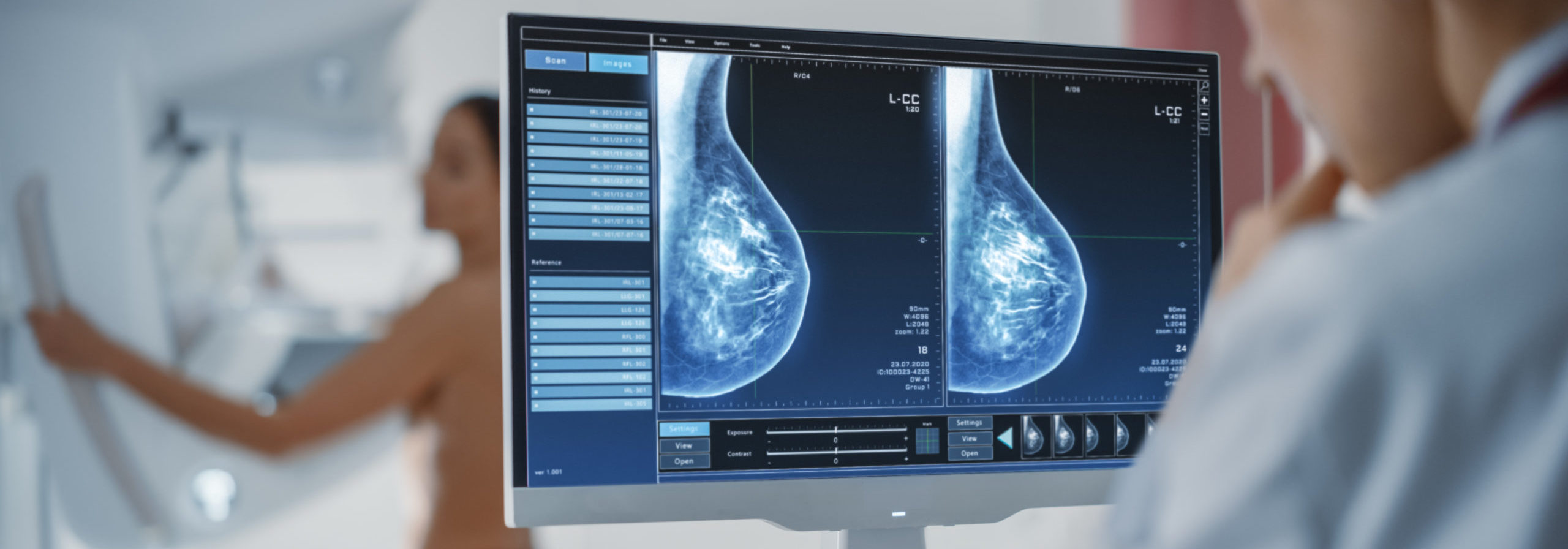
Predicting who is most likely to develop the disease is not just about diagnosing earlier. It opens the door to tailored screening, concentrating supplemental imaging and closer surveillance on the women who would truly benefit. Clinical tools such as the Tyrer-Cuzick model and breast density analysis already attempt this, but with limited performance. The novelty here is using the screening image itself, read by AI, as the predictor.
What the Swedish study found
The researchers analyzed 89,000 mammograms from 31,400 women followed over a 10-year period within Sweden’s national screening program, where women aged 40 to 74 undergo biennial mammography interpreted by two radiologists. During the study, 12,100 participants (39%) were ultimately diagnosed with breast cancer — a dataset robust enough to test the hypothesis with statistical rigor.
Three commercial algorithms generated the scores: Vara AI (from Vara), Lunit Insight MMG (from Lunit), and MammoScreen (from Therapixel). It is worth noting that all three were designed for cancer detection, not risk prediction. Even so, among women who later developed the disease, scores rose progressively with each exam, while remaining relatively stable among those who stayed cancer-free.
The numbers are striking. At a fixed 90% specificity, the systems flagged 19% to 20% of future cases six years before diagnosis. Detection climbed to 23%-25% at four years and to 35%-39% at two years before diagnosis. Even a full decade out, the algorithms already identified 13% to 17% of cancers that would later emerge.
More than the absolute value in any single exam, what stood out was the trajectory: a score that climbs exam after exam acts as a silent alarm. This sequential reading — comparing a woman’s current score with her previous ones — may be more informative than any isolated measurement, and it fits naturally into the longitudinal history that screening programs already maintain.
How AI sees risk before the radiologist
Across all pre-diagnostic exams, the algorithms reached AUC values between 0.63 and 0.67, outperforming breast density alone, which sat at 0.57. It may sound like a modest gap, but in population screening every point of accuracy translates into thousands of better-stratified women. What the AI appears to capture are subtle textural and architectural patterns — density distributions, microstructures, and asymmetries — that escape conventional human reading and precede any defined lesion.
This behavior converges with another frontier in the field: foundation models trained on massive image volumes. We have already covered how vision-language models applied to mammography expand what can be extracted from a single exam. The logic here is similar: the score is not a simple “cancer or no cancer” call, but a continuous signal that evolves over time.
Crucially, these are signals the human eye is not trained to weigh quantitatively. A radiologist reads each mammogram for findings; the algorithm instead distills the whole breast into a single probability that can be tracked across years. That shift — from event detection to continuous risk monitoring — is what makes the approach genuinely new, and it explains why scores designed for detection still carry predictive value.
Implications for screening practice
For the radiologist and the imaging-service manager, the practical message is clear: AI can move beyond serving as a second read and start guiding when and how intensively to screen each woman. Instead of a fixed interval for everyone, it becomes possible to personalize frequency and recommend supplemental imaging — such as MRI or ultrasound — for those with elevated scores.
The same technology now used to triage low-risk mammograms and ease double reading could, in the future, flag high-risk patients early, closing the loop between efficiency and safety. In systems with uneven mammographic coverage, this stratification can help direct installed capacity to those who need it most.
In day-to-day practice, the benefit only materializes if the score reaches the workflow. That means integrating the AI output into the PACS and the structured report, so the radiologist sees risk evolving alongside the images without switching between systems. It is the same logic as opportunistic radiology, where data already captured during an exam is reused to generate additional clinical information at no extra acquisition cost.
Limitations and outlook
Caution is warranted. The three algorithms were not designed to predict risk, and the authors stress that prospective validation is still needed before any large-scale clinical use. There are also calibration questions across different populations, equipment, and protocols — a score trained in Sweden will not necessarily transfer without adjustment to other settings.
Still, the study adds to a growing body of evidence that mammography AI can extend beyond detection into long-term risk stratification. By recognizing patterns years before diagnosis, these scores offer an additional layer of longitudinal monitoring and make room for genuinely personalized screening strategies.