
IGZO enters industrial inspection — with direct read-through to radiology
Finland’s Detection Technology, a global supplier of x-ray imaging solutions, expanded its flat panel detector portfolio for battery inspection in May 2026 with the addition of IGZO (Indium Gallium Zinc Oxide) panels. The new models come in three sizes — 1313, 3030 and 4343 — alongside the established amorphous silicon (a-Si) line. The announcement landed just before the China International Battery Fair (CIBF), in Shenzhen on May 13-15, 2026, and is another sign that IGZO has graduated from novelty to a mature commercial option — including in medical applications.
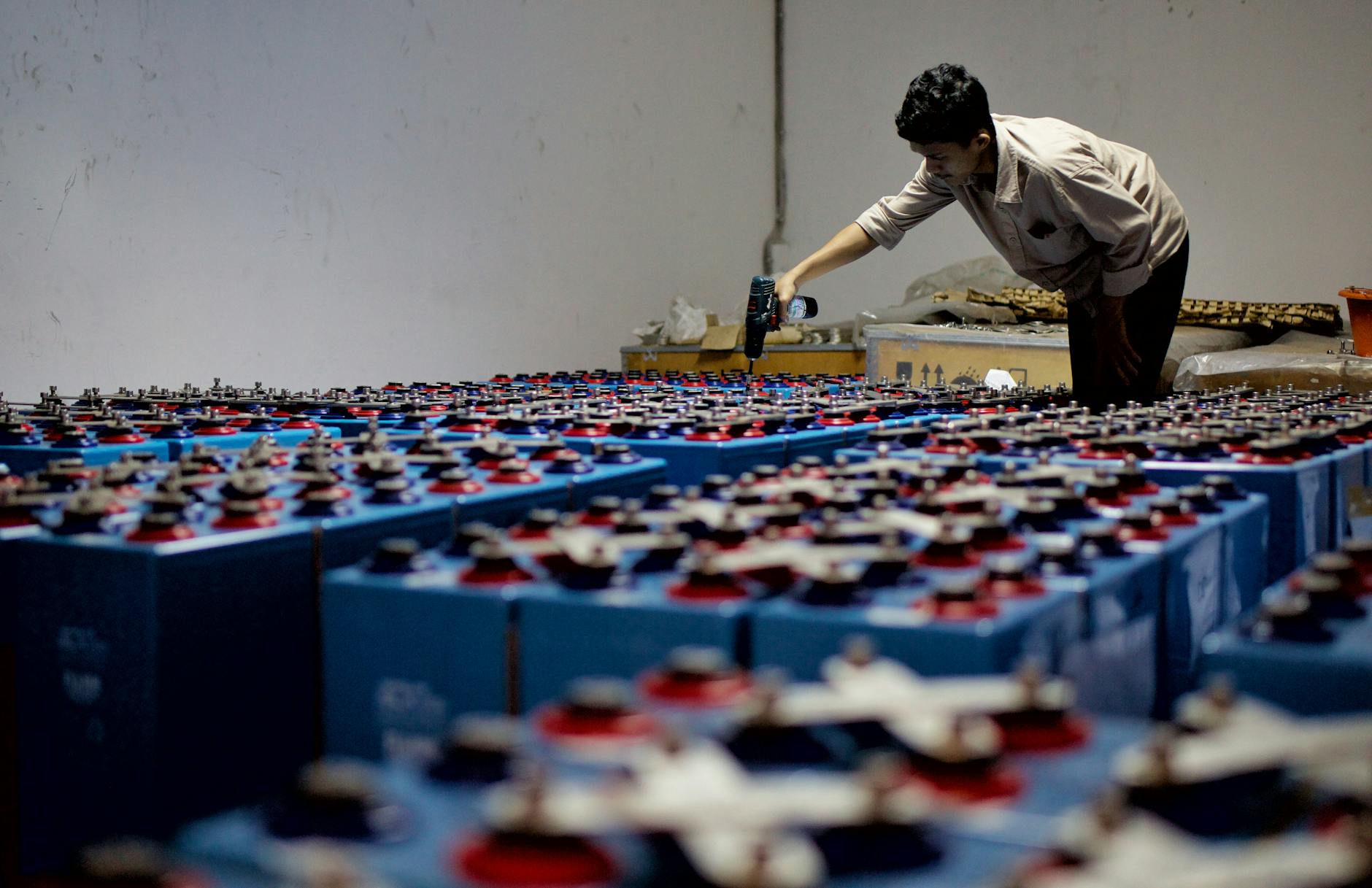
While the immediate application announced is the inspection of battery cells and packs — including cylindrical, pouch, button and power-winding formats — the underlying technology has a clear read for medical imaging. IGZO panels are already being adopted in digital radiography (DR) and dental imaging precisely for the same characteristics that make them attractive on the factory floor: higher electron mobility, lower noise and the ability to operate at high frame rates.
What IGZO offers that a-Si does not
a-Si panels have dominated the x-ray market for over two decades and remain capable for most applications. The practical IGZO advantage lies in transistor physics: the electron mobility of indium gallium zinc oxide is orders of magnitude higher than amorphous silicon. That means pixels switch faster, support high frame-rate readout and offer adequate sensitivity at low dose. In industrial settings, this translates into in-line inspection without slowing down the production rhythm. In medicine, it opens the door to digital fluoroscopy, dynamic radiography and faster tomosynthesis.
For EV batteries specifically, Detection Technology highlights the ability to identify internal defects such as air pockets, cracks, voids, misaligned layers, foreign objects, lithium plating, welding defects, pole-piece wrinkling and overhang wrapping misalignment. These defects directly correlate with internal short-circuit and thermal-runaway risk — themes covered in 2026 publications such as the Energy Technology study on x-ray detection of shorts in smartphone packs.
Why this matters to radiologists and hospital leaders
The connection is direct: medical imaging uses flat panels from the same family, supplied by players like Trixell, Varex, Vieworks, Carestream and Detection Technology itself. When IGZO reaches industrial maturity, its entry into medical products usually follows within a few years. Signals are already there — Detection Technology previously launched IGZO panels for dental imaging, broadening the application playbook.
For radiology services, the impact can arrive through three paths. First, new portable and bedside DR equipment, where weight and read-out speed are key. Second, replacement upgrade panels — clinics running older stations can boost performance by swapping the detector without overhauling the whole system. Third, interventional fluoroscopy, where higher frame rates can reduce motion blur in cardiac and vascular procedures. To see how hardware offerings intersect with the AI software layer, see the DeepTek and deepc integration in radiology AI and Aidoc’s $150 million round to scale radiology AI.
Market and supply-chain implications
The industrial x-ray inspection segment is projected to grow from $0.97 billion in 2025 to $1.07 billion in 2026, at an estimated 10.4% CAGR. That volume forces panel suppliers to scale production and invest in IGZO variants, with spillover effects on the medical side. Hospitals and equipment manufacturers can benefit via lower unit cost and broader supply — provided the regulatory learning curve (FDA, MDR, Anvisa) is overcome.
There is also a geopolitical layer. China holds a major share of EV battery industrial capacity. If Detection Technology can lock in preferred-vendor status with Chinese EV manufacturers, the company gains scale and credibility that transfer into the Western medical market — a phenomenon already seen with CT and MR in the early 2000s.
What to monitor in the next few months
Three signals deserve monitoring. First, announcements from medical x-ray equipment vendors (Carestream, Konica Minolta, Fujifilm, GE) integrating IGZO panels in their DR and fluoroscopy portfolios. Second, image-quality comparison studies between IGZO and a-Si in clinical radiography — metrics like DQE, MTF and effective dose are critical to validate real-world gains. Third, M&A activity in the detector supply chain: IGZO maturation may reshape partnerships between OEM equipment makers and panel suppliers.
The Detection Technology launch is, in the end, one piece of a bigger puzzle. Flat panel detectors are sophisticated commodities, and each technology jump that consolidates in heavy industry tends to become standard in medicine a few years later. Radiologists watching equipment trends should remember the term: IGZO today is what a-Si flat panel was in the early 2000s.
For procurement teams, the practical guidance is simple: when sourcing new DR equipment in the next 18 months, ask vendors explicitly about IGZO availability, ROI versus a-Si, and roadmap commitments. Early adopters in interventional radiology and dental imaging may find better warranties and pilot pricing as suppliers seek reference customers to validate clinical performance.
Source: PNI News — Detection Technology expands battery inspection portfolio with IGZO detectors and AuntMinnie — Detection Technology adds IGZO detectors for battery x-ray inspection.