
A $20M package for oncology and outpatient imaging
Rochester Regional Health has broken ground on two projects that together represent more than $20 million in investments at its Unity campus in New York. The first is an $8.9 million expansion of oncology services at the Lipson Cancer Institute. The second is a new $12 million outpatient imaging center. Both were announced on April 27, 2026, and reflect a broader push toward decentralizing oncology and diagnostic care, bringing services closer to where patients live.
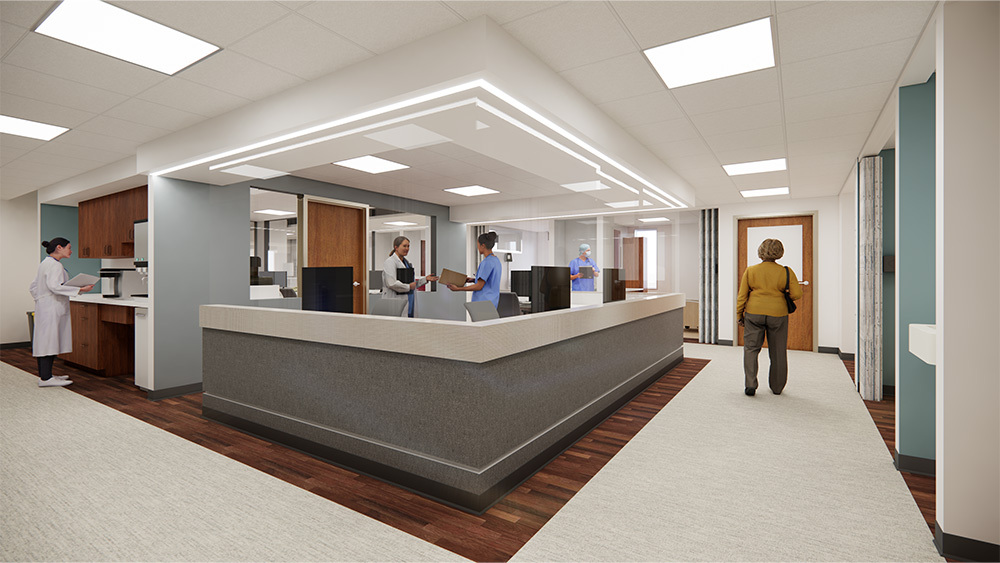
Oncology expansion: 20 infusion bays and dedicated pharmacy
The oncology expansion doubles infusion capacity at the Lipson Cancer Institute from 10 to 20 bays and adds a dedicated oncology pharmacy. For the network’s leadership, the gain is not just volume — it is workflow. A dedicated pharmacy allows chemotherapy preparation right at the point of use, cutting time between prescription and administration and reducing the risk of logistical errors. The first phase is expected to be completed by the end of 2026.
“This investment is about building the future of care for our community,” said Richard “Chip” Davis, CEO of Rochester Regional Health. “By expanding cancer services and broadening comprehensive imaging capabilities at Unity, we are strengthening our ability to deliver coordinated, patient-centered care closer to home.”
Why expanding infusion capacity is strategic
Infusion bay capacity is a classic bottleneck in oncology. As immunotherapy, monoclonal antibodies and outpatient chemotherapy protocols expand, demand grows faster than traditional capacity. Doubling from 10 to 20 bays means not only more patients per day, but also more flexibility for long protocols — many modern regimens require multi-hour infusions with extended monitoring windows.
Dr. Jeffrey Haynes, executive medical director of cancer services, noted that the additional infusion capacity and pharmacy support would let the team treat more patients while improving workflow efficiency. “This project reflects a focused investment in the clinical environment and care teams that support patients throughout their treatment journey,” he said.
A new outpatient imaging center with full modality coverage
The second project is a $12 million outpatient imaging center in the Unity Professional Office Building, scheduled to open in late 2026. The facility will offer MR, CT, DEXA, X-ray, mammography and ultrasound — a complete outpatient diagnostic package. Dr. Adam Zinkin, chief of diagnostic imaging, said the goal is to improve access to diagnostic services and strengthen coordination between imaging and specialty care.
“Access to timely, high-quality imaging is essential to accurate diagnosis and coordinated care,” Zinkin said. Construction begins April 27, and during the build-out patients will continue to access the building through the rear entrance.
The strategic move behind the $20M
Rochester Regional Health is following a pattern visible in many U.S. hospital networks: invest in outpatient oncology and community imaging to absorb growing demand without overloading tertiary hospitals. This “hub-and-spoke” model has three practical effects: it decongests the main centers, reduces patient travel time and enables more continuous care across visits, infusions and imaging exams.
The pattern aligns directly with investments such as CaroMont Health’s $200 million plan for oncology and radiation therapy and with the broader trend of hospital networks investing in integration between CT, MRI and oncology workflows on the same campus. Similar cases are multiplying across the U.S. and beginning to inspire projects in other markets.
Imaging as a pillar of modern oncology
Choosing to bring mammography, MRI, CT, DEXA, X-ray and ultrasound under one roof reflects the recognition that oncologic diagnosis is multimodal. Mammography is foundational in breast cancer screening and diagnosis; MRI is central to staging breast, prostate and pelvic tumors; CT supports staging across virtually all solid neoplasms; DEXA tracks bone density, especially under hormone therapy; and ultrasound supports image-guided biopsies and lesion follow-up.
For imaging managers elsewhere, this kind of outpatient center offers two lessons. The first is that imaging should be designed as a service integrated into the oncology plan, not as a standalone island. The second is that outpatient centers with full modality coverage hold a growing competitive edge, because they cut visit count and fragmentation of care — a real differentiator now that patient experience has become a quality metric.
Implications for clinical operations
Multi-modality outpatient centers require strict standardization of imaging protocols, integration with a centralized PACS and a clear strategy for serial comparison across exams. Coordination with radiation oncology also gains weight: simulation CTs, MRIs for image fusion in planning and follow-up exams interface directly with radiation therapy routine. Discussions about interpretation efficiency in radiology and AI applied to radiation therapy planning show that this kind of operation only works with strong digital governance.
Another critical point is staffing. Centers combining multiple modalities under one roof can adopt distributed reading models, internal teleradiology and dedicated coverage for oncologic emergencies. Integration with referring physicians, oncologists and surgeons should be designed from the start to avoid bottlenecks.
Lessons for other markets
Rochester Regional Health’s move serves as a case study for hospital networks and clinics elsewhere. In many countries, ambulatory oncology centers are still rare outside major urban hubs, even as demand grows with population aging and broader insurance coverage of oncologic care. Paired investments in infusion and imaging can shorten queues at reference hospitals and reduce time-to-treatment.
For managers, three metrics matter when adapting this kind of project: infusion bay utilization, time from imaging order to exam completion and clinical outcomes compared before and after expansion. Those metrics show whether the investment translates into real patient gain and not just installed capacity.
Outlook: decentralization and integrated care
The Rochester Regional Health story reinforces a clear trend: modern oncologic care is decentralized, multidisciplinary and heavily anchored in imaging. As treatments become more individualized — combining chemotherapy, immunotherapy, targeted therapies and radiation — coordination across services matters as much as the technology itself.
For the next few years, expect more networks to announce paired investments in outpatient oncology and community imaging. The trend should hold up even under tariff pressure, because it lowers long-term costs while improving outcomes — a hard combination for any hospital leader to refuse.
Source: DOTmed HealthCare Business News