

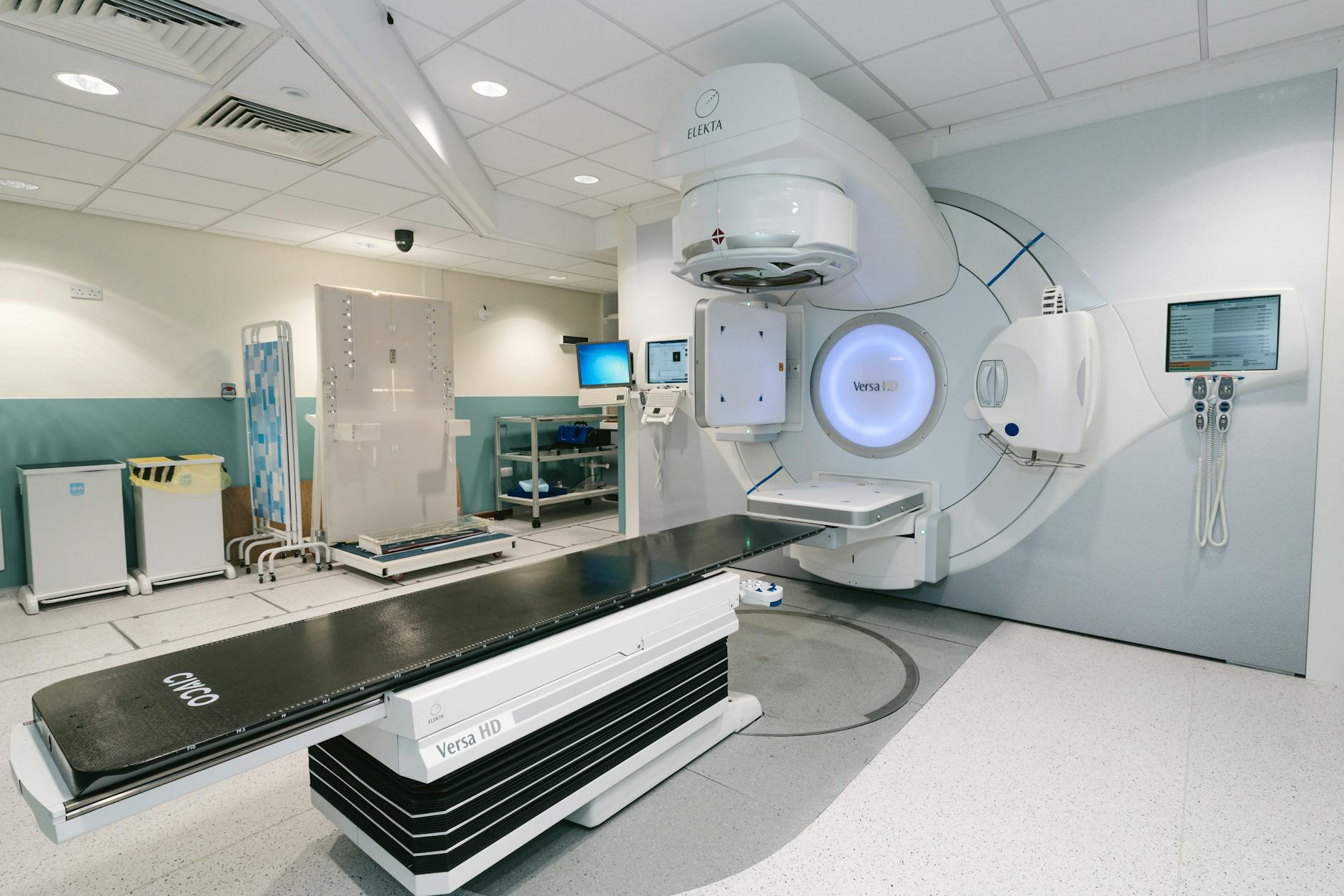
Ion Beam Radiotherapy and the Role of Monte Carlo Simulation
Charged particle therapy with light ions — defined here as elements with atomic number $Z \leq 10$, spanning from protons to neon — represents one of the most physically precise forms of radiotherapy available today. The defining characteristic of these beams is the Bragg peak: a sharp, localized deposition of energy at a well-defined depth that simply has no equivalent in photon or electron therapy. This physical advantage translates directly into clinical benefit, allowing higher doses to tumors while sparing surrounding healthy tissue. Yet that same precision demands an equally precise understanding of how beams behave inside the patient — and that is where Monte Carlo (MC) simulation becomes indispensable.
This article is part of a series examining Monte Carlo methods throughout radiotherapy. Earlier installments covered the fundamental physics and computational principles of Monte Carlo simulation and the application of MC to external photon beam dosimetry. Here the focus shifts to scanned ion beam delivery (SIBD), the dominant technique in modern particle therapy centers, and the modeling approaches that make MC-based dose calculation reliable enough for clinical deployment.
The major general-purpose MC codes used in this domain are GEANT4, FLUKA, PHITS, SHIELD-HIT, and MCNP. Each has a different heritage and different strengths in nuclear physics modeling. In practice, clinical implementations have consolidated around a smaller set: FLUKA underpins the treatment planning at the Heidelberg Ion Beam Therapy Center (HIT) in Germany and at CNAO in Italy, while GATE (built on Geant4) supports MedAustron in Austria and has been packaged into a dedicated clinical release, GATE-RTion. Other frameworks including PTSim, GAMOS, and TOPAS have also found use in research and commissioning workflows. The choice of code matters less than the rigor of validation, but the physics models embedded in each code — particularly for nuclear fragmentation — carry real dosimetric consequences that will be explored throughout this article.
Scanned Ion Beam Delivery: How the Technique Works
Scanned ion beam delivery is a time-dependent technique that exploits the unique properties of charged particles to paint dose onto a tumor volume with millimeter-level precision. Two orthogonal magnetic deflectors sweep the beam laterally across the tumor cross-section in two dimensions, while the beam energy is varied — either between spills from a synchrotron or through degraders downstream of a cyclotron — to shift the Bragg peak to successively deeper layers. The result is a fully three-dimensional dose distribution assembled spot by spot, layer by layer, with no need for patient-specific hardware such as brass apertures or compensators.
Clinical proton energies span roughly 60 to 250 MeV, corresponding to ranges in water of approximately 30 to 380 mm. Carbon ion beams typically operate between 120 and 430 MeV per nucleon (MeV/u), covering ranges from about 30 to 300 mm. These numbers define the engineering envelope of the accelerator and nozzle, and they set the boundaries within which the MC model must perform accurately.
When tumors are located close to the skin — at depths accessible only to the shallowest energy settings — a range shifter can be inserted into the beam path to provide additional energy degradation without reconfiguring the accelerator. Without any passive beam-modifying elements in the nozzle, the water-equivalent thickness (WET) of the nozzle itself is typically only 1 to 3 mm, a feature that distinguishes scanned delivery from passive scattering systems and has direct implications for the accuracy of nozzle-exit MC models.
Synchrotron-based facilities deliver beam in spills at discrete, variable energies, while cyclotron-based systems produce a continuous beam at fixed energy that requires energy selection through a degrader-and-collimator system. The two accelerator architectures lead to different beam optical properties at the nozzle entrance, and any MC model must account for those differences when characterizing the incident beam phase space.
Pencil Beam Characterization: Energy and Optical Parameters
A single pencil beam — one individual spot in the scanned delivery — is fully characterized by two classes of parameters: energy parameters and optical parameters. Getting both right is a prerequisite for any accurate MC simulation of the dose distribution.
Energy Parameters
The energy distribution of a pencil beam is described by its mean energy $\bar{E}$ and its energy spread $\sigma_E$. In practice, the mean energy determines where the Bragg peak falls in depth, while the energy spread controls how sharp that peak is. A narrower energy spread produces a sharper, higher Bragg peak; a broader spread smears it out longitudinally. The commissioning strategy for tuning these parameters in a MC model follows a straightforward recipe: first match the range (typically defined as the depth at which dose falls to 80% of the maximum on the distal side of the Bragg peak), then match the peak width. These two measurements together constrain $\bar{E}$ and $\sigma_E$ independently and unambiguously.
Optical Parameters and Phase Space
The transverse properties of a pencil beam are described in the language of accelerator optics. The phase space of the beam at any longitudinal position $z$ is a two-dimensional probability density function (PDF) in position $x$ and angle $x’$ (the divergence). The 1-sigma contour of this distribution traces an ellipse whose area is proportional to the beam emittance $\varepsilon$. At the beam waist — the position of minimum spot size — the emittance takes the simple form:
$$\varepsilon = \pi \cdot \sigma_x \cdot \sigma_\theta$$
where $\sigma_x$ is the spatial width and $\sigma_\theta$ is the angular divergence. Away from the waist, the full description requires the Twiss parameters $\alpha$, $\beta$, and $\gamma$, which parameterize the orientation and shape of the phase-space ellipse according to:
$$\gamma x^2 + 2\alpha x x’ + \beta x’^2 = \varepsilon$$
with the constraint $\beta\gamma – \alpha^2 = 1$. Using the convention $A = 4\pi\varepsilon$, the beam moments are:
$$\sigma_x^2 = \varepsilon \beta \qquad \sigma_{x’}^2 = \varepsilon \gamma$$
The Twiss framework is not merely mathematical bookkeeping. It encodes physically meaningful beam properties: a beam with $\alpha > 0$ is converging toward a downstream waist, while $\alpha < 0$ describes a diverging beam past its waist. This distinction turns out to matter when modeling specific facilities — at MedAustron, for instance, measurements confirmed that the beam entering the nozzle is converging despite exiting in a diverging state, a subtlety that would be missed by a naive fit to spot profiles measured only at isocenter.
Scanning Geometry and Virtual Source Distance
Beyond the intrinsic beam properties, the scanning geometry introduces an additional parameter: the source-to-axis distance (SAD) from the scanning magnets to the isocenter. Horizontal beamlines equipped with scanning magnets close to the nozzle exit produce diverging beams at isocenter. Gantry systems that place bending magnets before the final 90-degree dipole can produce a quasi-parallel beam, effectively pushing the virtual source to a very large distance. The virtual SAD (vSAD) can be extracted experimentally from spot fluence maps measured at multiple air gaps, providing the geometric scaling needed to propagate the beam model from the nozzle plane to any depth in the patient.
Nozzle Accessories and Their Dosimetric Consequences
Even in a nominally transparent scanning nozzle, several passive elements may be present or may be inserted depending on the clinical scenario. Each one perturbs the beam phase space in ways that a MC model must handle correctly.
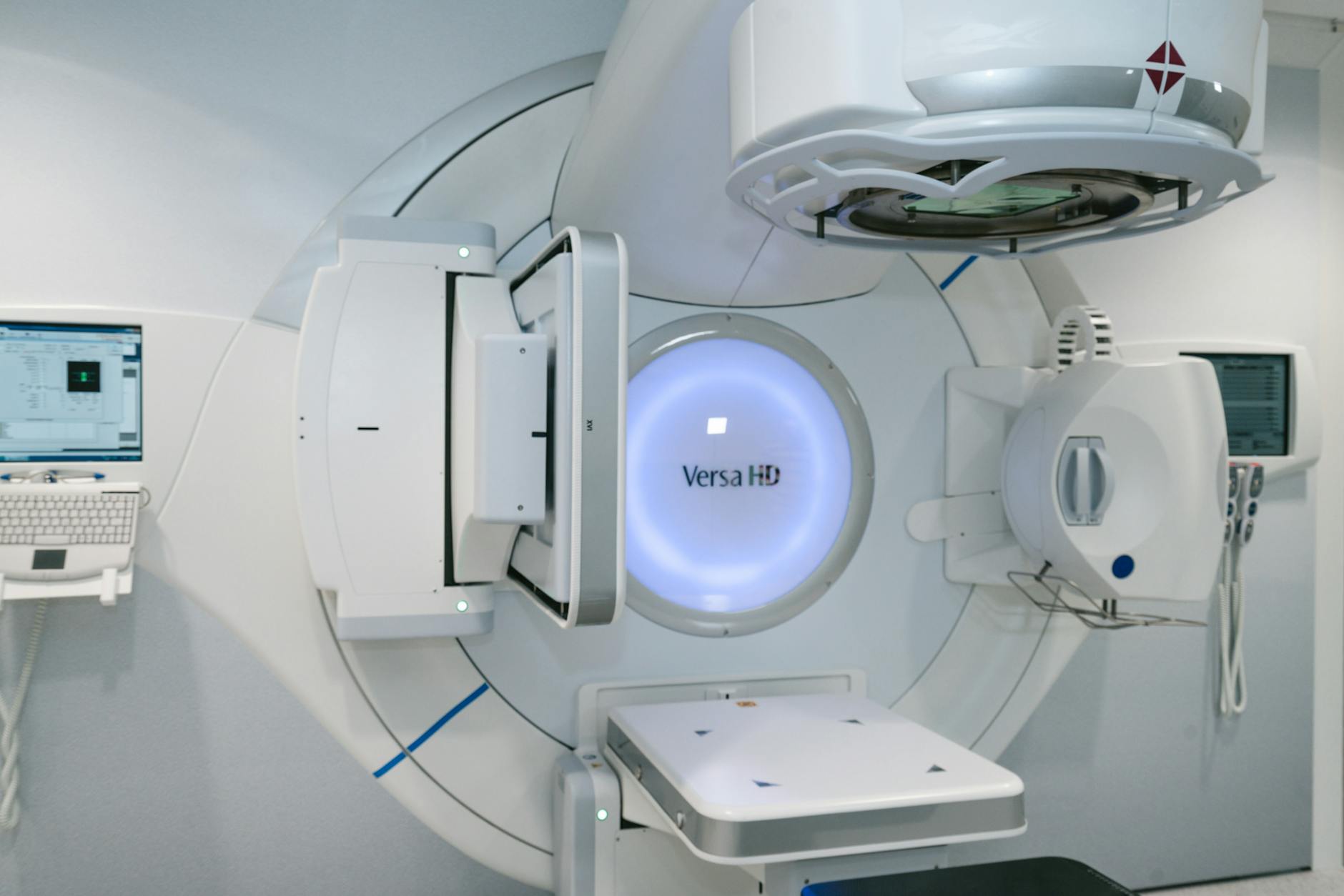
The range shifter degrades beam energy by introducing a known thickness of low-Z material (typically polycarbonate or Lucite) upstream of the patient. Its dosimetric effect extends well beyond the simple energy loss: it also broadens the energy spectrum (increasing Bragg peak width) and substantially increases the lateral penumbra through multiple Coulomb scattering. The penumbra degradation is strongly dependent on the air gap between the range shifter and the patient surface — a fact with significant implications for treatment planning accuracy, discussed in the applications section below.
The ripple filter is a periodic surface-relief structure used to modulate the energy spectrum of the beam in a controlled way. In carbon ion therapy, ripple filters are employed to create a miniature spread-out Bragg peak (SOBP) at the single-spot level, facilitating more homogeneous dose layering across a treatment volume. The manufacturing tolerances for ripple filters are tight — on the order of 10 µm for carbon ion applications — and MC simulations have been used to validate whether production tolerances meet dosimetric requirements.
Finally, a moving snout — a collimator assembly that can be translated along the beam axis to bring its aperture closer to the patient surface — is used to reduce lateral penumbra when sharp field edges are clinically required. Its position relative to the patient affects the effective air gap and thus the scattering contribution to penumbra.
Two Strategies for Monte Carlo Beam Modelling
Two distinct philosophical approaches exist for constructing a MC model of a scanned ion beam delivery system. Each has characteristic strengths and limitations, and the choice between them depends on the transparency of the nozzle, the availability of engineering documentation, and the computational resources at hand.
The Nozzle-Exit Method
Pioneered at the Paul Scherrer Institute (PSI) in Switzerland in the early 2000s, the nozzle-exit method bypasses explicit simulation of the nozzle hardware entirely. Instead, the beam is initialized at the nozzle exit plane using a phase-space representation derived exclusively from commissioning measurements. The method relies on the Fermi-Eyges multiple-scattering theory, which provides an analytic framework for propagating the beam moments through any homogeneous medium. The lateral beam profile variance at depth $z$ downstream of the nozzle exit is expressed as:
$$\sigma_x^2(z) = A_{2,x} + 2z \cdot A_{1,x} + z^2 \cdot A_{0,x} + T \cdot z^3$$
where $A_{0,x}$, $A_{1,x}$, and $A_{2,x}$ are the Fermi-Eyges moments of the beam at the reference plane, and the $T \cdot z^3$ term accounts for in-air scattering downstream. The emittance of the beam in projection $x$ can then be computed directly from these moments:
$$M_x = \pi\sqrt{A_{0,x} \cdot A_{2,x} – A_{1,x}^2}$$
The nozzle-exit method has several attractive properties. It is faster computationally because there are no nozzle geometry elements to track particles through. It is arguably more accurate for facilities with transparent nozzles, because the beam model is anchored directly to measured data rather than to a geometric description that may contain uncertainties. The contribution of secondary particles generated within the nozzle to the total dose at the patient level is typically less than 0.5% and usually below 0.2%, so neglecting them introduces negligible error for most clinical purposes.
The Full-Nozzle Method
The full-nozzle method constructs an explicit geometric model of every element in the beamline from some upstream reference point through to the nozzle exit — ion chambers, range shifter, scanning magnets, vacuum windows, and any other material in the beam path. Particles are tracked through this geometry, and the MC physics handles all interactions: energy loss, straggling, and multiple Coulomb scattering in each element. The phase space emerging from the nozzle model is then propagated into the patient geometry.
This approach requires detailed engineering drawings (blueprints) of the nozzle. When such documentation is unavailable or incomplete, a common approximation replaces the actual nozzle materials with an equivalent water slab of the same WET — an approach that preserves the energy degradation correctly but approximates the scattering properties. A well-known clinical implementation was developed at MD Anderson Cancer Center using MCNPX for a Hitachi proton system: eight discrete energies were explicitly modeled, with the results interpolated across the full clinical range of 94 energies.
The full-nozzle method is particularly valuable when the nozzle contains significant material that perturbs the beam phase space in ways that are difficult to capture phenomenologically — for example, in passive scattering systems or in active scanning nozzles equipped with thick ion chambers or range modulators.
Calibration: Linking Simulated Particles to Monitor Units
Regardless of which modeling approach is used, a calibration step is required to convert the absolute number of simulated primary particles into the clinical unit of monitor units (MU). The standard procedure uses a mono-energetic square field with constant spot spacing. In the flat plateau region of such a field — well away from edges, where the dose contribution from neighboring spots averages out — the dose-area product (DAP) per spot is measured with a calibrated ionization chamber and compared to the MC-predicted value. The calibration factor is then:
$$\frac{N}{MU}(E) = \frac{\text{DAP}_{\text{measured}}}{\text{DAP}_{\text{simulated}}} \times N_{\text{sim}}$$
This factor $N/MU(E)$ is determined as a function of energy, providing the link between the physical simulation and the dose monitor reading for every energy layer in the clinical system.
Nuclear Interactions: Halos, Fragments, and Dose Tails
The nuclear physics of light ion beams introduces dose components that have no analog in photon or electron therapy and that challenge both MC codes and analytical pencil beam algorithms (PBAs). Understanding these components is essential for accurate dose calculation, particularly in clinical scenarios involving small fields, range shifters, or high-Z ions such as carbon.
The Nuclear Halo in Proton Beams
When a proton undergoes a nuclear interaction in the patient — not the dominant electromagnetic interaction, but the less frequent nuclear collision — the secondary particles produced (recoil nuclei, evaporation particles, secondary protons) scatter to lateral distances far outside the primary Gaussian beam profile. This creates what is known as the nuclear halo: a low-dose region extending several centimeters laterally from the beam axis. The full lateral dose profile of a proton pencil beam can be decomposed into three components: the electromagnetic core (the Gaussian pencil beam proper), the halo from primary nuclear interactions, and the aura from secondary particles that travel upstream and deposit dose proximal to the Bragg peak.
An additional phenomenon, sometimes called spray, refers to unwanted dose delivered to tissues proximal to the target from particles scattered at wide angles. In the mid-range region of the depth-dose curve, a characteristic bump appears due to the accumulated secondary particle dose — at 252.7 MeV, this midrange bump can represent approximately an 8% correction to the dose relative to a purely electromagnetic model. Multiple-Gaussian beam models that decompose the lateral profile into a narrow core Gaussian and one or more broader halo Gaussians have been developed to capture this effect efficiently in treatment planning, with MC providing the reference data for fitting the model parameters.
Fragment Spectra in Carbon Ion Beams
Carbon ions undergo substantially more nuclear fragmentation than protons, and the dosimetric consequences are correspondingly more complex. Up to 50% of the primary carbon ions in a clinical beam will undergo a nuclear fragmentation event before reaching the Bragg peak depth. The fragments produced — lighter ions ranging from hydrogen through boron — have longer ranges than the primary carbon ions and therefore deposit dose beyond the Bragg peak, creating a characteristic tail in the depth-dose curve that is absent in proton beams. Simultaneously, the transverse scattering of fragments with low charge-to-mass ratios produces a broad lateral halo that extends the penumbra well beyond the primary beam profile.
A practical modeling approach that has been validated at clinical facilities decomposes the total dose into three components: the primary carbon ion dose, a halo contribution from heavier fragments ($Z \geq 3$), and a tail contribution from lighter fragments ($Z \leq 2$, mainly helium and hydrogen isotopes). This trichrome model captures the essential dosimetric structure while remaining computationally tractable. For small targets — tumor volumes with dimensions comparable to or smaller than the fragment halo width — the dose differences between a MC calculation that properly models fragmentation and a simplified analytical approach can reach 2.7%, a clinically meaningful discrepancy.
Comparison of Monte Carlo and Pencil Beam Algorithms
The comparison between MC and analytical PBA calculations is a recurring theme in the ion beam dosimetry literature, and the findings have direct implications for when MC-level accuracy is clinically required. The table below summarizes key scenarios and the magnitude of dose differences reported in the literature.
| Clinical Scenario | Ion Type | Typical MC vs. PBA Difference | Primary Physics Driver |
|---|---|---|---|
| Homogeneous phantom, standard field | Protons | ~5% | Nuclear halo, scattering model |
| Homogeneous phantom, standard field | Carbon ions | ~0.5% | Fragmentation tail |
| Range shifter (7.5 cm WET, 31.5 cm gap) | Protons | ~10% PBA error; MC within 3% | Scattering in range shifter + air gap |
| Small target near OAR | Carbon ions | Up to 2.7% | Fragment lateral halo |
| Heterogeneous tissue interfaces | Protons / Carbon | Variable, can exceed 5% | Range uncertainty in bone/soft tissue |
Source: Monte Carlo Techniques in Radiation Therapy (2nd ed., CRC Press, 2022)
The range shifter scenario deserves special attention because it represents a configuration that is simultaneously common in clinical practice (necessary for shallow tumors, pediatric cases, and certain head-and-neck targets) and particularly challenging for analytical algorithms. When a 7.5 cm WET range shifter is placed 31.5 cm upstream of the isocenter, the PBA systematically underestimates the lateral dose falloff due to the additional scattering introduced by the range shifter material and the long air gap. MC simulation reproduces the measured dose distribution within 3%, while the PBA error reaches approximately 10% — a difference large enough to be clinically significant for organs at risk near the target margin.
Integration with Treatment Planning Systems
Translating a validated MC beam model into a clinically usable treatment planning tool requires tight integration between the MC engine and the planning system infrastructure. Several pathways have been pursued at different institutions and by commercial vendors.
FLUKA has been integrated into the TPS workflows at HIT and CNAO for carbon ion planning, where its validated nuclear fragmentation models are considered essential for accurate dose calculation. TOPAS, which provides a user-friendly scripting layer over Geant4, has been coupled to planning systems for research and increasingly for clinical use. TRiP98, the treatment planning system developed at GSI Darmstadt, has incorporated MC-based dose kernels. GATE-RTion, the clinically validated release of GATE for particle therapy, is the primary planning tool at MedAustron and represents perhaps the most mature open-source clinical MC implementation currently available.
The energy sampling strategy is a practical consideration that significantly affects both accuracy and computation time. Full explicit simulation of all 94 (or more) clinical energies is computationally demanding. A common approach models a representative subset — typically 8 to 27 energies spread across the clinical range — and interpolates the beam model parameters for intermediate energies. The interpolation scheme must be validated to ensure that the interpolated parameters reproduce measured depth-dose and lateral profile data at energies not explicitly in the modeled set.
Beamline Design and Accelerator Specification
Beyond patient dose calculation, MC simulation plays a formative role in the design and specification of new particle therapy facilities. The same physics models that predict dose distributions in patients can predict particle fluence, energy spectra, and secondary particle production at any point in a beamline — information that is directly useful for accelerator engineers and radiation protection physicists.
Specific applications include estimating the activation of beamline components under clinical operating conditions, predicting the secondary neutron dose outside the primary beam enclosure, sizing shielding for new facilities, and evaluating proposed nozzle designs before hardware is fabricated. MC has also been applied to the problem of accelerator specification: given a desired clinical dose distribution quality, what are the required beam emittance, energy spread, and energy resolution at the accelerator output?
Moving Targets and Interplay Effects
One of the more challenging frontiers in scanned ion beam therapy is the treatment of moving targets — tumors in the thorax or upper abdomen that move with respiratory motion. The time-dependent nature of scanned delivery creates a potential for interplay between the scanning pattern and the tumor motion: as the beam sweeps across the tumor in a fixed geometric pattern but the tumor moves independently, the dose actually delivered to the tumor can differ substantially from the planned dose. This interplay effect can create both hot spots and cold spots within the target volume.
MC simulation is uniquely suited to studying interplay effects because it can explicitly model the time-dependent beam position, the time-dependent patient geometry (from a 4D-CT dataset), and the cumulative dose as a function of both variables. The reference article on dynamic beam delivery and 4D Monte Carlo in this series covers the methodology in depth. Emerging concepts such as MRI-guided light ion beam therapy (LIBT) add another layer of complexity: the strong magnetic field of the MRI scanner deflects charged particles, altering their trajectories and dose deposition patterns.
Practical Workflow for Commissioning a Monte Carlo Ion Beam Model
The following table outlines the recommended sequence of steps for commissioning a MC model for a scanned ion beam delivery system, drawn from the methodologies described in the literature for both the nozzle-exit and full-nozzle approaches.
| Step | Parameter Tuned | Measurement Required | Acceptance Criterion |
|---|---|---|---|
| 1 | Mean energy $\bar{E}$ | Depth-dose curve, range at 80% distal | Range agreement <0.5 mm |
| 2 | Energy spread $\sigma_E$ | Bragg peak width (proximal and distal falloff) | Peak width within 1 mm |
| 3 | Twiss parameters $\alpha$, $\beta$, $\varepsilon$ | Lateral profiles at multiple depths and air gaps | Sigma agreement <10% across depth range |
| 4 | Virtual SAD (scanning geometry) | Spot fluence maps at 2+ air gaps | vSAD consistent with spot size scaling |
| 5 | Absolute calibration $N/MU(E)$ | DAP in plateau of mono-energetic square field | Absolute dose within 2% |
| 6 | Interpolation validation | Depth-dose and profiles at intermediate energies | Same criteria as steps 1-2 at all clinical energies |
| 7 | Clinical field validation | SOBP in heterogeneous phantom | 3%/3 mm gamma passing rate >95% |
Source: Monte Carlo Techniques in Radiation Therapy (2nd ed., CRC Press, 2022)
Steps 1 and 2 are deliberately sequenced before the optical tuning in step 3. This ordering matters: the lateral beam profile at depth depends on both the optical parameters and the energy spread (through range straggling), so attempting to fit all parameters simultaneously leads to an underdetermined problem. Fixing the energy parameters first removes that coupling and makes the optical fit unambiguous.
Relationship to Proton-Specific Quality Assurance
The beam modeling methodology described in this article applies broadly to all light ions, but protons remain the most widely deployed ion species and have the most mature QA infrastructure. The connection between accurate MC beam models and proton-specific quality assurance practices — patient-specific QA, end-to-end testing, and independent dose verification — is explored in the companion article on protons and QA in Monte Carlo.
One area where the proton and carbon ion workflows diverge significantly is in the role of nuclear physics models. For proton beams, the primary concern is the nuclear halo and its correction to absolute dose normalization (the ~8% midrange bump correction at high energies). For carbon ions, the fragmentation tail beyond the Bragg peak introduces a clinically significant dose to tissues distal to the target, and the accuracy of MC fragmentation models has been the subject of extensive experimental benchmarking campaigns at GSI, HIT, CNAO, and other facilities.
Limitations and Open Challenges
Despite the maturity of MC simulation for ion beams relative to where the field stood two decades ago, several open challenges remain. Nuclear fragmentation cross sections — the fundamental data that determine how many and what type of fragments are produced at each energy — are still incompletely measured for the full range of ion species and energies relevant to therapy. GEANT4, FLUKA, and PHITS use different nuclear models and different cross section parameterizations, leading to code-dependent differences in predicted fragment spectra that can be non-trivial in clinical scenarios.
The treatment of moving targets in 4D MC remains computationally intensive. Realistic interplay simulations require tracking millions of particles through time-varying geometries sampled from 4D-CT data, and the statistical uncertainty achievable within clinically acceptable computation times may not be sufficient for the most demanding scenarios. Hardware acceleration (GPU-based MC) and variance reduction techniques are active research areas addressing this limitation.
Biological dose modeling adds another layer of complexity for heavy ions. The relative biological effectiveness (RBE) of carbon ions depends on the local dose, the linear energy transfer (LET), and the tissue type — quantities that are all computed from the physical MC dose calculation but require additional radiobiological models to convert to biologically effective dose.
Conclusions
Monte Carlo simulation has moved from a research curiosity to a clinical necessity in scanned ion beam radiotherapy. The physics driving this transition is straightforward: the sharp Bragg peak that makes ion therapy attractive also makes the dose distribution acutely sensitive to beam characterization errors, tissue heterogeneities, and nuclear interaction effects that analytical algorithms handle only approximately.
The quantitative benchmarks tell the story clearly. A PBA error of 10% in a range-shifted proton field is clinically meaningful. A 2.7% fragment dose discrepancy in a small carbon ion field near an organ at risk is similarly significant when fractionation amplifies the effect across a full treatment course. MC simulation, properly commissioned and validated, reduces these errors to the 1-3% level — the level at which the dose calculation uncertainty becomes comparable to other sources of uncertainty in the treatment chain.
For a broader perspective on how these ion beam methods fit within the larger landscape of MC applications in radiotherapy — from photon beams through brachytherapy and electron therapy — the comprehensive Monte Carlo in Radiotherapy guide provides the connecting framework. The field continues to advance rapidly, driven by new facilities, new ion species, improved nuclear cross section databases, and the emerging challenges of adaptive and MRI-guided therapy. Monte Carlo simulation will remain at the center of that progress.