32-Slice CT Scanner Takes Mobile Stroke Care to the Next Level
Northwestern Medicine Central DuPage Hospital has unveiled a next-generation mobile stroke unit featuring a 32-slice CT scanner, doubling the imaging capability of its previous 16-slice system. The upgraded unit, based in Winfield, Illinois, is designed to deliver faster and more accurate stroke diagnosis directly in the field across Chicago’s western suburbs.
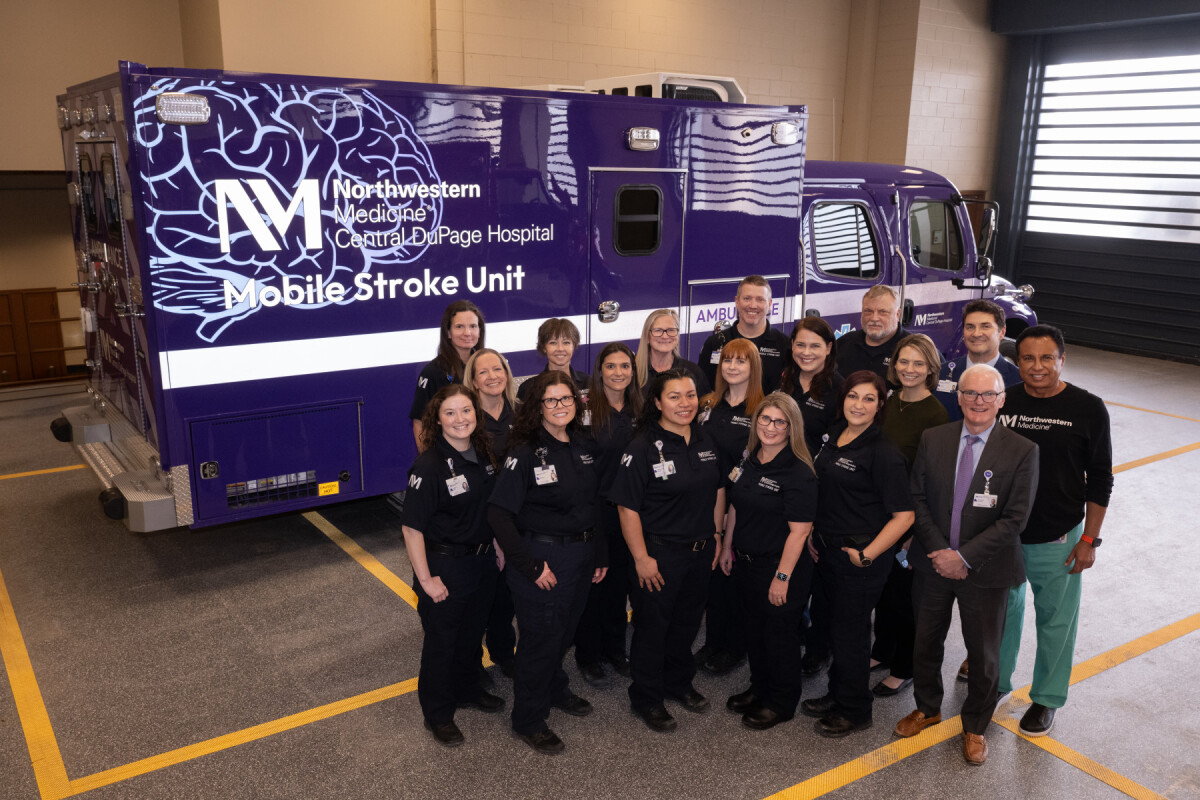
The mobile stroke program, originally launched in 2017, has steadily expanded its clinical impact. The new custom-built vehicle is smaller than its predecessor, improving maneuverability in residential neighborhoods while maintaining full diagnostic and treatment capability. Each deployment includes a critical care nurse, CT technologist, paramedic and EMT driver, with neurologists and radiologists connected remotely via real-time audio and video.
Treatment in 47 Minutes vs. 83 Through Conventional EMS
The most compelling data from the program centers on time-to-treatment. Patients served by the mobile unit receive thrombolytic therapy an average of 47 minutes from dispatch, compared to 83 minutes through standard emergency medical services. That 36-minute difference can be decisive in stroke outcomes, as every minute without reperfusion in ischemic stroke translates to irreversible brain tissue loss.
The “time is brain” principle has long guided modern stroke protocols worldwide. Research suggests that every 15-minute reduction in door-to-needle time can yield significant decreases in mortality and long-term neurological disability. Northwestern Medicine’s approach pushes this concept further by initiating both diagnosis and treatment before the patient reaches the hospital door.
How the Onboard CT Changes the Clinical Workflow
The mobile unit essentially functions as a CT suite and emergency room on wheels. When activated — either directly through 911 dispatch or by meeting EMS teams at designated intercept points — the vehicle travels to the patient with full imaging infrastructure on board.
The 32-slice CT scanner enables rapid differentiation between ischemic and hemorrhagic stroke, a distinction that is critical for treatment decisions. Ischemic stroke calls for intravenous thrombolysis with alteplase, administered as quickly as possible. Hemorrhagic stroke requires an entirely different management approach, including blood pressure control and, in some cases, neurosurgical intervention.
“Having a 32-slice CT scanner on board is a game-changer because it allows for an immediate and accurate diagnosis in the field,” said Dr. Harish Shownkeen, medical director of the Stroke and Neurointerventional Surgery Programs at the hospital. “Once we’ve determined the type of stroke a patient is experiencing — whether it’s an ischemic or hemorrhagic stroke — then we can administer lifesaving treatment, all before reaching the hospital.”
Program Growth and Global Certification
The program’s growth trajectory has been remarkable. In 2025, the unit treated 507 patients, up significantly from 166 during its inaugural year. Coverage now extends across 138 square miles, with the unit available via direct 911 dispatch or at designated EMS intercept locations. The mobile stroke unit received stroke certification from DNV in 2025, which Northwestern Medicine reports is only the second accreditation of its kind globally.
This initiative reflects broader trends in diagnostic imaging decentralization. Bringing next-generation CT technology beyond hospital walls represents a paradigm shift in how neurological emergencies are managed. The rapidly growing diagnostic imaging market continues to drive innovation in both portable equipment and integrated telemedicine solutions.
Implications for Radiology Practice
For radiologists, the deployment of high-resolution mobile CT units introduces new workflow considerations. Images acquired in the field must be transmitted and interpreted remotely in real time, demanding robust telecommunications infrastructure and well-defined telediagnosis protocols. Integration with PACS systems and standardized image workflows are essential to ensuring that remote reads match the quality of on-site interpretation.
The radiologist’s role also expands from passive image interpreter to active clinical decision consultant in emergency settings. This transition aligns with the evolving view of the radiologist as a clinical strategist, a concept gaining traction in discussions about the specialty’s future.
Looking Ahead: Portable Imaging and AI Integration
While mobile stroke units with onboard CT remain uncommon even in the United States, they point toward an important direction for regions with limited access to specialized stroke centers. The progression from 16-slice to 32-slice scanners in a mobile platform demonstrates that compact, high-performance imaging technology is becoming increasingly viable for pre-hospital deployment.
Future iterations may integrate artificial intelligence for automated triage and image interpretation, further reducing the time between scan acquisition and clinical decision-making. Combined with expanding telemedicine networks, onboard CT could fundamentally reshape pre-hospital stroke care in the coming decades — particularly in underserved rural and semi-urban areas worldwide.
Source: DOTmed Healthcare Business News