
GE HealthCare and Springbok Analytics Combine AI and MRI for Muscle Assessment
GE HealthCare and Springbok Analytics have entered a development agreement aimed at integrating Springbok’s proprietary AI-powered muscle analysis platform with GE HealthCare’s MRI technologies. The collaboration seeks to reimagine how muscle health is quantified and visualized — delivering precise, objective, and actionable assessments that go far beyond what traditional functional testing can offer for athletes, patients, and individuals focused on long-term health and performance.
The Gap This Partnership Addresses
Currently, injury recovery and athletic performance are typically tracked through physical tests and functional assessments — external measurements that provide incomplete insight into the structural changes happening inside the body. An athlete may appear clinically recovered while significant muscle asymmetries, fat infiltration, or tissue composition changes remain undetected — conditions that can dramatically increase the risk of re-injury.
MRI, however, can provide a clearer and more detailed view of muscle health and its response to training or treatment. “The ability to look within the body and directly assess the structure and health of individual muscles has profound implications in clinical care and human performance,” said Silvia Blemker, PhD, CSO and Co-Founder of Springbok Analytics and Professor of Biomedical Engineering at the University of Virginia. “Through our work with GE HealthCare, we are advancing musculoskeletal imaging capabilities in ways that will expand scientific reach and clinical impact for athletes, patients, and anyone seeking to preserve strength and mobility across the lifespan.”
How the Springbok Analytics Platform Works
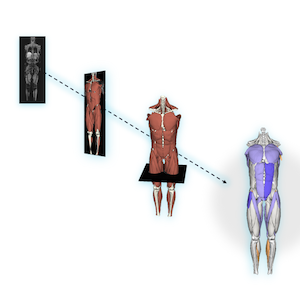
Springbok’s AI-based solution converts rapid full-body and regional MRI exams into detailed, interactive 3D maps of an individual’s musculoskeletal system. The technology quantifies up to 140 individual muscles depending on scan type and coverage area, delivering objective metrics such as muscle size, asymmetry, fat infiltration, bone, and adipose composition.
These insights are currently used by over 80 professional sports teams and human performance programs worldwide to help evaluate musculoskeletal health, guide rehabilitation, and optimize performance with greater precision. The platform has established a new quantitative standard for muscle assessment across elite sports — now the GE HealthCare collaboration aims to expand this capability within advanced MRI environments, potentially extending its reach to mainstream clinical settings.
Integration with GE HealthCare’s MRI technologies is particularly strategic: it allows image acquisition to be optimized for Springbok’s analytical needs, maximizing both the speed and quality of scans while maintaining patient safety and dose standards.
Clinical and Sports Medicine Applications
When combined, rapid MR imaging and deep learning-powered visualization have the potential to assess muscle asymmetries that may contribute to injury, track structural recovery in patients to determine a return-to-play timeline, and monitor age-related changes in muscle composition — all with the goal of providing clinicians, physical therapists, and performance specialists with clear, actionable information.
“Our collaboration with Springbok enables us to combine their advanced AI-driven muscle analytics with GE HealthCare’s strengths in MRI acquisition and tissue characterization,” said Anja Brau, PhD, general manager of MR clinical solutions and research collaboration at GE HealthCare. “Together, we want to leverage the richness of MRI to reveal new insights into muscle quality, symmetry, and recovery, delivering tools optimized within GE HealthCare MRI platforms.”
The practical implications span multiple domains. In sports medicine, the technology could transform how medical teams make return-to-play decisions after muscle injuries. In rehabilitation, it provides objective data to personalize exercise protocols based on actual tissue response rather than external functional metrics. In preventive medicine and longevity, it could identify sarcopenic changes early — before clinical symptoms appear and while interventions are most effective.
Broader Impact on Musculoskeletal Imaging
This collaboration signals a broader trend: the convergence of high-performance imaging hardware and domain-specific AI analytics platforms. As the global diagnostic imaging market evolves toward increasingly specialized, AI-integrated workflows, partnerships like this one define the next generation of clinical tools — where imaging is not just diagnostic but predictive and prescriptive.
The aging global population adds additional urgency: sarcopenia affects a significant proportion of adults over 65, increasing fall risk, fracture rates, and functional dependency. Objective, MRI-based muscle quantification could enable earlier intervention and better monitoring of treatment responses — a capability with significant public health implications. The development of this capability within existing AI-enhanced MRI platforms represents a natural evolution of musculoskeletal imaging practice.
Looking Ahead
The next steps in the partnership include developing optimized imaging workflows for GE HealthCare MRI platforms and clinical validation of the integrated technology across different patient populations and athletic disciplines. The potential impact spans elite sports medicine, mainstream orthopedic care, and population health management. As both companies deepen their integration, the clinical research community can expect robust new tools for studying muscle health at a scale and precision level that was previously impractical outside highly specialized academic settings.
Source: ITN Online