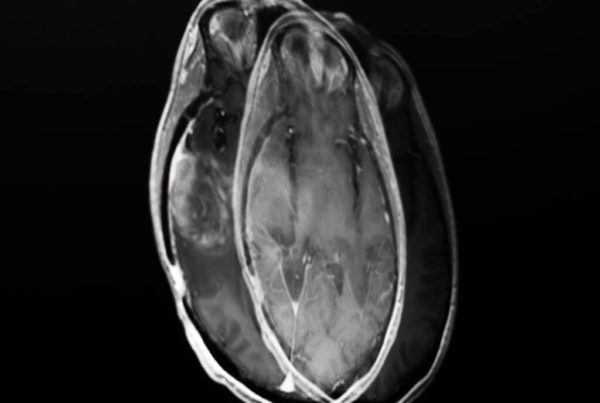

Epic has begun rolling out Care Everywhere Diagnostic Image Exchange across its installed base, a feature that lets hospitals at different organizations swap diagnostic-quality studies — CT, X-ray, MRI — with one click and without touching a CD. The August 13 announcement targets one of radiology’s most persistent and most mundane bottlenecks: the patient who shows up for an appointment carrying a disc.
What actually changes technically
Epic has for years allowed sharing of written radiology reports and reference-quality images — light files, less detail, cheap to store, good enough to give clinical context. What was missing was the heavy part: diagnostic-quality images, which live in the PACS, outside the electronic health record.
The flow now works in two steps. The physician uses reference images to pinpoint exactly which study is needed and, with one click, retrieves the diagnostic-quality version, which is automatically imported into the local PACS and opened in the usual reading workflow. What makes it possible is the adoption of open standards — FHIR and DICOMweb — layered on the interoperability pipelines the Care Everywhere network already ran.
That detail is the heart of the story. Exchanging images between institutions was always technically possible; the problem was that every route used a proprietary path. DICOMweb standardizes RESTful operations over DICOM — query, retrieve, and store studies over HTTP — replacing bespoke integrations with predictable calls. Without it, the options were a CD, a point-to-point VPN, or a separately contracted image exchange network.
The size of the problem being solved
“Care Everywhere Diagnostic Image Exchange empowers clinicians to deliver faster care and eliminates administrative burden,” said Matt Doyle, Epic’s director of interoperability. “We’re the first to embrace open image-sharing standards at scale, and we’re advocating for TEFCA — the federally sponsored interoperability framework — to embrace these standards so that any health system in the United States can exchange diagnostic images.”
The reference to TEFCA (Trusted Exchange Framework and Common Agreement) is not rhetorical. The US federal framework, organized around qualified health information networks, today deals essentially with clinical documents and structured data — diagnostic imaging sits outside its scope. As long as that holds, each EHR vendor solves the problem inside its own ecosystem, which helps anyone on the same platform and does nothing for exchange between rival ones.
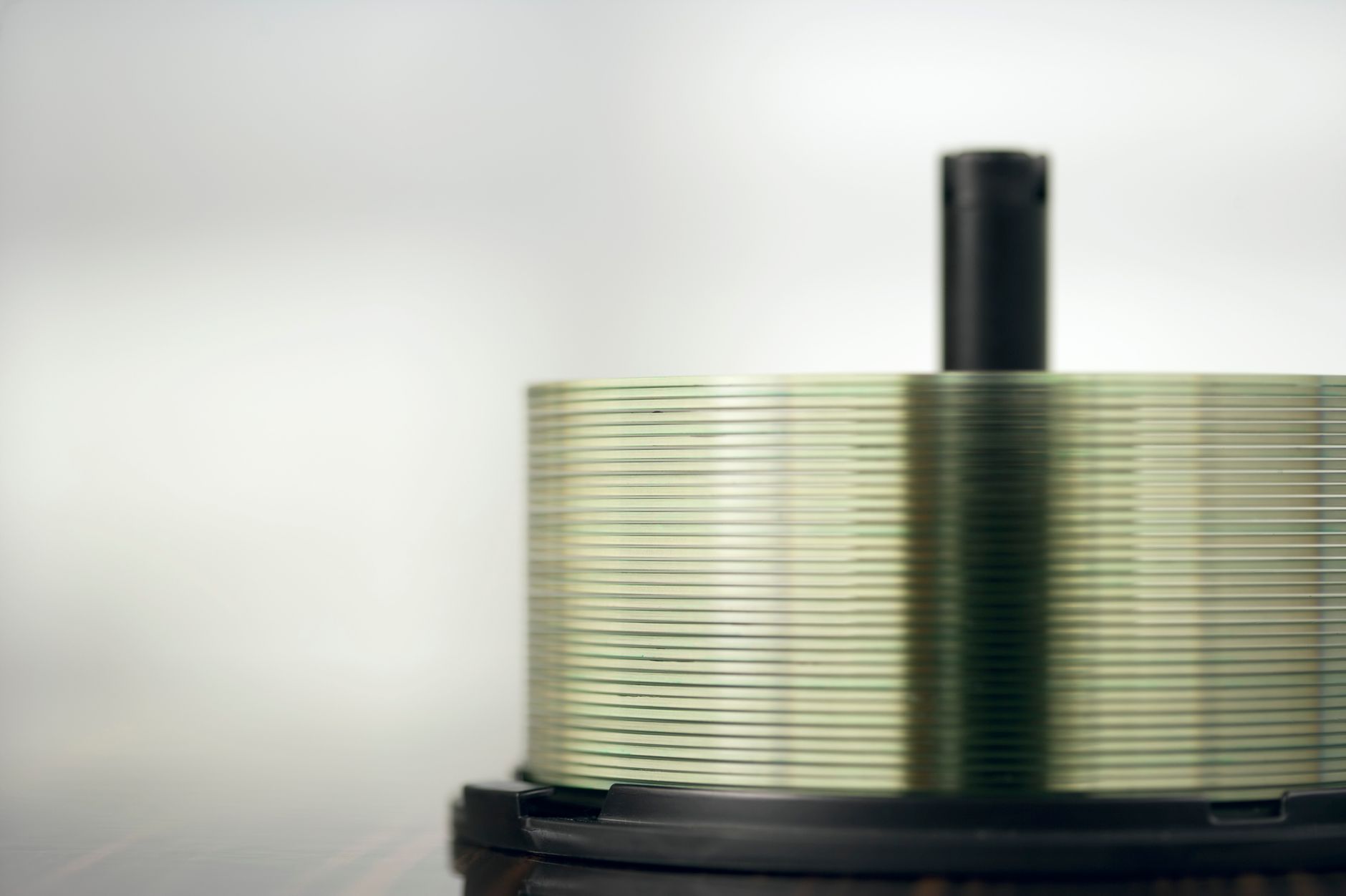
According to Epic, “as a result, health systems are burdened with manual image retrieval, and millions of patients across the U.S. still carry their images on CDs from appointment to appointment.” The company adds a telling figure: its duplicate order checks, which for years have flagged when imaging was already performed elsewhere, prevent more than 21,000 repeat scans per year. Until now the alert said the image existed — without delivering it. The new feature closes that gap.
Why a repeat scan is more than waste
The chain of harm deserves spelling out, because it tends to be underestimated. Repeating an abdominal CT because the previous one is unreachable means a fresh dose of ionizing radiation, another iodinated contrast load on renal function, more scanner time consumed in a fleet that already runs a backlog, and a new cost for the payer. Add the delay: the patient waits for reacquisition instead of moving on to a treatment decision.
For the radiologist there is a less obvious gain — the comparison. Much of oncologic and follow-up radiology depends on comparing against the prior study; without it, the report loses discriminative power and the language necessarily turns vaguer. Having the old study inside the local PACS, rather than in an external viewer tab, changes the quality of what you can assert.
There is also a continuity effect tied to a problem we have covered before: legacy system fragmentation. Accumulated old PACS architecture is exactly what turns every integration into a project — a theme we explored in showing how radiology’s early digital head start is now coming due. Distributed reading suffers from the same ailment, as our reporting on cloud teleradiology and the end of swivel-chair reads describes.
The regulatory push behind it
Epic’s announcement does not happen in a vacuum. On July 27, CMS launched the Diagnostic Imaging Acceleration work group, nicknamed “Ditch the Disk,” focused on making electronic image exchange across organizations genuinely seamless — as the American College of Radiology reported in an August 6 update. The federal initiative is modeled on the ACR-led campaign of the same name, launched in 2019 alongside RSNA and other industry groups, which had been pressing for data standards and policy alignment.
The new work group sits inside a broader health tech ecosystem initiative built on voluntary industry pledges around interoperability and patient access to records. “Voluntary” is the word that caps how far this goes: absent a regulatory mandate, uptake depends on commercial incentive — and an EHR vendor has little natural incentive to make it easy for data to leave for a competitor.
What it means outside the United States
Elsewhere the problem is recognizable but the arrangement differs. Most countries have no imaging equivalent of TEFCA: national programs have generally advanced on structured clinical data via FHIR, while diagnostic imaging stays out of scope. In practice, exchange happens through each service’s results portal, a web viewer link, or — yes — physical media.
That leaves a concrete improvement window for anyone running an imaging service, and it does not depend on public policy. Publishing DICOMweb access on your own PACS or VNA, with proper authentication, already handles most external requests. Standardizing patient identification and study naming reduces the friction of finding the exam on the other side. And keeping the structured report traveling alongside the image avoids the scenario where a physician receives pixels without interpretation — a problem that worsens when the patient sees the result first, as we showed in covering reports that reach patients before their doctors.
Limitations and what to watch
Three caveats. First, the feature works inside the Epic community — an enormous gain for those in it and none for those outside, until open standards are adopted on the other side too. Second, “one click” in the interface hides governance: who authorizes retrieval, on what legal basis, with what audit trail. Third, automatically importing an outside study into the local PACS raises storage, deduplication, and patient identity reconciliation questions that no press release settles.
Even so, the direction is right and the precedent matters more than the product. Once diagnostic-quality image exchange over open standards becomes a market expectation, the CD stops being a tolerated inconvenience and becomes a marker of technical neglect. For the patient walking around with an envelope in their bag, that distinction is fairly concrete.