
Why radiologists walked away from the VA
The U.S. Department of Veterans Affairs health system lost radiologists at speed after it scrapped remote work policies in 2025. That is the claim in a report by The American Prospect, picked up by The Imaging Wire: even after the VA reversed course and allowed remote reading again, morale never recovered and the departures kept coming.
The trigger is easy to date. In January 2025, the administration ordered federal employees back to the office. For most of the federal workforce, that was a logistics adjustment. For VA radiology, it was structural — because image interpretation stopped depending on the building more than a decade ago.
The pushback was immediate. According to the report, the policy “ignored the realities of radiology work” and sent morale among the system’s imaging specialists into free fall. The VA eventually recognized the mistake and rescinded the in-office requirement for radiologists. By then, plenty of them had already resigned.
The scale of the system left short-staffed
It helps to size up what is at stake. The Veterans Health Administration runs one of the largest care networks in the United States: roughly 9.1 million veterans served, 170 VA medical centers, and a broad web of affiliated outpatient sites across the country.
There is no official count of how many radiologists work in the network. Estimates cited in the report put the figure at at least 1,500 — somewhere between 4% and 5% of all actively practicing radiologists in the U.S. That is a large enough share that any meaningful attrition shows up in imaging queues nationally, not just inside the VA.
These physicians were never drawn in by pay. VA salaries do not approach private-sector levels, and that was never a secret. What sustained recruitment was something else: job security, career predictability, and the weight of serving people who served. Strip away the security, and the cold comparison is all that remains — private practice pays more than 40% higher on average.
Remote reading is not a perk, it is work architecture
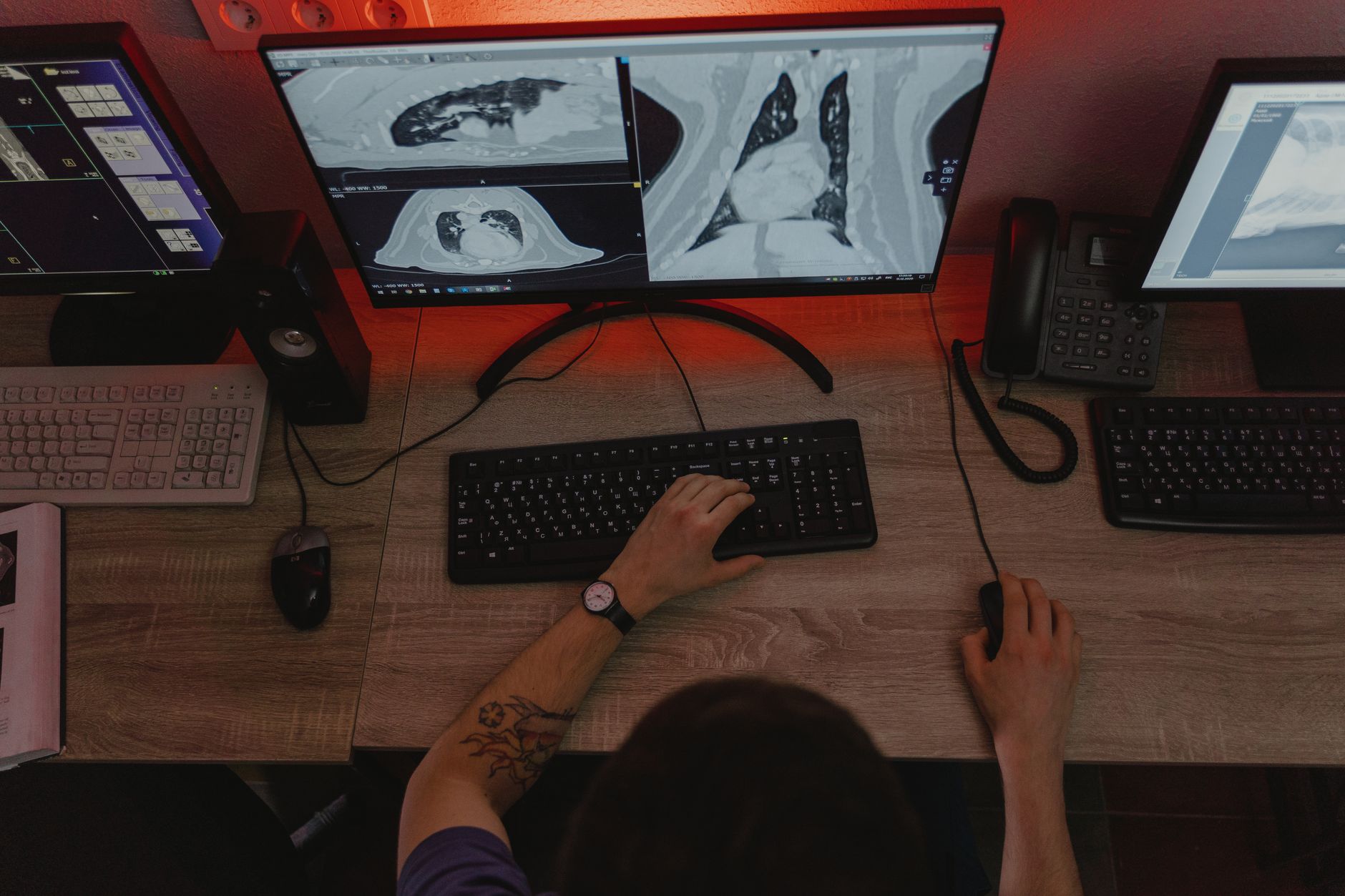
This is the part the policy appears to have missed. Radiology was the first medical specialty to physically decouple from the patient. With mature PACS, voice-recognition reporting, and teleradiology networks, the study travels to the physician rather than the other way around. Cloud-based distributed reading is now the standard way to balance load across sites, cover overnight shifts, and reach subspecialists no single hospital could afford to hire alone.
There is also a productivity argument that rarely makes it into return-to-office debates. Interpretation quality depends on conditions the average corporate office simply does not provide: calibrated diagnostic displays, controlled ambient light, quiet, and freedom from interruption. Forcing a radiologist to read in a worse environment while holding volume constant is a request for more errors and less throughput.
And volume keeps climbing. Remote reading was being treated as part of the answer to the mismatch between rising imaging demand and a flat workforce — the same demand-side pressure that makes curbing low-value imaging such an urgent lever. Removing it, even temporarily, meant rowing against the only short-term capacity gain available.
The cascade: backlogs, outsourcing, and amyloid PET
The downstream effects described in the report are concrete. With fewer readers, workloads for the remaining VA radiologists skyrocketed. Primary care physicians began reporting that imaging results now take “days, not hours” — a gap that changes clinical management, not just service perception.
Some VA medical centers were forced to outsource specialized studies. The most cited example is amyloid PET, used in the workup of Alzheimer’s disease, where turnaround times have stretched to two or three months. For a dementia investigation, that interval is barely compatible with therapeutic decision-making.
This is the classic spiral: staff leave, the remaining team is overloaded, turnaround degrades, dissatisfaction grows — and more people leave. It is the same mechanism straining radiology worldwide, only here it was accelerated by an avoidable administrative decision.
What it means in practice
The case is American, but the lesson travels. Any radiology service operating as a network — multi-site groups, public hospitals with contracted teleradiology, physician cooperatives — faces the same equation. Location flexibility is now a retention line item, not a fringe benefit.
Three management decisions stand out. First, treat remote work policy as part of operational design, with agreed productivity and quality metrics, rather than as an informal concession. Second, invest in the infrastructure that makes remote reading defensible: certified displays, stable VPN, PACS that performs acceptably outside the local network, and access auditing that satisfies privacy regulation. Third, track turnaround by modality and subspecialty, because that is where collapse surfaces first — exactly as amyloid PET did at the VA.
There is a message for public-sector leadership too. In state-run health systems the competitive edge is rarely salary; it is stability and purpose. Policies that erode both at once are expensive and slow to undo — a familiar theme for anyone tracking how reimbursement pressure is reshaping U.S. radiology economics.
Outlook: trust takes longer to rebuild than to lose
Nobody can say precisely how many radiologists left the VA. The report is explicit about that limitation, and no official statistic has been published. That matters: the true size of the exodus remains a journalistic estimate, not audited data.
Even so, the direction of the effect is hard to dispute. Rescinding the in-office requirement was the right move, but rebuilding a specialized clinical workforce does not happen within one budget cycle. Recruiting, credentialing, and onboarding a subspecialty radiologist takes months, and the physician who left for a 40% raise rarely comes back.
For American veterans, the most likely outcome is that the fallout from this policy change will be felt for years. For everyone else, it stands as a natural experiment in what happens when you ignore the distributed nature of radiological work.
Source: The Imaging Wire — Rads Flee VA After Agency Banned Remote Work