
Private equity bets on AIRS Medical AI to speed up MRI
Private equity has turned its attention to artificial intelligence in radiology: Boston-based global investor TA Associates announced it is backing South Korea’s AIRS Medical, the company behind SwiftMR, a deep-learning platform that shortens MRI scan times. The deal signals that AI-driven MRI acceleration has graduated from lab promise to a contested financial asset.
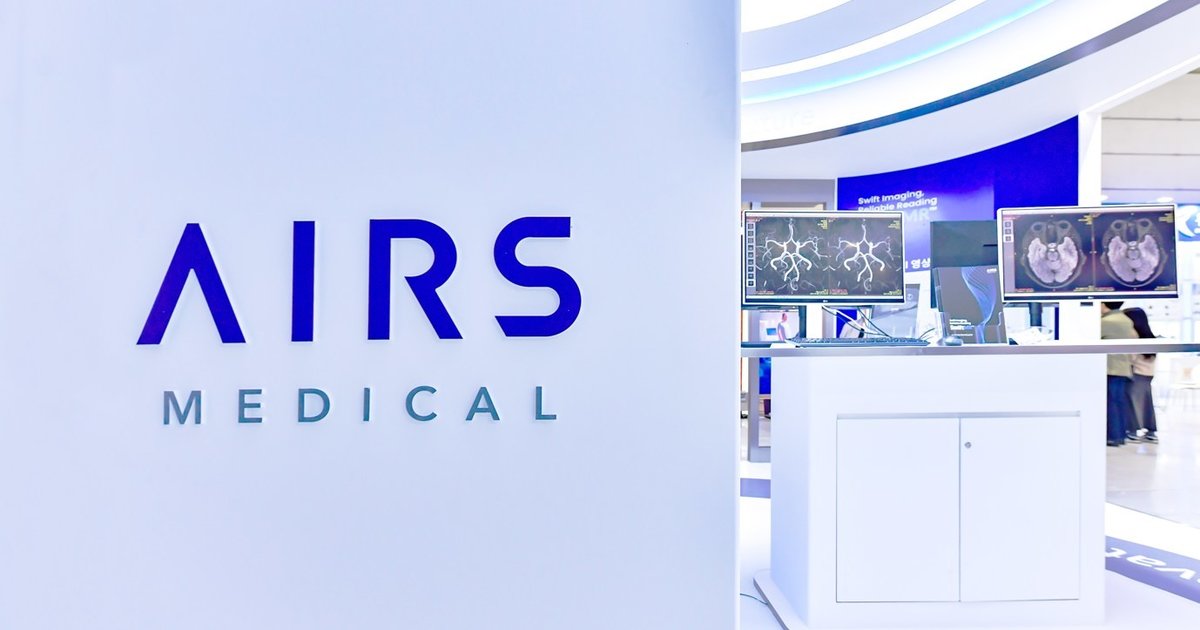
Founded in 2018 and headquartered in Seoul, AIRS Medical built its reputation around SwiftMR, software that applies deep-learning reconstruction after image acquisition. The company says it already serves more than 1,700 healthcare institutions and processes roughly 6 million MRI exams a year across more than 40 countries. The investment was announced on June 16, though financial terms were not disclosed.
What the deal reveals about the market
TA Associates said it sees strong momentum in this segment, citing radiologist shortages, constrained imaging capacity and steadily growing exam volumes. Edward Sippel, managing director and head of TA Asia Pacific, noted that “the company’s strong foundation and growing international presence across 40-plus countries position it well to meet increasing demand for solutions that improve imaging efficiency, patient access and diagnostic consistency.”
This is not the first time AIRS Medical has attracted capital. In 2024 the company closed a $20 million Series C round, with participation from South Korean firms Shinyoung Securities and BSK Investment. With the new infusion, AIRS plans to advance its AI-powered radiology solutions and develop new ones. Both parties expect to finalize the transaction by the end of June, subject to customary closing conditions.
Investor appetite for the sector is far from isolated. We recently covered how a private equity fund acquired Heritage Imaging, another sign of consolidation in diagnostic imaging. The difference here is that the core asset is not a clinic network but software.
How deep-learning MRI acceleration works
MRI is powerful but slow. Each sequence needs acquisition time to accumulate enough signal and preserve an acceptable signal-to-noise ratio. SwiftMR tackles that bottleneck from another angle: instead of altering acquisition, it runs deep neural networks after the image is captured, removing noise and blur without changing the scan itself. AIRS claims the technique cuts average imaging time by about 45%.
The underlying principle is deep-learning reconstruction. Models trained on large image datasets learn to recover detail from shorter or under-sampled acquisitions, delivering images that approach those obtained with longer protocols. It is the same family of approaches powering much of AI’s role in modern radiology, though here the focus is throughput and access rather than interpretation.
Because SwiftMR operates on the reconstructed image rather than the raw acquisition, it can be layered onto existing scanners from multiple vendors without replacing the underlying hardware. That vendor-agnostic positioning matters commercially: a hospital does not have to swap out a magnet to gain the speed-up, which lowers the barrier to adoption and helps explain why the company has reached more than 40 countries so quickly. It also means the same protocol can be shortened on an older 1.5T system or a newer 3T unit, extending the useful life of legacy equipment.
The company also offers SwiftSight, which promises consistent brain volumetry and quantification regardless of scanner manufacturer or field strength. According to AIRS, conventional brain imaging methods can produce a 15% to 20% difference between different machines — variability that undermines longitudinal studies and multi-center comparisons.
Implications for clinical practice
For a radiology department, shortening MRI time has a direct effect on the queue. Faster exams mean more patients per day on the same magnet, shorter wait times and better tolerance for those who struggle to stay still — children, older adults and claustrophobic patients. In networks facing scheduling bottlenecks, gaining 45% throughput per scanner is practically equivalent to nearly doubling capacity without buying a new magnet.
That said, AI reconstruction software demands careful clinical validation. Providers must confirm that acceleration does not introduce subtle artifacts or erase small findings, and that diagnostic confidence holds up across the full range of pathologies a department sees. The consistency promised by tools like SwiftSight also speaks directly to applications in functional and quantitative MRI, where comparability across exams is decisive for tracking disease over time.
There is also a workforce angle. Radiology faces a persistent shortage of technologists and radiologists in many regions, and tools that compress acquisition time can ease pressure on overstretched teams. Shorter sessions reduce the chance of patient motion, which in turn means fewer repeat sequences and less rework — a quiet but meaningful contributor to both image quality and staff workload. For markets with uneven access to advanced imaging, squeezing more capacity out of installed scanners is often more realistic in the short term than financing entirely new equipment.
Outlook and what to watch next
TA’s investment reinforces a thesis gaining traction: in the near term, the most valuable radiology AI may not be the kind that replaces the radiologist, but the kind that optimizes workflow and the use of expensive equipment. With chronic staffing shortages and rising volumes, operational efficiency is a concrete, measurable value proposition.
Next steps include closing the deal and the international expansion AIRS has announced. It will be worth watching whether the company broadens regulatory clearances in new markets, how it balances growth with clinical validation, and whether private equity’s bet on “AI-driven productivity” proves to be the most resilient corner of digital radiology. For now, the market’s message is clear: deep-learning MRI acceleration has become a strategic asset.
Source: Health Imaging