
The data point that hits radiology operations
Most radiologists live with some kind of work-related musculoskeletal complaint, according to a survey reported by AuntMinnie. The figure, which has been recurring across international studies in recent years, confirms what many services already see in practice: today’s radiologist sits for hours in suboptimal ergonomic conditions, in front of multiple monitors and inside workflows that demand constant clicking. The cumulative result is a load of microtraumas that translates into neck pain, low back pain, and shoulder and wrist complaints.
Why the problem is so common in radiology
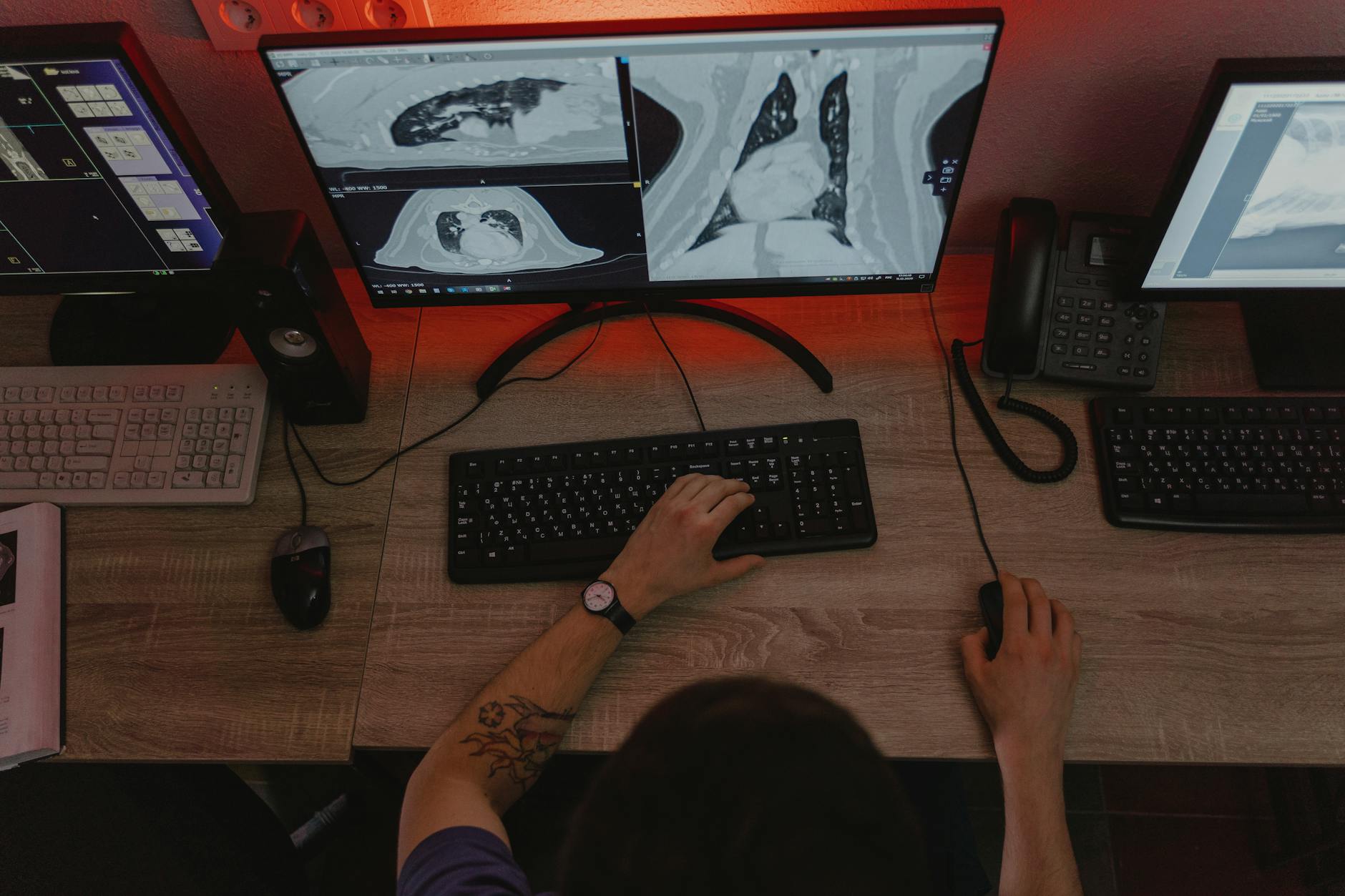
The nature of radiology work has changed dramatically over the past two decades. The shift from film to digital brought clear gains in productivity and image quality, but also concentrated interpretation in fixed stations with multiple screens, mouse, keyboard and dictation devices. Studies in specialty journals consistently report musculoskeletal pain prevalences between 60% and 90% in radiologist cohorts — well above other medical specialties.
The most affected areas are typically the neck (prolonged rotation between monitors), the low back (long sitting time with poor posture), shoulders and elbows (intensive mouse use), wrists (carpal tunnel syndrome linked to mouse and keyboard) and eyes (computer vision syndrome from hours of screen time). The combination paints the classic occupational picture of professionals seated all day in front of a reading station.
The ergonomic factors that matter most
Several ergonomic factors have been identified in recent studies. The first is inadequate chair and monitor height, which forces the radiologist to flex the neck downward or push the head forward. The second is the use of low-quality or poorly positioned mice, which overload shoulder and wrist. The third is the lack of structured breaks: many shifts demand 4 to 6 hours of continuous reading, with no scheduled pauses.
Less visible factors also contribute. Inadequate lighting — too much ambient light reflecting on monitors — pushes the radiologist to lean in and squint. Cold reading rooms, common to protect equipment, increase muscle tension. And background noise from PACS and computers accumulates as a cognitive stressor, indirectly linked to defensive posture and tension.
The weight of imaging volume
Exam volume growth makes the problem worse. Industry reports show consistent increases in studies per radiologist per hour, especially in emergency settings and high-volume diagnostic centers. Each CT or MRI study can involve hundreds to thousands of images, with windowing, reformatting, prior comparisons and simultaneous dictation. Ergonomics that worked for 30 studies a day can be unsustainable at 80 or 100.
The phenomenon connects directly with the discussion on interpretation efficiency in radiology: productivity gains that ignore ergonomic factors can end in repetitive strain leave, reduced work hours or early retirement. The trade-off between productivity and occupational health needs to enter the formal management agenda.
What the literature says about interventions
Structured ergonomic programs in radiology show good results when they combine three fronts. The first is physical workstation redesign: chair with lumbar support and adjustable height, monitors at eye level with proper tilt, mouse and keyboard close to the body, and ideally sit-stand desks to alternate posture. The second is the adoption of micro-frequent breaks: 1 to 2 minute pauses every 30 minutes to avoid static tension buildup.
The third is active prevention through occupational physical therapy programs, targeted stretching exercises and postural strengthening tailored for radiologists. Some U.S. institutions already run dedicated programs with occupational therapists, on-site exercise routines and individualized ergonomic assessments — a model that is gradually reaching large diagnostic networks elsewhere.
Technology as part of the solution
Technology is also part of the answer. Voice recognition cuts typing time and frees the hand from the mouse. Well-trained keyboard shortcuts reduce repetitive clicks. Modern PACS with custom hanging protocols eliminate several manual tasks. And the growing use of AI for pre-segmentation, automated measurements and case prioritization can reduce time spent on repetitive tasks, leaving more bandwidth for critical analysis.
This is where ergonomics meets technology modernization. The same workflows that free the radiologist from operational chores also protect their muscles. It is worth noting that qualified administrative assistants also relieve repetitive load by handling support tasks, keeping the radiologist focused on clinical interpretation.
Implications for service management
Three practical management actions emerge from this story. First, run formal ergonomic assessments of workstations — with checklists covering monitor height, chair adjustment, mouse and keyboard type, and ambient lighting. Second, establish a structured policy of short, frequent breaks during long shifts, even at peak demand. Third, track occupational health indicators at the team level: pain-related absences, sick leaves, spontaneous complaints and adherence to prevention programs.
The return on investment is measurable. Reducing leave for low back or neck pain by even a few days per radiologist per year more than pays for the cost of upgrading a workstation. In parallel, reducing chronic pain reduces burnout risk — a topic directly tied to the discussion on burnout in radiology, where physical and emotional aspects reinforce each other.
The individual perspective
For the individual radiologist, some practical habits help. Keep the monitor at arm’s length. Place the top of the screen at eye level. Keep feet supported on the floor or on a footrest. Take micro-stretching breaks every 30 to 40 minutes, focusing on neck, shoulders and wrists. Stay hydrated through the day, even without thirst cues. And reserve time outside work for regular physical activity, especially postural strengthening and joint mobility.
Recognizing that pain is data, not weakness, is the first cultural shift. Many radiologists live with chronic pain for years without proper treatment, partly because medical culture tends to downplay self-complaints. Taking pain seriously, addressing it with medical consultation, physiotherapy and ergonomics, is part of building a sustainable career.
Outlook: ergonomics as part of the quality strategy
The future of radiology practice involves less manual overload, more intelligent automation and more structured ergonomic care. International radiology societies already include ergonomics in quality guidelines and member wellness programs. In other markets, the movement is still nascent but tends to gain traction as services notice the direct impact on turnover, reading quality and professional satisfaction.
The message from the survey is simple: most radiologists are already living with some level of pain. Treating that as a management metric rather than an individual complaint is the necessary step to change a culture that has historically underestimated the physical costs of the specialty.
Source: AuntMinnie